The tradition & historical record
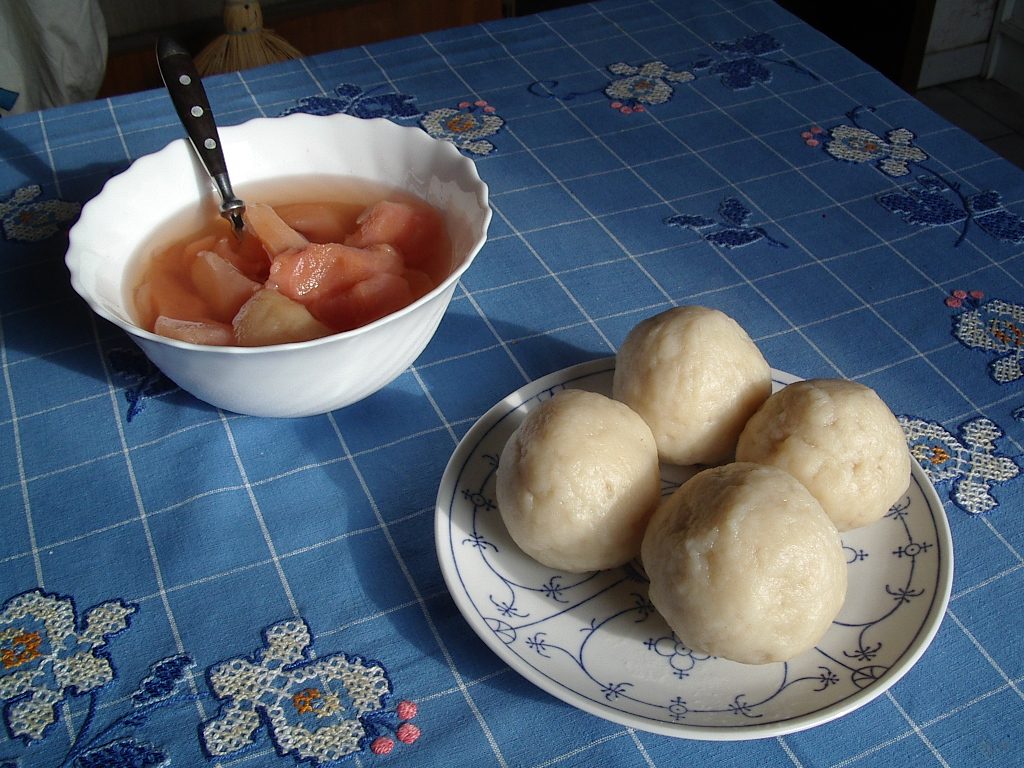
3 min read · 2 sourcesKnödel (German: [ˈknøːdl̩] ; sing. and pl.) or Klöße (German: [ˈkløːsə] ; sing.: Kloß) are boiled dumplings commonly found in Central European and Eastern European cuisine. Countries in which their variant of Knödel is popular include Austria, Bosnia, Croatia, Czech Republic, Germany, Poland, Romania, Serbia, Slovakia and Slovenia. Similar dishes can be found in most other European cuisines, such as Scandinavian, Romanian, Italian, Jewish, Ukrainian and Belarusian cuisines. Usually made from flour, bread or potatoes, they are often served as a side dish, but can also be a dessert such as plum dumplings, or even meat balls in soup. Many varieties and variations exist. 1
Etymology
The word Knödel is German and is cognate with the English word knot and the Latin word nōdus 'knot'. Through the Old High German chnodo and the Middle High German knode it finally changed to the modern expression. Knödel in Hungary are called gombóc or knédli; in Slovenia, cmoki or (vulgarly) knedl(j)i; in the Czech Republic, knedlíky (singular knedlík); in Slovakia, knedle (singular knedľa); in Luxembourg, Kniddel(en); in Bosnia, Croatia, Poland and Serbia, knedle; in Bukovina, cnidle or cnigle. The same German roots are found in these Romance languages: France has quenelles, and large gnocchi are called canederli [kaˈneːderli; kaˈnɛːderli] in Italian; bales is the Ladin word for the same dish. In some regions of the United States, klub is used to refer specifically to potato dumplings. A similar dish is known in Sweden (kroppkakor or pitepalt) and in Norway (raspeball or komle), filled with salty meat; and in Canada (poutine râpée). 1
Varieties
Knödel are used in various dishes in Austrian, German, Slovak and Czech cuisine. From these regions, Knödel spread throughout Europe. Klöße are also large dumplings, steamed or boiled in hot water, made of dough from grated raw or mashed potatoes, eggs and flour. Similar semolina crack dumplings are made with semolina, egg and butter called Grießklößchen (Austrian German: Grießnockerl; Hungarian: grízgaluska; Silesian: gumiklyjza). Thüringer Klöße are made from raw or boiled potatoes, or a mixture of both, and are often filled with croutons or ham. 1
Leberknödel are large dumplings made of ground liver and a batter made of bread soaked in milk and seasoned with nutmeg or other spices, boiled in beef stock and served as a soup. Bread dumplings (Semmelknödel) are made with dried white bread, milk and egg yolks. They are sometimes shaped like a loaf of bread and boiled in a napkin, in which case they are known as napkin dumplings or Serviettenknödel. 1
The text above is adapted from the Wikipedia article “Knödel”, available under the Creative Commons Attribution-ShareAlike 4.0 licence. 1
knödel is large round poached or boiled potato or bread dumplings, made without yeast, according to the structured record cited below. This entry was generated automatically from that record and has not yet been reviewed by a person familiar with the tradition. 2
The source record links this tradition to 9 external registers, which can be verified through the citation. 2