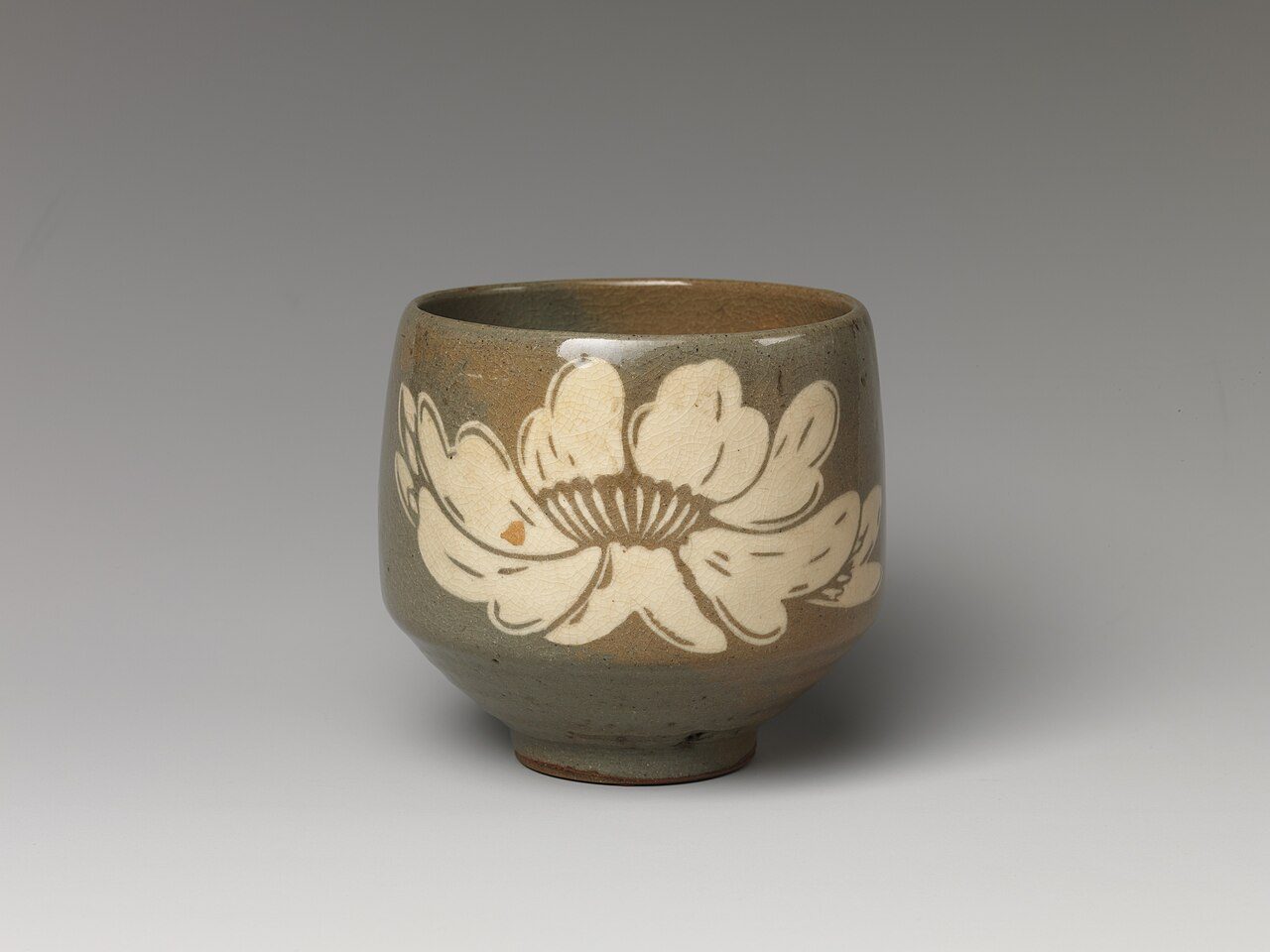
The tradition & historical record
1 min read · 2 sourcesKōda ware (高田焼, Kōda-yaki) is a type of Japanese pottery with damascening traditionally from Yatsushiro, Kumamoto prefecture. It is also known as Yatsushiro ware (八代焼, Yatsushiro-yaki). Most of the decorative style is influenced by Goryeo ware. The Hirayama Kiln Site (平山窯跡) is inscribed in the list of Historic Sites of Japan (Kumamoto). 1
History
Kōda ware is believed to have originated with the relocation of Hosokawa Mitsunao from Buzen Province to Higo Province (present-day Kumamoto) in 1632, which included moving potters who had produced Agano ware. However, it is more likely that Kōda ware production began before the arrival of the Hosokawas under the Kaga clan, who ruled Higo prior to their arrival. The best-known Kōda ware was produced under the supervision of the Korean potter Sonkai, around 1658. 1
The text above is adapted from the Wikipedia article “Kōda ware”, available under the Creative Commons Attribution-ShareAlike 4.0 licence. 1
Kōda ware is Type of Japanese pottery, according to the structured record cited below. This entry was generated automatically from that record and has not yet been reviewed by a person familiar with the tradition. 2
The source record links this tradition to 3 external registers, which can be verified through the citation. 2