The tradition & historical record
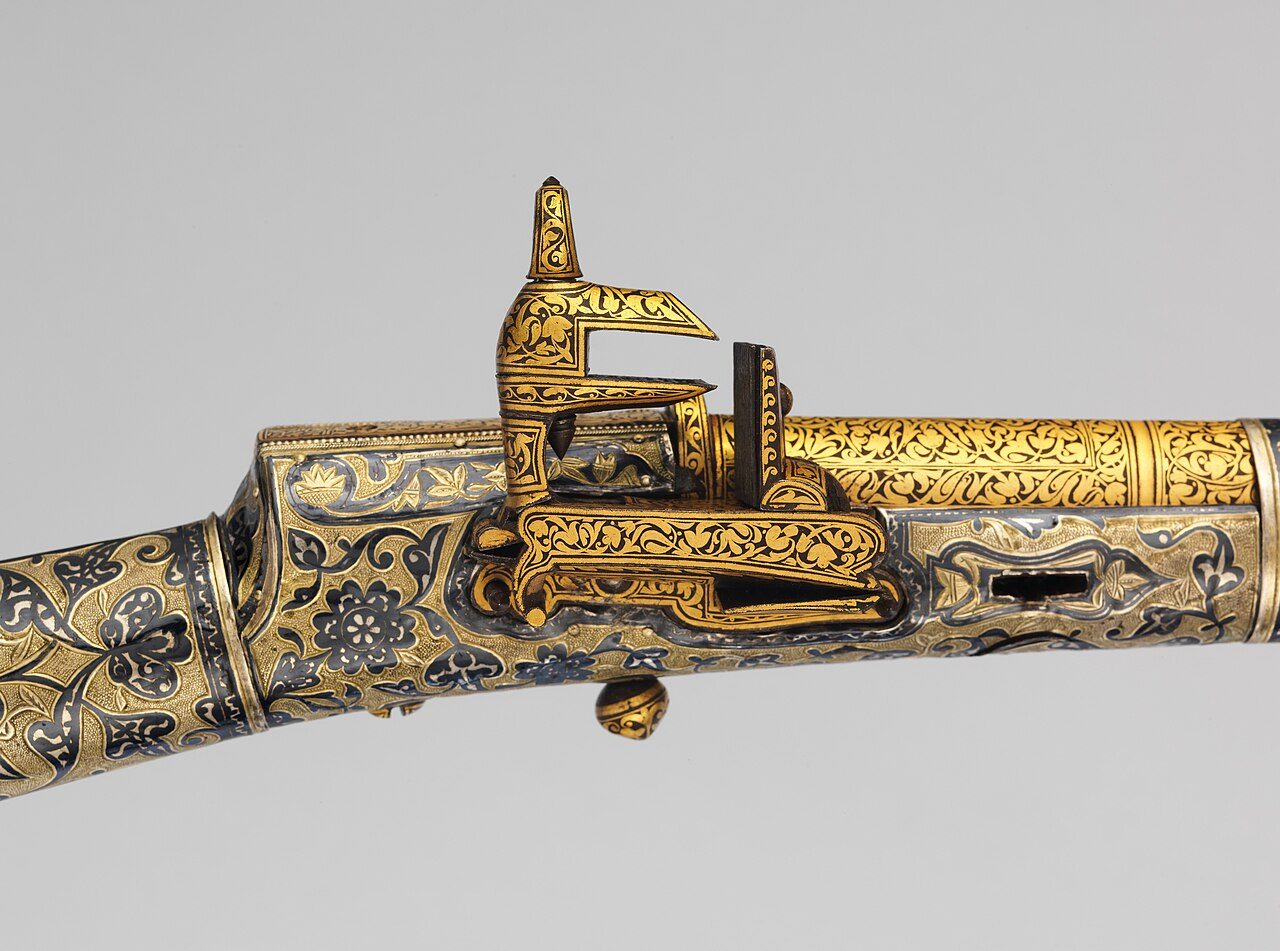
3 min read · 2 sourcesKubachi silver (Russian: Кубачинское серебро) is a metalwork tradition and artistic style of silver handicrafts from the village of Kubachi in today's Republic of Dagestan, Russian Federation. Of the roughly 2,500 people who live in Kubachi, the silversmith industry employs some 300 masters. Today, Kubachi silver is partly also produced in other parts of Dagestan as well as in the regional capital Makhachkala. Among many items, Kubachi silver includes swords, guns, bracelets, and caskets as well as tableware such as samovars, drinking vessels, and cutlery. In the late 19th and early 20th century, Kubachi silver was normally adorned with gold and (or) niello. The traditional nielloed Kubachi silver received so-called high acclaim at the 1937 World Exhibition in Paris. Since the middle of the 20th century, coloured enamel and semi-precious minerals, in particular turquoise, have also been used in Kubachi silver. Filigree is frequently applied. 1
History
The origins of Kubachi silver arrived in the region with Persian traders around 2,000 years ago. In Persian chronicles of the 4th century, the village is called Zerihgeran or Zirihgheran ('armory'). The present-day name, Kubachi ('makers of weapons'), is of Turkish origin. According to Fatima Gadzhalova and colleagues (2019), metalwork in Dagestan was 'largely promoted by the natural raw materials presence', more precisely wool, wood, stone, clay, and iron ore. Located along the trade routes between South Caucasus, the Near and Middle East, and Russia, Dagestan even had access to supplies of materials necessary for jewellery, copper minting, and so on. In the 19th century, the Russian emperors and high nobility commissioned Kubachi silver, including decorated daggers. Emperor Alexander III gave his British counterpart Queen Victoria knives from Kubachi. Originally looked upon with suspicion by the communist authorities, who did not endorse privately owned enterprises, Kubachi masters took part in the 1923 All-Union Agricultural Exhibition. The exposition of jewellery allegedly demonstrated the prospects of both the industry and Kubachi craftsmen. In 1924, in the early days of the Soviet Union, a workshop in Kubachi was founded, engaging artisans not only in traditional jewellery and weapons but also silver portcigars, spoons, and other items for dining rooms. In 1932, the government of the Soviet Union reserved parts of the state silver reserves for the workshop in Kubachi, at the same time giving it the status of export cooperative. 1
In 1937, items produced at the workshop in Kubachi won a top prize at the International Exhibition in Paris. A direct consequence of this success, a new building was built for the workshop. 1
Collections
Today, the Victoria and Albert Museum owns a Kubachi shasqa sword with sheet from c. 1850 and a Kubachi pistol from c. 1840. Kubachi silver is also owned or (and) exhibited by: 1
The State Historical Museum, Moscow The Hermitage Museum, Saint Petersburg Louvre, Paris The Metropolitan Museum of Art, New York City There is also a factory museum in the village of Kubachi. Allegedly, the museum owns a saber of Nadir Shah, ruler of Persia 1736-1747, and a silver vase displaying the images of the first leaders of the USSR. 1
Literature
Freidgeim, Lazar. 'Sterling Niello Drinking Horns of Kubachi'. ASCAS. https://www.ascasonline.org/articoloFEBBRA179.html North, Anthony 1985. An Introduction to Islamic Arms London: HMSO. 1
The text above is adapted from the Wikipedia article “Kubachi silver”, available under the Creative Commons Attribution-ShareAlike 4.0 licence. 1
Kubachi silver is traditional handicraft, according to the structured record cited below. This entry was generated automatically from that record and has not yet been reviewed by a person familiar with the tradition. 2
The source record links this tradition to 2 external registers, which can be verified through the citation. 2