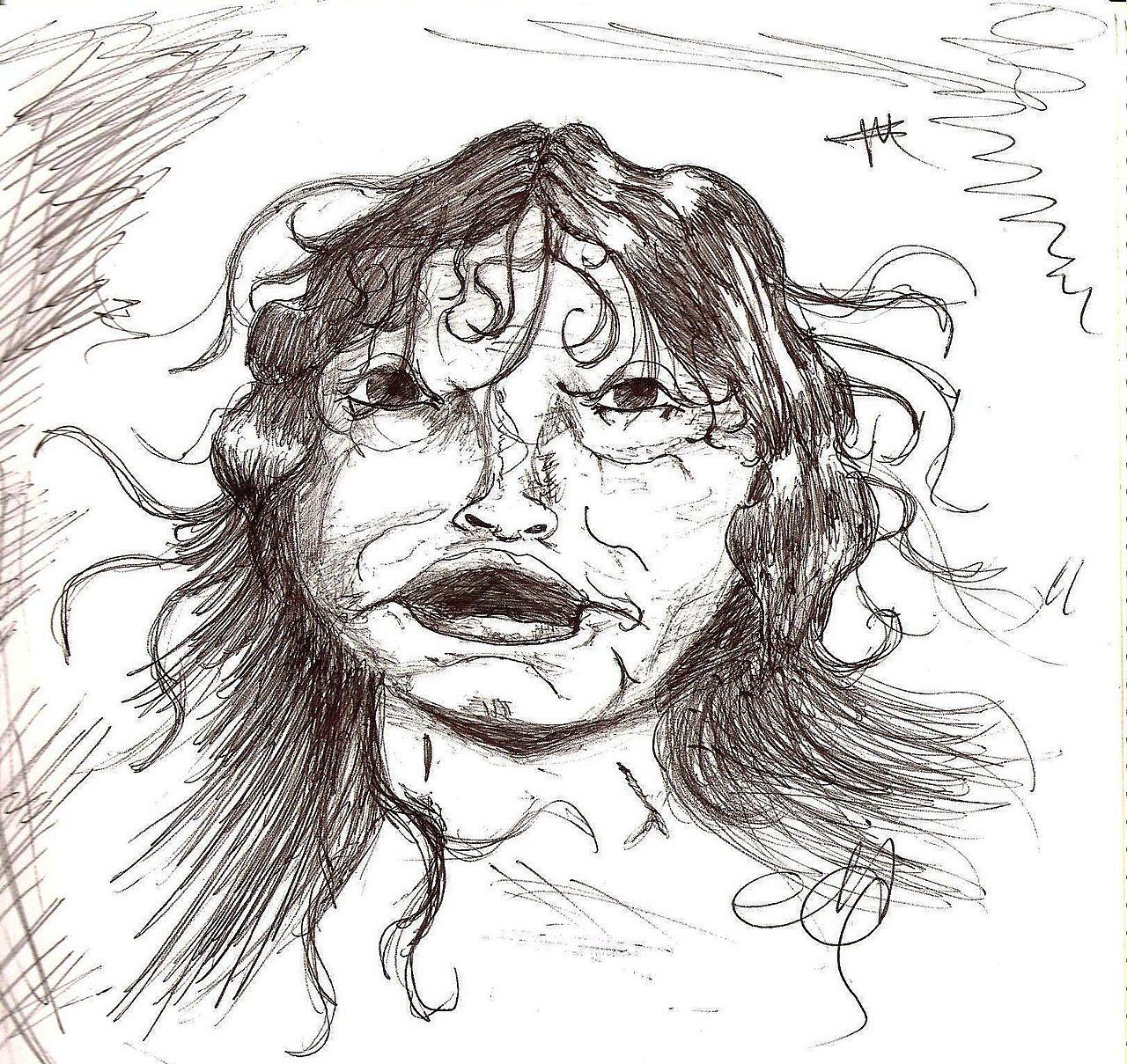
The tradition & historical record
6 min read · 2 sourcesLa Llorona (Latin American Spanish: [la ʝoˈɾona]; 'the Crying Woman, the Weeping Woman, the Wailer') is a vengeful ghost in Hispanic American folklore who is said to roam near bodies of water mourning her children she drowned in the river. Whoever hears her crying is said to either suffer misfortune, death, or become extremely unsuccessful in life. The lore of La Llorona is well known in Mexico and the southwestern United States. Her legend is traditionally told throughout Mexico, Central America and northern South America. La Llorona is sometimes conflated with La Malinche, the Nahua woman who served as Hernán Cortés's interpreter and also bore his son. La Malinche is considered both the mother of the modern Mexican people and a symbol of national treachery for her role in aiding the Spanish. 1
Origins
The presence of ghostly beings who desperately cry by rivers for various reasons is a recurring feature of the mythology of Mesoamerican peoples. Thus, traits of these specters can be found in several pre-Columbian cultures, which eventually, with the arrival of the Spanish conquistadors, came to share common characteristics due to the expansion of Spanish dominion over the continent. The legend is a story that has mythical referents in the pre-Hispanic universe, but that establishes its drama and its imaginary, anguishing retinue in the colonial order. To explain the origin of the legend of La Llorona, three main approaches have been proposed: a literalist approach, meaning that the events really happened—a Spaniard killed his indigenous-Spaniard children he had with the woman people blame for her children’s death, and from there the story was told again and again until the woman became a ghost and the story a legend; a euhemerist approach, in which a myth is superimposed on a real story with concrete referents (as, for example, when the myth of the goddess Cihuacóatl is superimposed on the story of La Malinche); and finally, a parabolic approach, which has an apologetic and symbolic reading, with a hidden meaning, in which the story emerges as a way of giving voice to silenced groups—in this case, Indigenous peoples during the Conquest and colonization. 1
Pre-Columbian legends
For the ancestral cultures of the Americas, myths answer questions about the origin of man and the universe. These myths were carried by the Indigenous societies of the Americas in their migrations, being transmitted orally through many generations. Myths are traditionally linked to religion and worship. Their characters are divine beings, both worshipped and feared, whose powers transcend human intellect. Whether the myth is of Quechua, Nahuatl, Guaraní, or Aymara inspiration, its essence lies in the need of the human spirit to unravel the wonders and mysteries that surround and terrify it. The legend of La Llorona is, above all, a story created to warn and frighten. 1
Mesoamerican myths
In Mexico, where it originated in Xochimilco and the Lacandon jungle, several researchers estimate that La Llorona, as a character of mythology and legend, has its origin in certain pre-Hispanic beings or deities such as Auicanime, among the Purépechas; Xonaxi Queculla, among the Zapotecs; Cihuacóatl, among the Nahuas; and the Xtabay, among the Lacandon Maya. She is always identified with the underworld, hunger, death, sin, and lust. In the case of Xtabay (or Xtabal), this Lacandon goddess is identified as an evil spirit in the form of a beautiful woman whose back has the shape of a hollow tree. By inducing men to embrace her, she drives them mad and kills them. The Zapotec goddess Xonaxi Queculla, meanwhile, is a deity of death, the underworld and lust who appears in some representations with emaciated arms. Attractive at first sight, she appears to men, makes them fall in love and seduces them, only to later transform into a skeleton and carry the spirit of her victims to the underworld. Auicanime was considered among the Purépechas to be the goddess of hunger (her name can be translated as the Thirsty One or the Needy One). She was also the goddess of women who died in childbirth during their first delivery, who, according to belief, became warriors (mocihuaquetzaque), which turned them into divinities and, therefore, into objects of worship and offering. This abundance of goddesses connected with phallic cults and sexual life was the origin not only of La Llorona, but also of other female ghosts that punish men, such as the Siguanaba, the Cegua or the Sucia. 1
Cihuacóatl and other Mexica entities
In the particular case of the Mexica, the pre-Hispanic legend of La Llorona arises from a multitude of hybrid oral narratives. La Llorona has been associated with the pre-Hispanic goddess Tenpecutli, who purged a sorrow for having drowned her children in a river. This goddess, who was very beautiful, had the ability to change her face into that of an animal if someone looked into her eyes, like the nahuales. Another figure with whom she has been associated was the goddess of the underworld Mictlancíhuatl, who seduced and ruined men. It has also been proposed that La Llorona is a hybridization of three Mexica goddesses: Cihuacóatl (the mother goddess and serpent woman), Teoyaominqui (the watcher of the dead), and Quilaztli (goddess of childbirth and twins). For the Mexica, this trio of goddesses wandered in the figure of a woman dressed in white who cried for her lost children, and hearing her was an ill omen. One of the best-known pre-Hispanic antecedents of the legend of La Llorona is the one that identifies her with the Mexica goddess Cihuacóatl. This goddess has different attributes: goddess of the earth (Coatlicue), fertility and childbirth (Quilaztli), warrior woman (Yaocíhuatl), and mother (Tonantzin), both of the Mexica and of their very gods (she was the mother of Huitzilopochtli, the greatest Mexica god). Cihuacóatl was also the patron of the cihuateteo, spirits of women who died in childbirth who at night cried out and roared in the air, who descended to the earth on certain days dedicated to them in the calendar in order to frighten at crossroads and who were fatal for children. One of these cihuateteo could be heard at night, uttering great laments over the death of her son and the loss of her own life. 1
Spirits, ghosts, and weeping women of the Intermediate Area
In the Bribri and Cabécar Talamancan mythology, located on the border between Costa Rica and Panama, the stories of these spirits are transmitted through the Suwoh, the oral tradition of these peoples. In their myths, these spirits, called itsö, are beings associated with dark and tangled mountains, mountain abysses, rains, strong winds, and river waterfalls, with a strong connection to the forces of nature and rural life. They are creatures with the appearance of a woman and the body of a bird that dwell in caves and riverbeds, and that utter mournful cries when a child is about to die, or else lose children in the forest when they stray from their parents. Examples of these myths are the stories of Sakabiali and the Wíkela. 1
The text above is adapted from the Wikipedia article “La Llorona”, available under the Creative Commons Attribution-ShareAlike 4.0 licence. 1
La Llorona is ghost legend in Latin American folklore, according to the structured record cited below. This entry was generated automatically from that record and has not yet been reviewed by a person familiar with the tradition. 2
The source record links this tradition to 7 external registers, which can be verified through the citation. 2