The tradition & historical record
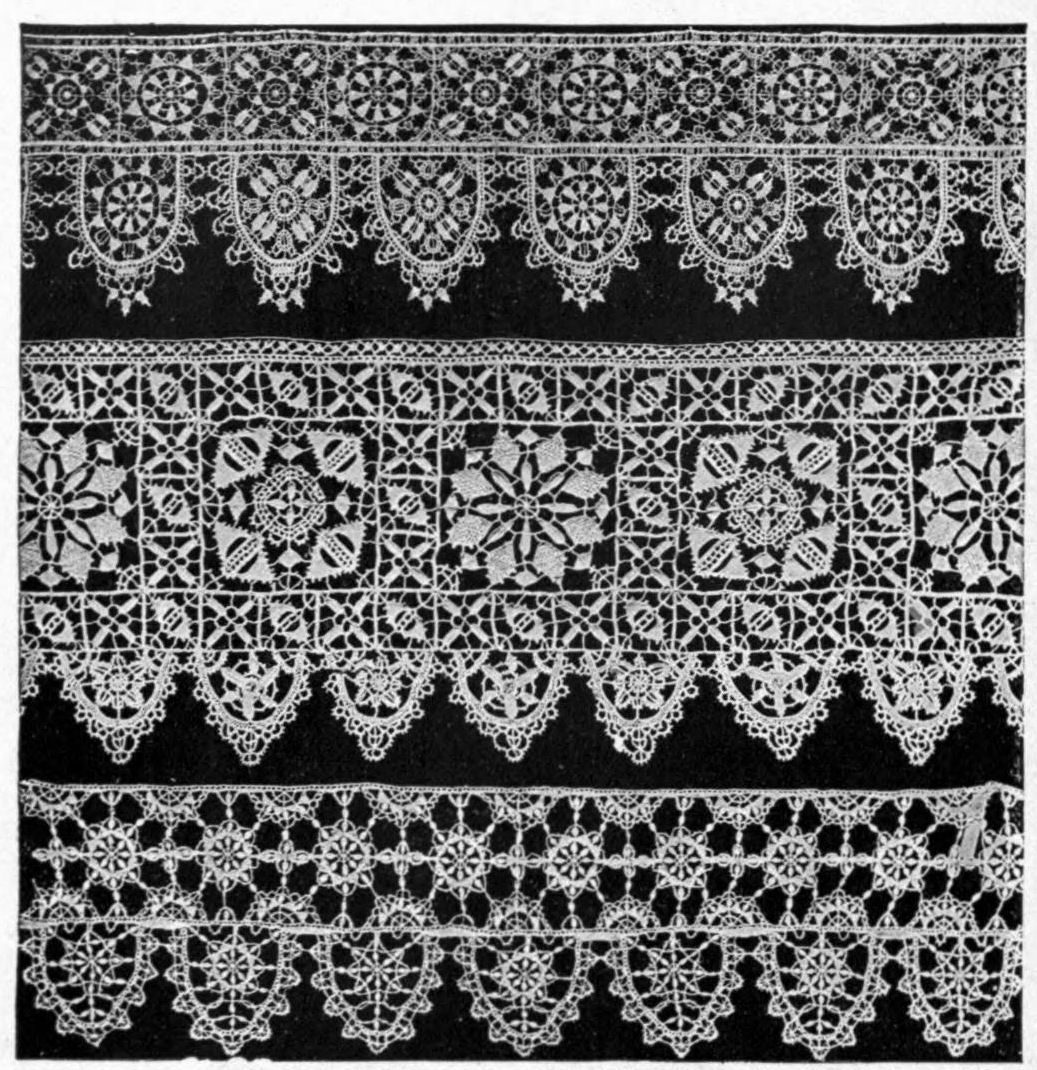
4 min read · 2 sourcesLace is a decorative openwork textile consisting of a pattern of holes. Various techniques can be employed to form lace, for example needle lace, which uses needle and thread, or cutwork, which uses pre-existing fabric. Lace can be made by hand or machine. Lace is commonly used as an embellishment for clothing or household linens. The origin of lace is unclear, however the earliest examples are from 16th-century Italy. Lace can be made of any thread, though cotton is widely used. Early forms of lace were made of linen, silk, gold, or silver thread. Manufactured lace is often made of synthetic fiber. Some modern artists make lace with fine copper or silver wire instead of thread. 1
Etymology
The word lace is from Middle English. In Vulgar Latin *laceum, or in Latin laqueus, means noose. In Old French las means noose or string. A noose describes an open space outlined with rope or thread. This description applies to many types of open fabric resulting from "looping, plaiting, twisting, or knotting...threads...by hand or machine." 1
Types
There are many types of lace, classified by how they are made. These include: 1
Bobbin lace, also known as bone lace, is made with bobbins and a stiff pillow. The bobbins, turned from wood, bone, or plastic, carry threads which are woven together and pinned in place on a pillow fitted with a pattern template. Bobbin lace pillows are made of straw, or other materials like sawdust, insulation styrofoam, or ethafoam. An example of a style of bobbin lace is Chantilly lace. Chemical lace: a stitching ground made of a water-soluble or non-heat-resistant material is embroidered with a continuous motif. The stitching areas are then dissolved so only the embroidery remains. Chemical lace is typically made by machine. Crocheted lace uses thin thread and crochet stitches to create openwork designs. This includes Irish crochet, pineapple crochet, and filet crochet. Cutwork, drawn thread work, or whitework, is lace constructed by removing threads from a woven background. The remaining threads are wrapped or filled with embroidery. Knitted lace is made with fine thread or yarn. Different stitches are used to create openwork patterns. This includes Shetland lace, such as the "wedding ring shawl", a lace shawl so fine that it can be pulled through a wedding ring. Machine-made lace is any style of lace created or replicated using mechanical means. Needle lace, such as Venetian Gros Point, is made using a needle and thread. Net lace is made using a ready made net which is embellished by hand or machine. Tape lace can be made by forming the tape (thin woven strips) as the lace is worked or by using a ready made tape. 1
Origins
Since lace evolved from multiple different techniques, it is impossible to say that it originated in any one place. The fragility of lace means that few exceedingly old specimens are extant. The origin of lace is disputed by historians. An Italian claim is a will of 1493 by the Milanese Sforza family. A Flemish claim is lace on the alb of a worshiping priest in a painting about 1485 by Hans Memling. 1
Early history
Lace was used by clergy of the Catholic Church as part of vestments in religious ceremonies. Much of their lace was made of gold, silver, and silk. The early forms of lace were made using cutwork techniques. Wealthy people began to use such expensive lace in clothing trimmings and furnishings. In the 1300s and 1400s heavy duties were imposed on lace, and strict sumptuary laws were passed in the Italian states. This led to less demand for lace. In the mid-1400s some lacemakers turned to using flax, which cost less, while others migrated, bringing the industry to other countries. Lace came into widespread use in the 16th century in the northwestern part of the European continent. The popularity of lace increased rapidly and the lace making cottage industry spread throughout Europe. The late 16th century marked the rapid development of lace. Both needle lace and bobbin lace became dominant in fashion and home décor. Sumptuary laws in many countries had a major impact on lace wearing and production throughout its early history, though in some countries they were often ignored or worked around. 1
Italy
Bobbin and needle lace were both being made in Italy early in the 1400s. Documenting lace in Italy in the 15th century is a list of fine laces from the inventory of Beatrice d'Este, Duchess of Milan, from 1493. 1
The text above is adapted from the Wikipedia article “Lace”, available under the Creative Commons Attribution-ShareAlike 4.0 licence. 1
lace is openwork fabric, patterned with open holes in the work, made by machine or by hand, according to the structured record cited below. This entry was generated automatically from that record and has not yet been reviewed by a person familiar with the tradition. 2
The source record links this tradition to 36 external registers, which can be verified through the citation. 2