The tradition & historical record
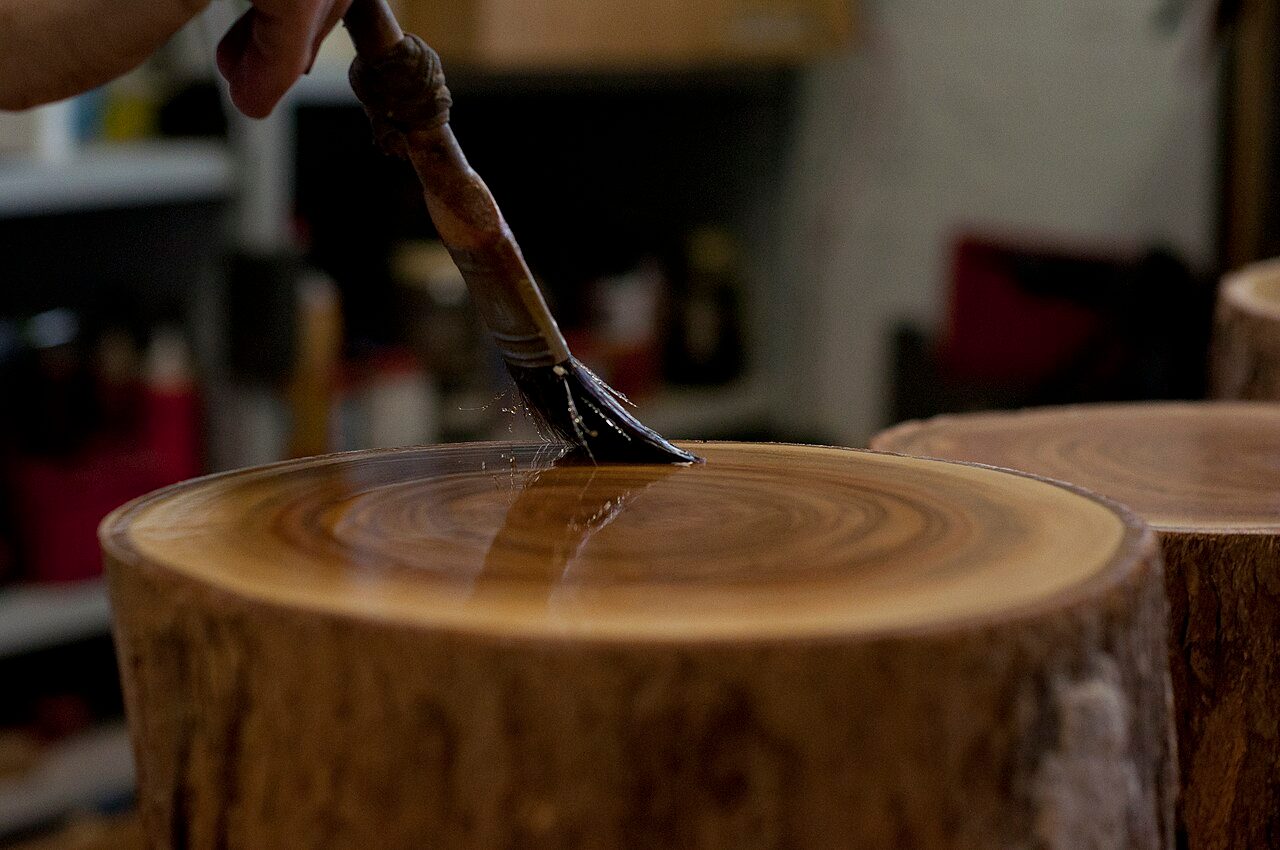
5 min read · 2 sourcesLacquer is a type of hard and usually shiny coating or finish applied to materials such as wood or metal. It is most often made from tree sap and wax and has been in use since antiquity. Asian lacquerware, which may be called "true lacquer", are objects coated with the treated, dyed and dried sap of Toxicodendron vernicifluum or related trees, applied in several coats to a base that is usually wood. This dries to a very hard and smooth surface layer which is durable, waterproof, and attractive in feel and look. Asian lacquer is sometimes painted with pictures, inlaid with shell and other materials, or carved, as well as dusted with gold and given other further decorative treatments. In modern techniques, lacquer means a range of clear or pigmented coatings that dry by solvent evaporation to produce a hard, durable finish. The finish can be of any sheen level from ultra matte to high gloss, and it can be further polished as required. Lacquer finishes are usually harder and more brittle than oil-based or latex paints and are typically used on hard and smooth surfaces. In terms of modern finishing products, finishes based on shellac dissolved in alcohol are often called shellac or lac to distinguish them from synthetic lacquer, often called simply lacquer, which consists of synthetic polymers (such as nitrocellulose, cellulose acetate butyrate ("CAB"), or acrylic resin) dissolved in lacquer thinner, a mixture of various organic solvents. 1
Etymology
The English lacquer is from the archaic French word lacre, "a kind of sealing wax", from Portuguese lacre, itself an unexplained variant of Medieval Latin lacca "resinous substance," from Arabic lakk (لك), from Persian lāk (لاک), from Hindi lākh (लाख); Prakrit lakkha, 𑀮𑀓𑁆𑀔), itself from the Sanskrit word lākshā (लाक्षा) for lac bug, representing the number one hundred thousand (100,000), used as wood finish in ancient India and neighbouring areas. 1
Sheen measurement
Lacquer sheen is a measurement of the shine for a given lacquer. Different manufacturers have their own names and standards for their sheen. The most common names from least shiny to most shiny are: flat, matte, eggshell, satin, semi-gloss, and gloss (high). 1
Shellac-based lacquers
In India shellac derived from insect lac was used since ancient times. Shellac is the secretion of the lac bug (Tachardia lacca Kerr. or Laccifer lacca). It is used for wood finish, lacquerware, skin cosmetic, ornaments, dye for textiles, production of different grades of shellac for surface coating. 1
Urushiol-based lacquers
Urushiol-based lacquers differ from most others, being slow-drying, and set by oxidation and polymerization, rather than by evaporation alone. The active ingredient of the resin is urushiol, a mixture of various phenols suspended in water, plus a few proteins. In order for it to set properly it requires a humid and warm environment. The phenols oxidize and polymerize under the action of laccase enzymes, yielding a substrate that, upon proper evaporation of its water content, is hard. These lacquers produce very hard, durable finishes that are both beautiful and very resistant to damage by water, acid, alkali or abrasion. The resin is derived from trees indigenous to East Asia, like lacquer tree Toxicodendron vernicifluum, and wax tree Toxicodendron succedaneum. The fresh resin from the T. vernicifluum trees causes urushiol-induced contact dermatitis and great care is therefore required in its use. The Chinese treated the allergic reaction with crushed shellfish, which supposedly prevents lacquer from drying properly. Lacquer skills became very highly developed in Asia, and many highly decorated pieces were produced. It has been confirmed that the lacquer tree has existed in Japan since nearly 12,600 years ago in the incipient Jōmon period. This was confirmed by radioactive carbon dating of the lacquer tree found at the Torihama shell mound and is the oldest lacquer tree in the world found as of 2011. Lacquer was used in Japan as early as 7000 BCE, during the Jōmon period. Evidence for the earliest lacquerware was discovered at the Kakinoshima "B" Excavation Site in Hokkaido. The ornaments woven with lacquered red thread were discovered in a pit grave dating from the first half of the Initial Jōmon period. 1
Types of lacquer
Types of lacquer vary from place to place but they can be divided into unprocessed and processed categories. The basic unprocessed lacquer is called raw lacquer (生漆: ki-urushi in Japanese, shengqi in Chinese). This is directly from the tree itself with some impurities filtered out. Raw lacquer has a water content of around 25% and appears in a light brown colour. This comes in a standard grade made from Chinese lacquer, which is generally used for ground layers by mixing with a powder, and a high-quality grade made from Japanese lacquer called kijomi-urushi (生正味漆) which is used for the last finishing layers. The processed form (in which the lacquer is stirred continuously until much of the water content has evaporated) is called guangqi (光漆) in Chinese but comes under many different Japanese names depending on the variation, for example, kijiro-urushi (木地呂漆) is standard transparent lacquer sometimes used with pigments and kuroroiro-urushi (黒呂色漆) is the same but pre-mixed with iron hydroxide to produce a black coloured lacquer. Nashiji-urushi (梨子地漆) is the transparent lacquer but mixed with gamboge to create a yellow-tinged lacquer and is especially used for the sprinkled-gold technique. These lacquers are generally used for the middle layers. Japanese lacquers of this type are generally used for the top layers and are prefixed by the word jo- (上) which means 'top (layer)'. Processed lacquers can have oil added to them to make them glossy, for example, shuai-urushi (朱合漆) is mixed with linseed oil. Other specialist lacquers include ikkake-urushi (釦漆) which is thick and used mainly for applying gold or silver leaf. 1
The text above is adapted from the Wikipedia article “Lacquer”, available under the Creative Commons Attribution-ShareAlike 4.0 licence. 1
lacquer is liquid or powder coating material which is applied thinly to objects to form a hard finish, according to the structured record cited below. This entry was generated automatically from that record and has not yet been reviewed by a person familiar with the tradition. 2
The source record links this tradition to 32 external registers, which can be verified through the citation. 2