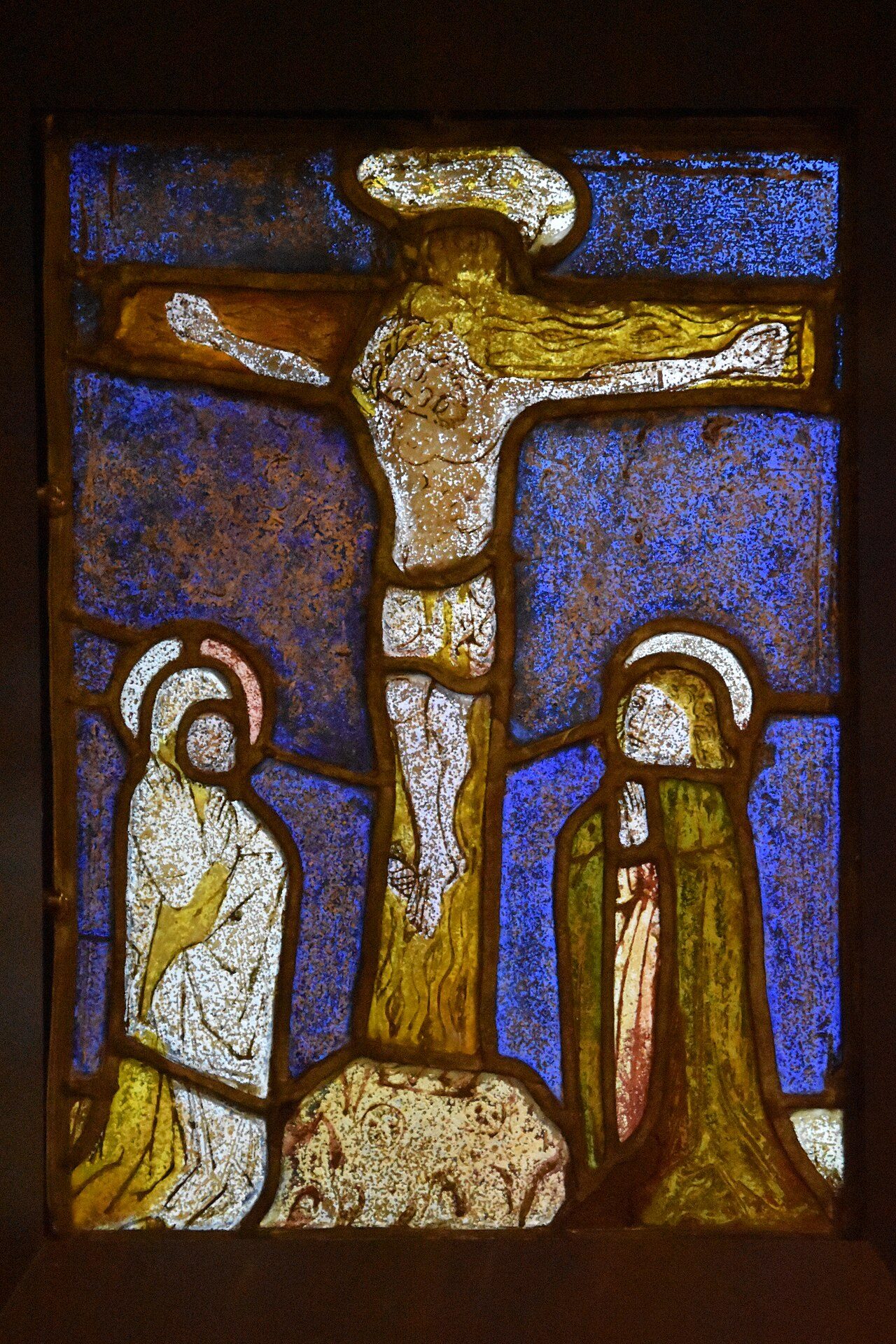
The tradition & historical record
6 min read · 2 sourcesLeadlights, leaded lights or leaded windows are decorative windows made of small sections of glass supported in lead cames. The technique of creating windows using glass and lead is known as came glasswork. The term "leadlight" could be used to describe any window in which the glass is supported by lead, but traditionally, a distinction is made between stained glass windows and leadlights; the former is associated with the ornate coloured-glass windows of churches and similar buildings, while the latter is associated with the windows of vernacular architecture and defined by its simplicity. Since the traditional technique of setting glass into lead cames is the same in both cases, the division between "leadlights" and "stained glass" became less distinct during the late 20th century. The terms are now often incorrectly used interchangeably for any window employing the lead-support technique, while the term "stained glass" is often applied to any windows, sculptures, or works of art using coloured glass. 1
Traditional leadlight
Traditionally, leadlight windows differ from stained glass windows principally in being less complex in design and employing simpler techniques of manufacture. Stained glass windows, such as those commonly found in churches, usually include design components that have been painted onto the glass and fired in a kiln before assembly. The extra time and cost employed in painting and firing the glass usually prohibited its use in domestic architecture. While stained glass windows are found principally in churches and ornate buildings, leadlight windows, which rarely employ painted components, are much more common, and from the 1860s to the 1930s were a regular architectural feature in many private houses and cottages, where their style is often a clue to the age of the building. Unlike stained glass windows, which are traditionally pictorial or of elaborate design, traditional leadlight windows are generally non-pictorial, containing geometric designs and formalised plant motifs. Leadlight windows almost always employ the use of quarries, pieces of glass cut into regular geometric shapes, sometimes square, rectangular or circular but most frequently diamond-shaped, creating a "diaper" pattern. A further difference between traditional stained glass and leadlight is that the former almost always has painted pictorial details over much of the glass, requiring separate firing after painting by the artist. This is not the case in traditional leadlight, with painted quarries being separately produced and leaded in with those of plain glass, in the form of armorial crests and occasionally small scenes painted in grisaille (grey). 1
Origin and continuity
The work of the leadlighter was essentially to provide windows that excluded the weather, but admitted light into buildings. Leadlight has been in use for over a thousand years, having its origins in the Roman and Byzantine windows that were made of thin sheets of alabaster set in armatures of wood or wrought iron. With the employment of small pieces of glass as the translucent material (rather than alabaster), lead "cames" of H-section were used to hold the glass in place, with the iron armatures being retained as support for larger windows. By the late Middle Ages, the profession of domestic leadlighter was common across Europe. Until World War II, most towns had a commercial shop producing domestic leadlight. These craftsmen did not refer to their product as "stained glass". The provision of decorative stained glass windows was a task requiring many more complex skills than the provision of domestic leadlight. However, some of the major stained glass studios that produced church windows also produced leadlight for commercial and domestic buildings, so that the division became blurred; the leadlights, particularly for public buildings, were occasionally very ornate, as in the windows of Central Railway Station, Sydney. In the late 20th and early 21st centuries, the previously accepted division between leadlight and stained glass had almost disappeared, with the terms "stained glass" and "leadlight" often being used interchangeably. This is because the techniques of construction of a pictorial stained glass window and a domestic leadlight window are basically the same, and any glass that is coloured or carries a stain is generally referred to as stained glass. 1
15th–17th centuries
Many buildings exist that were glazed during this period, with Little Moreton Hall (1555–1559) in Cheshire, England being particularly famous for the extensive nature of its leadlighting. During this period, large sheets of glass were unavailable. Domestic windows were generally small and were made of broad glass or cylinder glass before crown glass was first made in England in 1678. Broad glass is usually around 1.5 to 2 mm thick and uneven, often with scars and marks on the surface where it has been "ironed" flat, and often has a greenish tint. Later windows often used crown glass, which has a much better surface quality and shows slight concentric ripples that form as the disk is spun. Old windows often contain a mixture of several types of glass, as they will have been re-leaded about every 100 years, with the replacement of some of the quarries. The irregular glinting surface of diamond-pane windows is a distinctive feature of old European houses. The diaper shape of the panes gave greater stability than square-cut straight-set panes, and it is accordingly more common. It was also convenient to cut diamond-shaped panes from a single "crown" of glass with less waste than that caused by cutting square panes. Square panes are most often found in the grander or later buildings, and sometimes only on ground floor windows. In grander houses, the windows often contain small painted panes or stained glass panels containing heraldic emblems and coats of arms. Some European churches also retain diaper glass of this period: some, like York Minster, with painted and fired quarries. During the 19th and early 20th, century a great number of important medieval houses were restored and had their windows returned to an earlier style of glazing. 1
Late 17th–18th centuries
With the development of sash windows, leadlighting became much less common in the domestic setting, giving way to larger panes of glass set into wooden frames. Doors were often surmounted by decorative fanlights in which the panes of glass might be supported by lead, but wood was also commonly used as the support for the glass in fanlights. Casement windows and fixed windows continued to employ leadlight, often with larger panes of rectangular rather than diamond shape. Large windows set in public buildings and churches of this period also employed rectangular panes of leadlight supported by armatures, emphasizing the classical design of the windows. Heraldic motifs in stained glass were often set into the windows. 1
19th century
By 1840 there was a growing fashion for the Medieval. 1
The text above is adapted from the Wikipedia article “Leadlight”, available under the Creative Commons Attribution-ShareAlike 4.0 licence. 1
leadlight is type of windows, according to the structured record cited below. This entry was generated automatically from that record and has not yet been reviewed by a person familiar with the tradition. 2
The source record links this tradition to 7 external registers, which can be verified through the citation. 2