The tradition & historical record
6 min read · 2 sourcesLefse (Norwegian pronunciation: [ˈlɛ́fsə̌], cognate to loaf), dialectally also lefsa (among others), is a traditional soft Norwegian flatbread, also found regionally in Sweden (Swedish: läfsa, löfsa). It is made with riced potatoes, can include all purpose (wheat) flour, and includes butter, and milk, cream, or lard. It is cooked on a large, flat griddle. Special tools are used to prepare lefse, including a potato ricer, long wooden turning sticks and special rolling pins with deep grooves. 1
Flavoring
There are many ways of flavoring lefse. The most common is adding butter and sugar to the lefse and rolling it up. In Norway, this is known as lefse-klenning. Other options include adding cinnamon, or spreading jelly, lingonberries, or gomme on it. Scandinavian-American variations include rolling it with a thin layer of peanut butter and sugar, with butter and white or brown sugar, with butter and corn syrup, or with butter and salt, or with ham and eggs. Also eaten with beef and other savory items like ribberull and mustard, it is comparable to a tortilla. Lefse is a traditional accompaniment to lutefisk, and the fish is often rolled up in the lefse. 1
Variations
There are significant regional variations in Norway in the way lefse is made and eaten, but it generally resembles a flatbread, although in many parts of Norway, especially Valdres, it is far thinner. Tynnlefse ('thin lefse') is a variation made in central Norway. Tynnlefse is rolled up with butter, sugar, and cinnamon (or with butter and brown sugar). Tjukklefse or tykklefse is thicker and often served with coffee as a cake. Potetlefse ('potato lefse') is similar to and used like tynnlefse, but made with potatoes. Lompe or potetkake is the smaller version of the potato lefse, and usually made with only boiled potatoes, flour and salt. It is often used in place of a hot dog bun and can be used to roll up sausages. This is also known as pølse med lompe in Norway. Norway's Constitution Day on May 17 is one of the most popular days to eat the dish. Toppings include ketchup and mustard, but can also include raw or crispy onions, and other types of relish. Møsbrømlefse is a variation common to Salten district in Nordland in Northern Norway. Møsbrømmen is eaten with a sweetened sauce made of brunost, a type of cheese, flour, and sugar. It is ready when møsbrømmen is warm and the butter is melted. Nordlandslefse is a chunky small lefse. Made of butter, syrup, sugar, eggs, and flour. Originally created in western Norway as a treat for fishermen who worked at the Lofoten Fishery. Anislefse is made on the coast of Hordaland. It resembles thin lefse but is slightly thicker, and it is stained by large amounts of whole aniseed. 1
Hardangerlefse
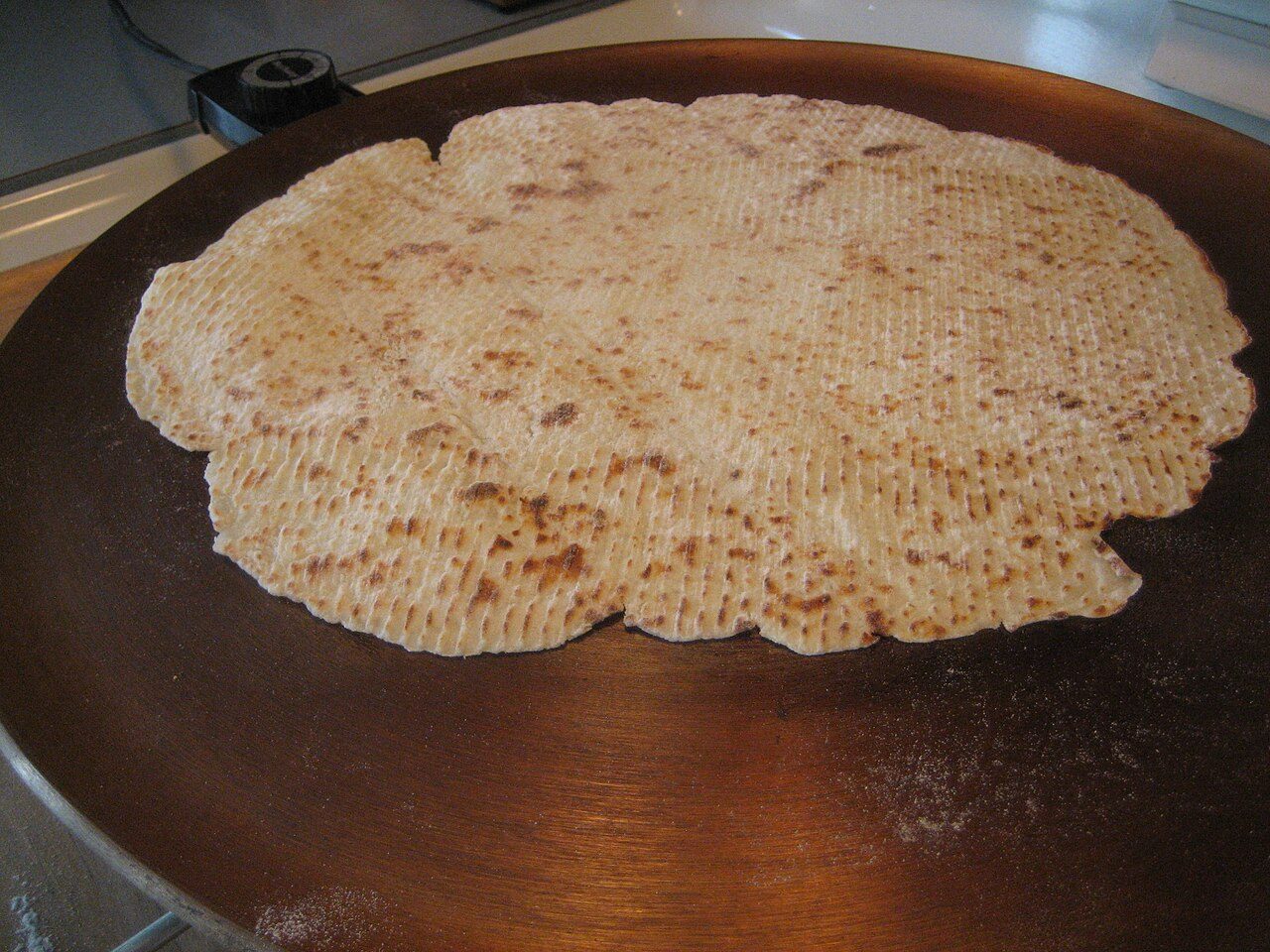
Another variety, the Hardangerlefse (from Hardanger in Norway), is made from yeast-risen Graham flour or a fine ground whole wheat flour (krotekake). It is often made with egg yolks and buttermilk instead of potatoes. The dough is rolled with a conventional rolling pin (and much more flour) until it is thin and does not stick to the surface. It is then cut with a grooved rolling pin in perpendicular directions, cutting a grid into the dough which prevents it from creating air pockets as it cooks. The grid cut can also aid in thinner rolling of the lefse, as the ridges help preserve structural integrity. The lefse is cooked at high temperature (400 °F or 205 °C) until browned, and then left to dry. It can also be freeze-dried by repeatedly freezing and thawing. Dried Hardangerlefse can be stored without refrigeration for six months or more, so long as it is kept dry. It is customarily thought that the bread (along with lutefisk) was a staple on the seagoing voyages as far back as Viking times. The dry lefse is dipped in water, and then placed within a towel which has also been dipped in water and wrung out. Many people maintain that dipping in salted or seawater enhances the flavor. The dry lefse regains its bread-like texture in about 60 minutes. Often that time is used to prepare such ingredients as eggs or herring, which are wrapped in the lefse once it has softened. 1
Holidays
Lefse is a Norwegian treat that is especially popular around the Christmas holidays. Many Nordic and Scandinavian Americans eat lefse primarily around Thanksgiving and Christmas. 1
General
While the Midwest almost always makes its lefse with potatoes, this is not necessarily the case in Norway. When one uses the term lefse in the United States, it typically refers to what Norwegians call potato lefse. Norwegians, however, also make Hardangerlefse with egg yolks and buttermilk. The tradition of making lefse was brought over by Norwegian Americans, and potato lefse itself was made when their potato crop was successful. Due to this, it became more prevalent than other types in the United States. When lefse was able to be made, it was stored in small storage buildings called bryggerhus. When Norwegian immigrants first arrived in America, they did not have the usual foods they were used to back home, including milk and porridge, dried meat, and lefse, but early Norwegian-American immigrants brought folded lefse to eat for the beginning stages of their journey via ship. After these were eaten, the lack of food they were used to is likely why they turned back to tradition so quickly. During World War I, Americans were encouraged to eat potatoes to be patriotic, as wheat was needed to feed the troops on the front lines. Lefse, a staple for Norwegian Americans, was eaten with gusto during this time. While lefse is generally not eaten with day-to-day meals in Norway today, Norwegian Americans traditionally give prominence to having lefse with dinner. 1
The text above is adapted from the Wikipedia article “Lefse”, available under the Creative Commons Attribution-ShareAlike 4.0 licence. 1
lefse is Norwegian flatbread, according to the structured record cited below. This entry was generated automatically from that record and has not yet been reviewed by a person familiar with the tradition. 2
The source record links this tradition to 5 external registers, which can be verified through the citation. 2