The tradition & historical record
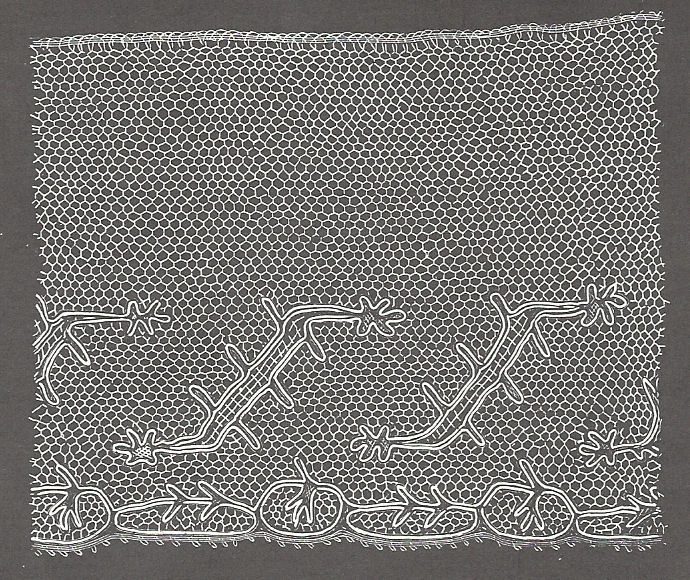
1 min read · 2 sourcesLille lace was a type of bobbin lace that was made at Lille, also known as Rijsel. It was a lightweight lace popular in the eighteenth century in both black and white. It lacked the rich designs of Valenciennes lace. Its quality declined after the French Revolution, and by 1800 it was worn only by 'the most ordinary women'. In the first half of the nineteenth century the sketch-line designs, made only of gimp, were enclosed by a cloudy fond simple, relieved only by a scattering of tiny dots (point d'esprit). After the French Revolution of 1848, little was made commercially. 1
The text above is adapted from the Wikipedia article “Lille lace”, available under the Creative Commons Attribution-ShareAlike 4.0 licence. 1
Lille lace is bobbin lace from Lille, according to the structured record cited below. This entry was generated automatically from that record and has not yet been reviewed by a person familiar with the tradition. 2
The source record links this tradition to 4 external registers, which can be verified through the citation. 2