The tradition & historical record
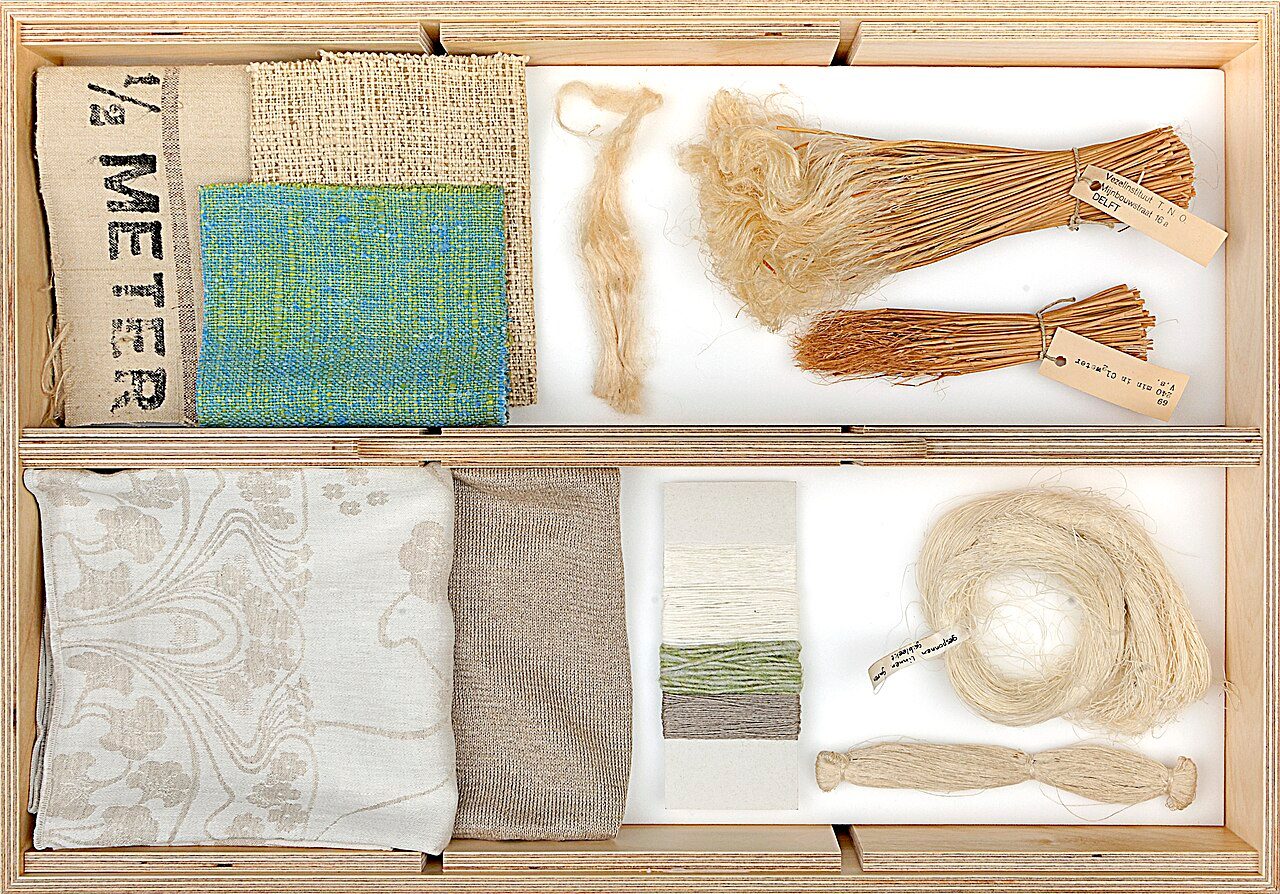
6 min read · 2 sourcesLinen () is a textile made from the bast fibers of the flax plant. Linen cloth has been produced since ancient times primarily for use in clothing and household items. Linen is very strong and absorbent and dries faster than cotton. Because of these properties, linen clothing is comfortable to wear in hot weather. Linen also has other distinctive characteristics, such as its tendency to wrinkle. Linen textiles can be woven or knitted from flax fibers. It takes significantly longer to harvest and process than cotton. It is also more difficult to weave than cotton. Linen is often marketed as a more eco-friendly alternative to synthetic fibers or water-intensive fibers like cotton. Linen textiles appear to be some of the oldest in the world; their history goes back many thousands of years. Dyed flax fibers found in a cave in the Caucasus (present-day Georgia) suggest the use of woven linen fabrics from wild flax may date back over 30,000 years. Linen was used in ancient civilizations including Mesopotamia and ancient Egypt, and linen is mentioned in the Bible. In the 18th century and beyond, the linen industry was important in the economies of several countries in Europe as well as the American colonies. Textiles in a linen weave, even when made of cotton, hemp, or other non-flax fibers, are also loosely referred to as "linen". 1
Etymology
The word linen is of West Germanic origin and cognate to the Latin name for the flax plant, linum, and the earlier Greek λινόν (linón). This word history has given rise to a number of other terms in English, most notably line, from the use of a linen (flax) thread to determine a straight line. It is also etymologically related to a number of other terms, including lining, because linen was often used to create an inner layer for clothing, and lingerie, from French, which originally denoted underwear made of linen. 1
History
Many linen fragments have been found in archeological sites, suggesting people in various parts of the world began weaving linen at least several thousand years ago. 1
Early history
The discovery of dyed flax fibers in a cave in Southern Caucasus, West Asia (modern-day country of Georgia) dated to 36,000 years ago suggests that ancient people used wild flax fibers to create linen-like fabrics from an early date. Fragments of straw, seeds, fibers, yarns, and various types of fabrics, including linen samples, dating to about 8,000 BC have been found in Swiss lake dwellings. Linen was also recovered from Qumran Cave 1 near the Dead Sea. In ancient Mesopotamia flax was domesticated and linen was produced. It was used mainly by wealthy people, such as priests. Woven flax textile fragments have been "found between infant and child" in a burial at Çatalhöyük, a large settlement dating to around 7,000 BC. The Sumerian poem of the courtship of Inanna mentions flax and linen. In ancient Egypt linen was used for mummification and for burial shrouds. White linen was also worn as clothing on a daily basis. The Tarkhan dress (dated to between 3482 and 3102 BC), considered to be among the oldest woven garments in the world, is made of linen. Plutarch wrote that the priests of Isis also wore linen because of its purity. Egyptian mummies were wrapped in linen as a symbol of light and purity and as a display of wealth. Some of these fabrics, woven from hand-spun yarns, were very fine for their day, but are coarse compared with modern linen. 1
The earliest written documentation of a linen industry comes from the Linear B tablets of Pylos, Greece. There are many references to linen throughout the Bible. 1
Middle Ages
By the Middle Ages, there was a thriving trade for German flax and linen. The trade spread throughout Germany by the 9th century and spread to Flanders and Brabant by the 11th century. The Lower Rhine was a center of linen making in the Middle Ages. Flax was cultivated and linen used for clothing in Ireland by the 11th century. Evidence suggests that flax may have been grown and sold in Southern England in the 12th and 13th centuries. Textiles, primarily linen and wool, were produced in decentralized home weaving mills. 1
Modern history
Linen continued to be valued for garments through the 16th century. Specimens of linen garments worn by historical figures have survived. For example, a linen cap worn by Emperor Charles V was carefully preserved after his death in 1558. There is a long history of the production of linen in Ireland. When the Edict of Nantes was revoked in 1685, many of the Huguenots who fled France settled in the British Isles and elsewhere. They brought improved methods for linen production with them, contributing to the growth of the linen industry in Ireland. Among them was Louis Crommelin, a leader who was appointed overseer of the royal linen manufacture of Ireland. He settled in the town of Lisburn, a major linen production center throughout history. During the Victorian era the majority of the world's linen was produced in Lisburn, which gained it the name Linenopolis. Although the linen industry was already established in Ulster, Louis Crommelin found scope for improvement in weaving. His efforts were so successful that he was appointed by the Government to develop the industry over a much wider range than the small confines of Lisburn and its surroundings. The result of his work was the establishment, under statute, of the Board of Trustees of the Linen Manufacturers of Ireland in the year 1711. Several grades were produced including coarse lockram. The Living Linen Project was set up in 1995 as an oral archive of the knowledge of the Irish linen industry, which was at that time still available within a nucleus of people who formerly worked in the industry in Ulster. The linen industry was increasingly critical in the economies of Europe in the 18th and 19th centuries. 1
The text above is adapted from the Wikipedia article “Linen”, available under the Creative Commons Attribution-ShareAlike 4.0 licence. 1
linen is textile made from spun flax fiber, according to the structured record cited below. This entry was generated automatically from that record and has not yet been reviewed by a person familiar with the tradition. 2
The source record links this tradition to 30 external registers, which can be verified through the citation. 2