The tradition & historical record
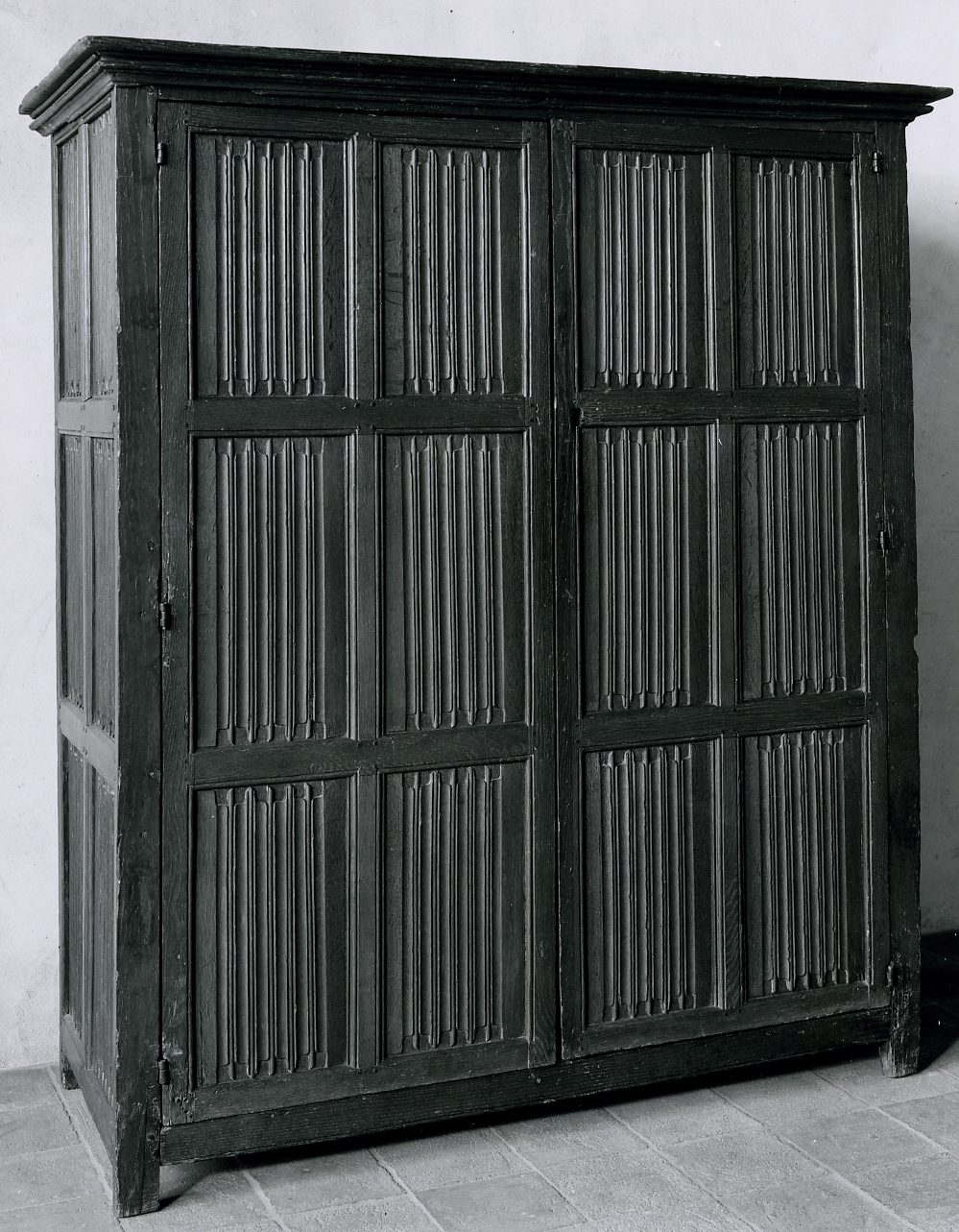
2 min read · 2 sourcesLinenfold (or linen fold) is a simple style of relief carving used to decorate wood panelling with a design "imitating window tracery", "imitating folded linen" or "stiffly imitating folded material". Originally from Flanders, the style became widespread across Northern Europe in the 14th to 16th centuries. The name was applied to the decorative style by antiquarian connoisseurs in the early 19th century; the contemporary name was apparently lignum undulatum (Latin: "wavy wood"), Nathaniel Lloyd pointed out. Wood panelling or wainscoting, almost always made from oak, became popular in Northern Europe from the 14th century, after European carpenters rediscovered the techniques to create frame and panel joinery. The framing technique was used from the 13th century onwards to clad interior walls, to form choir stalls, and to manufacture moveable and semi-moveable furniture, such as chests and presses, and even the back panels of joined chairs. Linenfold was developed as a simple technique to decorate the flat surfaces of the ubiquitous panels thus created. The simplest linenfold style is "parchemin" (also known as "parchment fold"), a low relief carving formed like a sheet of paper or piece of linen folded in half and then spread out with the sharp centered fold running vertically, and the top and bottom running out to the corners of the panel, with something of the appearance of an opened book. 1
The text above is adapted from the Wikipedia article “Linenfold”, available under the Creative Commons Attribution-ShareAlike 4.0 licence. 1
linenfold is design motif imitating vertically folded linen fabric, most often used on wooden panelling and furniture, according to the structured record cited below. This entry was generated automatically from that record and has not yet been reviewed by a person familiar with the tradition. 2
The source record links this tradition to 5 external registers, which can be verified through the citation. 2