The tradition & historical record
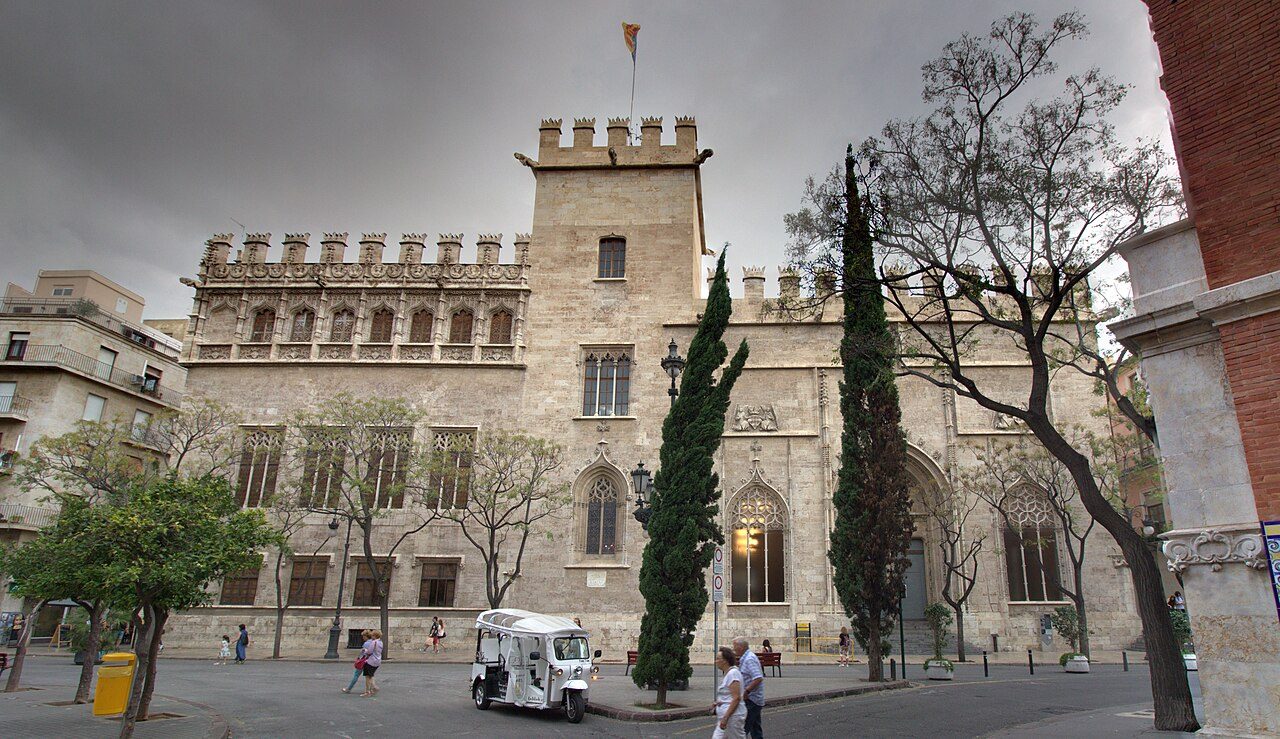
3 min read · 2 sourcesThe Lonja de la Seda [ˈloŋxa ðe la ˈseða]; or Llotja de la Seda (in Valencian) (Valencian: [ˈʎɔdʒa ðe la ˈseða]; or alternatively in English "Silk Exchange", is a late Valencian Gothic-style civil building in Valencia, Spain. It is a principal tourist attraction in the city. 1
History
Built between 1482 and 1533, the Llotja is composed of three parts (plus the Orange Garden - a walled courtyard). The main hall, Sala de Contractació (The Trading Hall), is a large lavishly decorated space supported by gorgeous twisted columns. This was the financial centre of La Lonja, where the merchants worked out contracts. The side-wing is named the Pavilion of the Consulate, and this was the seat of the Consolat del Mar - the first marine merchant tribunal to ever be formed in Spain. On the first two floors were the main rooms. The second floor had a richly decorated ceiling. These rooms still have the original furnishings. Occasionally, the Tribunal would imprison merchants for debts in the central tower of La Lonja - the third part of the structure. Behind the current building, there was an earlier one from the 14th century, which was called the Oil Exchange (Llotja de l’Oli, in Valencian, or Lonja del Aceite, in Spanish). It was used for trading – including agricultural oils. In 1348 perxal (percale) – a type of silk – was traded. Valencia's commercial prosperity reached its peak during the 15th century, and led to the construction of a new building. The design of the new Lonja of Valencia was derived from a similar structure in the Lonja of Palma de Majorca, built by the architect Guillem Sagrera in 1448. The architect in charge of the new Lonja was Pere Compte, who built the main body of the building – the Trading Hall (or Sala de Contractació in Valencian) – in only fifteen years (1483–1498). So is written in a blue band that runs along all four walls of the Trading Hall, also called "Hall of Columns". It proclaims in golden letters the following inscription: 1
Inclita domus sum annis aedificata quindecim. 1
The text above is adapted from the Wikipedia article “Lonja de la Seda”, available under the Creative Commons Attribution-ShareAlike 4.0 licence. 1
Lonja de la Seda is Late Valencian Gothic style civil building in Valencia, Spain., according to the structured record cited below. This entry was generated automatically from that record and has not yet been reviewed by a person familiar with the tradition. 2
The source record links this tradition to 14 external registers, which can be verified through the citation. 2