The tradition & historical record
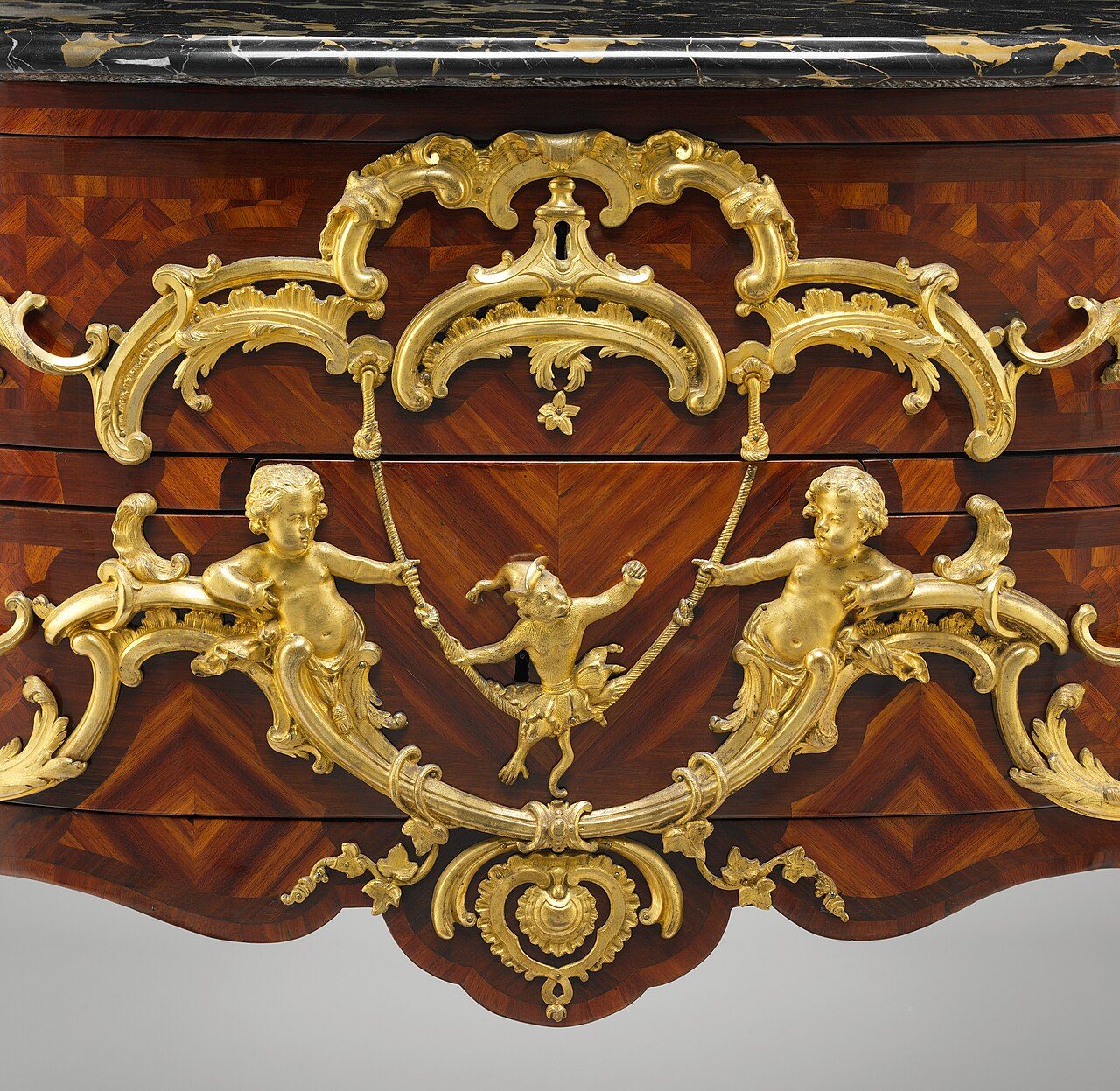
6 min read · 2 sourcesThe furniture of the Louis XV period (1715–1774) is characterized by curved forms, lightness, comfort and asymmetry; it replaced the more formal, boxlike and massive furniture of the Louis XIV style. It employed marquetry, using inlays of exotic woods of different colors, as well as ivory and mother of pearl. The style had three distinct periods. During the early years (1715–1730), called the Regency, when the King was too young to rule, furniture followed the massive, geometric Style Louis XIV style. From 1730 until about 1750, the period known as the first style, it was much more asymmetrical, ornate and exuberant, in the fashion called rocaille. From about 1750 to the King's death in 1774, a reaction set in against the excesses of the rocaille. The Louis XV style showed the influences of Neo-classicism, based on recent archaeological discoveries in Italy and Greece. It featured Roman and Greek motifs. The later furniture featured decorative elements of Chinoiserie and other exotic styles. Louis XV furniture was designed not for the vast palace state rooms of the Versailles of Louis XIV, but for the smaller, more intimate salons created by Louis XV and by his mistresses, Madame de Pompadour and Madame DuBarry. It included several new types of furniture, including the commode and the chiffonier, and many pieces, particularly chairs and tables, were designed to be moved easily rearranged or moved from room to room, depending upon the kind of function. 1
History
With the death of Louis XIV on 1 September 1715, his grandson, Louis XV, born in 1710, became King. Because of his young age, France was ruled by a Regent, Philippe of Orleans, until 1723. During this period, the style of furniture changed little from the Louis XIV period; it was massive, lavishly decorated and solemn, designed for the gigantic state halls of the new Palace of Versailles. In 1722 Louis XV moved from Paris, where he had lived with the Regent, to Versailles, began his own rule, and gradually imposed his own taste on the arts, architecture, and furniture. Louis left the exterior of Versailles and the other palaces largely unchanged, but beginning in 1738 he extensively redesigned the interiors, creating the petits apartments, or smaller apartments and salons for himself, the Queen, Marie Leszczyńska, whom he married in 1725, and later, for his primary mistresses, Madame de Pompadour and Madame du Barry. In these salons the traditional etiquette and formality of Louis XIV was abandoned. These new suites of smaller rooms were furnished in a new style that met the needs of comfort, intimacy and elegance. Beginning in about 1730, His preference was for the style called rocaille, a term which referred to an ornamental decoration resembling a stylized seashell, a style which expressed gaiety and fantasy. The ornament appeared rarely on the exteriors of the new buildings, but lavishly in the interiors, on the walls, ceilings, and furniture. The architects Robert de Cotte and Ange-Jacques Gabriel remade the interiors of the Palace of Versailles, the Palace of Fontainebleau, and the Château de Compiègne in the new style. Palatial residences with rocaille interiors soon appeared In Paris. 1
Designers
The earliest furniture designers under Louis XV during the Regency included Claude III Audran, who had been responsible for furniture design under Louis XIV; Pierre Lepautre, who in 1699 became chief designer for Louis XIV, and Gilles-Marie Oppenordt, born in Holland, who became the furniture designer for the Regent. Opponordt's designs in 1714 for the decor of the Hotel de Pomponne on Place des Victoires, featuring curving S and C forms, helped introduce the new style to Parisians. Another important figure in introducing the new style was the painter Watteau, a former pupil of Audran, who, besides his famous paintings, made arabesque designs for the woodwork of the new chateau of La Muette. In the 1730s, notable designers included the sculptor and architect Nicolas Pineau and the jeweler Juste-Aurèle Meissonnier; their work featured a greater amount of asymmetry, floral design twisting elements and counter-curves. In 1736 the carver and jewelry sculptor Jean Mondon published Premier Livre de form rocquaille et carte, the first book specifically on the style, and was among the first to include elements of Chinoiserie, notably dragons, a phoenix, and other figures. Engravings of their designs for furniture, woodwork and other decoration circulated widely throughout Europe, making the rocaille style a model for artists and craftsmen in other counties to follow. 1
Craftsmen
Louis XV furniture was created by the collaboration of complex network of designers and craftsmen. The Menuisier, made the wooden framework of the furniture, which was held together by its structure and wooden chevilles or dowels; the use of nails or glue was forbidden. The Ebenist then covered the frame and native woods with thin pieces of exotic woods, called marquetry. In the reign of Louis XIV ebony was most often used for this covering, but, beginning in 1675-80, more exotic and colorful woods were used, which could give more picturesque effects. This were sometimes placed in cubic designs, or checkerboards, or representing arabesques, floral patterns, trophies, or picturesque scenes. Originally the plaques were about a centimeter thick, but by the end of the period plaques were only slightly more than two millimeters thick. Then the furniture was completed by the bronziers, who made the handles and knobs; the doreurs who gilded them; the fondeurs, who made metalwork; the chiselers or wood sculptors, who made the decorate details, legs, and other carvings; the laqueursand vernisseurs, who applied multiple coats of lacquer or varnish. After 1751 each work was signed by the master craftsman who oversaw the work. This mark, called the Estampille, used a heated iron to mark the piece with the initials of the master. It was usually placed on the back of the rear traverse of chairs, under the marble of commodes and secretaries, and under the surrounding ceinture of tables. marks are often missing, either forgotten by the craftsman, or defaced. Given the high value of signed pieces by famous craftsmen, Counterfeit Estampilles are not unknown. 1
Chairs and sofas
Between 1769 and 1775, the furniture designer André Jacob Roubo published a series of books of engravings called L'Art du menusier, detailing the categories and styles. He divided the chairs into two categories; those with a straight back, called á la Reine, and those with a rounded back, called en cabriolet. The chairs en cabriolet were usually lighter, often had cane seats and backs, and could be moved around easily. 1
Consoles and tables
The Table en console or Console table, was designed to be placed against a wall, often in front of mirror, and held statuettes or porcelain objects. It was among the most lavishly decorated pieces of furniture of the early Louis XV period. 1
The text above is adapted from the Wikipedia article “Louis XV furniture”, available under the Creative Commons Attribution-ShareAlike 4.0 licence. 1
Louis XV furniture is style of furniture characterized by curved forms, lightness, comfort and asymmetry, according to the structured record cited below. This entry was generated automatically from that record and has not yet been reviewed by a person familiar with the tradition. 2
The source record links this tradition to 1 external register, which can be verified through the citation. 2