The tradition & historical record
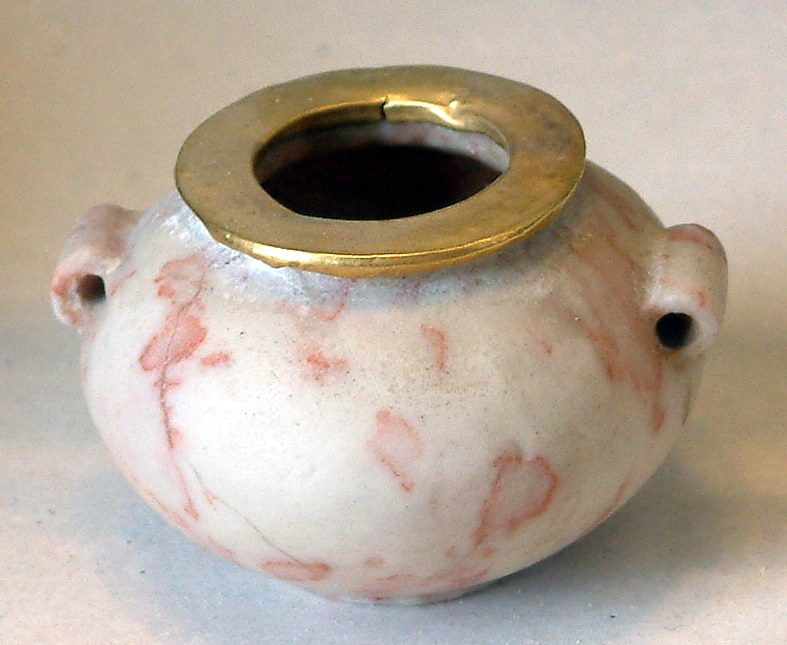
1 min read · 2 sourcesA lug is a typically flattened protuberance, a handle or extrusion located on the side of a ceramics, jug, glass, vase, or other container. They are sometimes found on prehistoric ceramics and stone containers, such as on pots from ancient Egypt, Hembury ware, claw beakers, and boar spears. A lug may also only be shaped as a lip for suspension–(no hole). In Ancient Egypt, lugs contained a hole for suspension, with 2– or 3–lugged vessels most common. In Roman times, lugs were on some types of column-sections to aid in construction. After slung by rope into position with a crane, the lugs were then masoned off. In Japan, Iga ware vases with lugs on each side are called "ears" and are an important feature. 1
The text above is adapted from the Wikipedia article “Lug (knob)”, available under the Creative Commons Attribution-ShareAlike 4.0 licence. 1
lug is typically flattened protuberance, a handle or extrusion located on the side of a ceramics, jug, glass, vase, or other container, according to the structured record cited below. This entry was generated automatically from that record and has not yet been reviewed by a person familiar with the tradition. 2
The source record links this tradition to 5 external registers, which can be verified through the citation. 2