The tradition & historical record
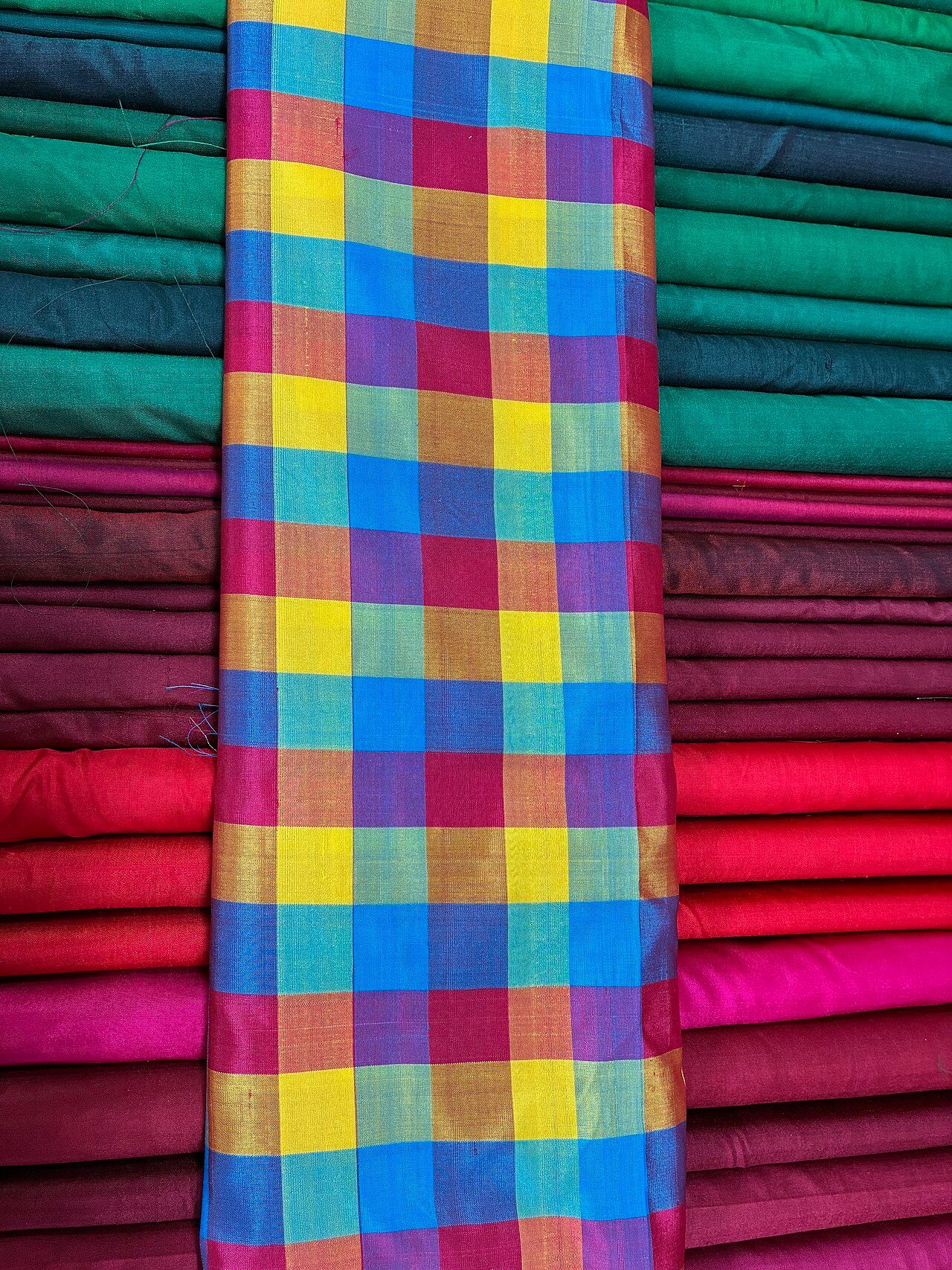
3 min read · 2 sourcesMadras is a lightweight cotton fabric with typically patterned texture and tartan design, used primarily for summer clothing such as pants, shorts, lungi, dresses, and jackets. The fabric takes its name from the former name of the city of Chennai in India. 1
Definition
Authentic Madras comes from Chennai (Madras) in Tamil Nadu. Both sides of the cloth must bear the same pattern, and it must be handwoven (evidenced by the small flaws in the fabric). Madras was most popular in the 1960s. Cotton madras is woven from a fragile, short-staple cotton fiber that cannot be combed, only carded. This results in bumps known as slubs which are thick spots in the yarn that give madras its unique texture. The cotton is hand-dyed after being spun into yarn, woven, and finished in some 200 small villages in the Madras area. 1
History
By the 16th century, madras cotton had morphed into something more elegant, printed with floral patterns or religious designs. Dutch traders arrived in India in the early 17th century to trade in the local calico cloth, followed by the British. The English East India Company sought quality textiles, finding the small fishing village of Madrasapattinam (Madras), and the company established a trading post there in the mid-17th century. The first madras material was a muslin overprinted or embroidered in elaborate patterns with vegetable dyes. To secure a reliable labor supply, the English East India Company promised a 30-year exemption from duties for Indian weavers in the area, and thus within a year nearly 400 families of weavers had settled in Madras. Undyed madras cloth became popular in Europe because it was lightweight and breathable. Cotton plaid madras reached America in 1718 as a donation to the Collegiate School of Connecticut (now known as Yale University). Sears offered the first madras shirt for sale to the American consumer in its 1897 catalog. In the Philippines, madras fabric was known as cambaya, after the state of Cambay (present-day Gujarat, India) that also exported madras fabrics. They were popular in the early 19th century for use in traditional women's skirts (saya) in the baro't saya ensemble, as well as for pants for the barong tagalog. Since they were expensive, they were copied by Chinese manufacturers as well as local industries, resulting in a lower-grade fabric that was usually used for clothing by commoners. The name "madras" was attributed to shirt maker David J. Anderson in 1844, although the material had been referred to as such much earlier. 1
National costumes
In 1994 the government of Antigua and Barbuda adopted a new national dress, which featured madras cloth, that had been designed by artist Heather Doram, as a result of a national competition. 1
The text above is adapted from the Wikipedia article “Madras (cloth)”, available under the Creative Commons Attribution-ShareAlike 4.0 licence. 1
Madras Checks Fabric is Madras checks is a colorful cotton fabric with a plaid pattern, originating in Chennai, India. It is yarn-dyed before weaving, lightweight and breathable, and mainly used for shirts and summer clothing., according to the structured record cited below. This entry was generated automatically from that record and has not yet been reviewed by a person familiar with the tradition. 2
The source record links this tradition to 1 external register, which can be verified through the citation. 2