The tradition & historical record
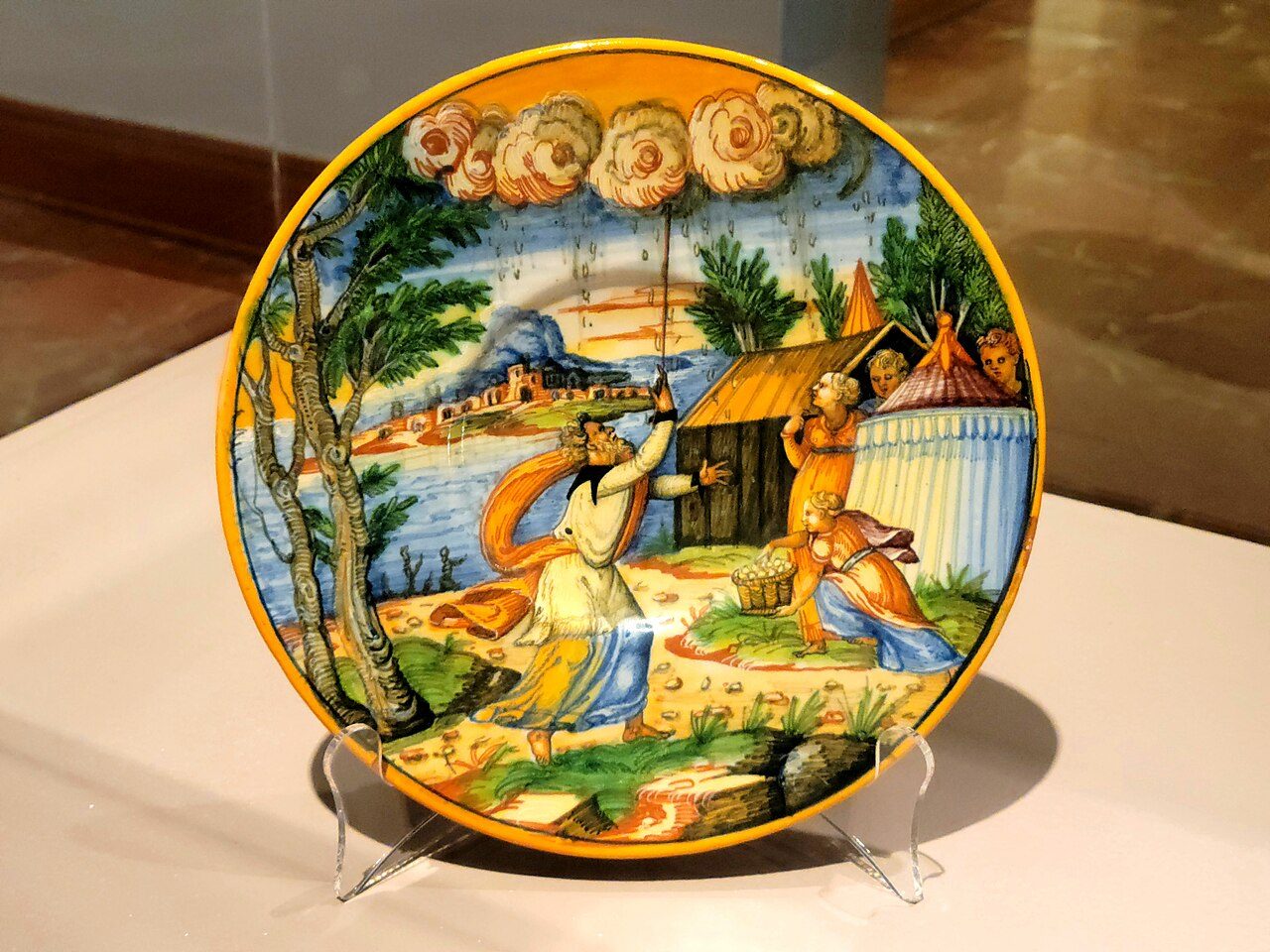
6 min read · 2 sourcesMaiolica , or majolica, is tin-glazed pottery decorated in colours on a white background. The most renowned maiolica is from the Renaissance period. These works were known as istoriato wares ("painted with stories") when depicting historical and mythical scenes. Its origins date from painted Hispano-Moresque ware from Spain, developing the styles of Al-Andalus. By the late 15th century, multiple locations were producing sophisticated pieces for a luxury market. In Italy, the production arose in the northern and central regions. In France, maiolica developed as faience, in the Netherlands and England as delftware (Delft Blue), and in Spain as talavera. In English, the spelling was anglicised to majolica (, ). 1
Name
The name is thought to come from the medieval Italian word for Mallorca, an island on the route for ships bringing Hispano-Moresque wares from Valencia to Italy. Moorish potters from Mallorca are reputed to have worked in Sicily, and it has been suggested that their wares reached the Italian mainland from Caltagirone. An alternative explanation of the name is that it comes from the Spanish term obra de Málaga, denoting "[imported] wares from Málaga", or obra de mélequa, the Spanish name for lustre. In the 15th century, the term maiolica referred solely to lustreware, including both Italian-made and Spanish imports, and tin-glaze wares were known as bianchi (whiteware). By 1875, the term was in use describing ceramics made in Italy, lustred or not, of tin-glazed earthenware. With the Spanish conquest of the Aztec Empire, tin-glazed maiolica wares came to be produced in the Valley of Mexico as early as 1540, at first in imitation of tin-glazed pottery imported from Seville. Mexican maiolica is known famously as 'Talavera'. "By a convenient extension and limitation the name may be applied to all tin-glazed ware, of whatever nationality, made in the Italian tradition ... the name faïence (or the synonymous English 'delftware') being reserved for the later wares of the 17th Century onwards, either in original styles (as in the case of the French) or, more frequently, in the Dutch-Chinese (Delftware) tradition." The term "maiolica" is sometimes applied to modern tin-glazed ware made by studio potters. 1
Tin-glazed earthenware
Tin glazing creates a white, opaque surface for painting. The colours are applied as metallic oxides or as fritted underglazes to the unfired glaze, which absorbs pigment like fresco, making errors impossible to fix but preserving the brilliant colours. Sometimes the surface is covered with a second glaze (called coperta by the Italians) that lends greater shine and brilliance to the wares. In the case of lustred wares, a further oxygen-starved firing at a lower temperature is required. Kilns required wood as well as suitable clay. Glaze was made from sand, wine lees, lead compounds, and tin compounds. Tin-glazed earthenware is frequently prone to flaking and somewhat delicate. Analysis of samples of Italian maiolica pottery from the Middle Ages has indicated that tin was not always a component of the glaze, whose chemical composition varied. The fifteenth-century wares that initiated maiolica as an art form were the product of an evolution in which medieval lead-glazed earthenwares were improved by the addition of tin oxides under the influence of Islamic wares imported through Sicily. Such archaic wares are sometimes called "proto-maiolica". During the later fourteenth century, the limited palette of colours for earthenware decorated with coloured lead glazes (no added tin oxide) was expanded from the traditional manganese purple and copper green to include cobalt blue, antimony yellow and iron-oxide orange. Sgraffito wares were also produced, in which the white tin-oxide glaze was scratched through to produce a design from the revealed body of the ware. 1
History of production
Maiolica ceramics was a chance discovery by the Arabs when attempting to create a porcelain similar to that made in China with kaolin. The first maiolica were made with a yellowish terracotta, covered with enamel composed of a layer of lead-glazed paint mixed with quartz powder. The majolicas produced by Islamic peoples, in their initial stage, were decorated with pigments composed of cobalt oxide (blue) and copper or manganese, depending on whether a green or brown colour was desired: the so-called cerámica verde y manganeso (green and manganese ceramics, in Spanish). This art of glazing first spread through North Africa and was later adopted by the Arabs of Spain in the so-called Hispano-Moresque ware. Refined production of tin-glazed earthenwares made for more than local needs was concentrated in central Italy from the later thirteenth century, especially in the contada of Florence. The Della Robbia family of Florentine sculptors also adopted the medium. The city itself declined in importance as a centre of maiolica production in the second half of the fifteenth century, perhaps because of local deforestation, and manufacture was scattered among small communes, and, after the mid-fifteenth century, at Faenza. Potters from Montelupo set up the potteries at Cafaggiolo. In 1490, twenty-three master potters of Montelupo agreed to sell the year's production to Francesco Antinori of Florence; Montelupo provided the experienced potters who were set up in 1495 at the Villa Medicea di Cafaggiolo by its Medici owners. 1
In the fifteenth century, Florentine wares spurred the production of maiolica at Arezzo and Siena. Italian maiolica reached an astonishing degree of perfection in this period. 1
Contemporary production
Maiolica continues to be produced in contemporary times in several historic Italian centres, where traditional techniques have been preserved through the work of workshops, ceramic artists, and modellers. Towns such as Faenza, Deruta, Urbino, Montelupo Fiorentino, and Caltagirone remain active in the production of tin-glazed earthenware, maintaining historical methods while adapting to modern cultural and economic contexts. The continued use of tin-based glazes and traditional firing processes demonstrates the persistence of maiolica as a living form of artistic craftsmanship in the 21st century. 1
The text above is adapted from the Wikipedia article “Maiolica”, available under the Creative Commons Attribution-ShareAlike 4.0 licence. 1
maiolica is Italian tin-glazed pottery dating from the Renaissance period and in the broad sense also other types of coloured glazed pottery, according to the structured record cited below. This entry was generated automatically from that record and has not yet been reviewed by a person familiar with the tradition. 2
The source record links this tradition to 26 external registers, which can be verified through the citation. 2