The tradition & historical record
4 min read · 2 sourcesThe Manila shawl (Spanish: mantón de Manila or mantón de seda) is an embroidered silk shawl derived from the Philippine alampay or scarf (likely from the Luzonian or Tagalog variant). They were popular in the Philippines, Latin America, and Spain during the colonial era. It was also adopted and became popular in European fashions in the 19th century. In modern times, it is still an aspect of various traditional clothing in Hispanic cultures and is particularly prominent as part of the costume (traje de flamenca) of flamenco dancers (bailaoras) and Gitana women. 1
Description
Manila shawls are square silk garments embroidered with chinoiserie-style motifs. They were typically folded in half to form a triangle and worn over the shoulders. 1
History
Traditional shawls in the Philippines were known as alampay. These were head and neck coverings worn by pre-colonial Tagalog women. Like later Manila shawls, they were square and folded in half to form a triangle when worn over the shoulders. They continued to be used during the Spanish colonial period and incorporated European design elements, including floral embroidery using techniques such as calado, sombrado, and deshilado. In addition to the native abacá fiber, they were also made from piña fiber, acquired from pineapples introduced by the Spanish. They also featured borders of lace or knotted fringes, a Spanish element which itself was acquired from the Moors. These Spanish-style shawls were known as pañuelos in Philippine Spanish, and were an integral part of the traditional traje de mestiza fashion of aristocratic Filipino women, as they brought modesty to the relatively low neckline of the traditional camisa shirts. They were also luxury goods exported via the Manila galleons to Nueva España and Europe, sometimes as gifts to royalty. 1
Silk, though attempted numerous times, never became an established industry in the Philippines. Silk fabrics remained a Chinese monopoly, prompting the Spanish Empire to restrict silk trade with China in 1535, then banning it altogether in 1718, due to worries about the depletion of silver in Spanish treasuries. However, following protests by the middlemen in Manila, the silk ban was lifted in 1734, though it required silk to pass through Manila. 1
Philippines
Mantón de Manila are still worn in the Philippines as a rarer alternative to the pañuelo. They are part of the traje de mestiza ensemble (the aristocratic version of the national dress, the baro't saya). They may also be worn with the modern terno, a unified gown version of the baro't saya. 1
Spain
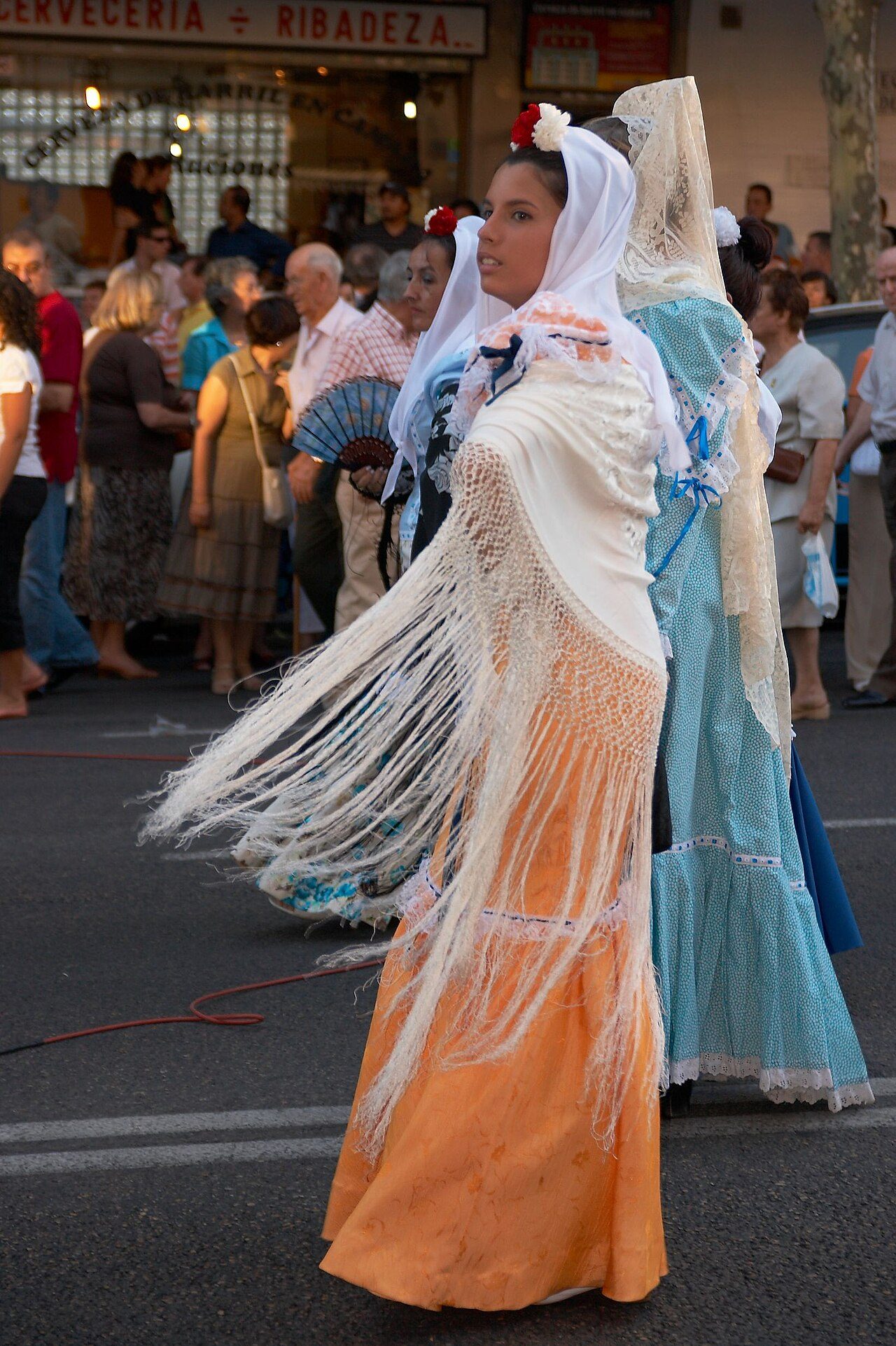
Today, the Manila shawls are still very popular in Andalusia and in Madrid for special festive occasions. Women use the shawls for dressing up and going to parties. During the Festival of the Crosses of May in Cordoba, balconies are dressed up with the shawl that add a bright look to the plazas. During the April Fair in Seville, most of the women in Gypsy dress (flamenco dress) use the shawl as an accessory. The Manila shawl is also used by female flamenco dancers during their dance, as it is a great dance enhancer and adds drama when the flamenco dancer twirls it around her body and in the air. Sara Baras and Maria Pages are two of the most best flamenco dancers in Spain and they are experts in twirling their shawls during the dance. The Manila shawl is also a traditional accessory of the manola madrileña (the chulapa attire), during the annual San Isidro Fair. Famous Spanish singers who sing the copla, a traditional form of song, also are dressed in the Manila shawl. One of the most popular singers of this genre is Isabel Pantoja, and she has a great variety of beautiful Manila shawls. The contemporary market for Manila shawls is bifurcated between mass produced imports and artisanal Andalusian productions. Low cost imports, frequently manufactured in China from synthetic materials such as polyester, typically retail between 20 and 300 euros, with pricing determined by embroidery density. In contrast, authentic Andalusian Manila shawls predominantly produced in Seville from silk are positioned as premium cultural artifacts, with prices ranging from 300 to 2,000 euros. These silk varieties remain a significant component of Andalusian cultural heritage. 1
The text above is adapted from the Wikipedia article “Manila shawl”, available under the Creative Commons Attribution-ShareAlike 4.0 licence. 1
Manila shawl is embroidered silk shawl, originally imported via the port of Manila, according to the structured record cited below. This entry was generated automatically from that record and has not yet been reviewed by a person familiar with the tradition. 2
The source record links this tradition to 4 external registers, which can be verified through the citation. 2