The tradition & historical record
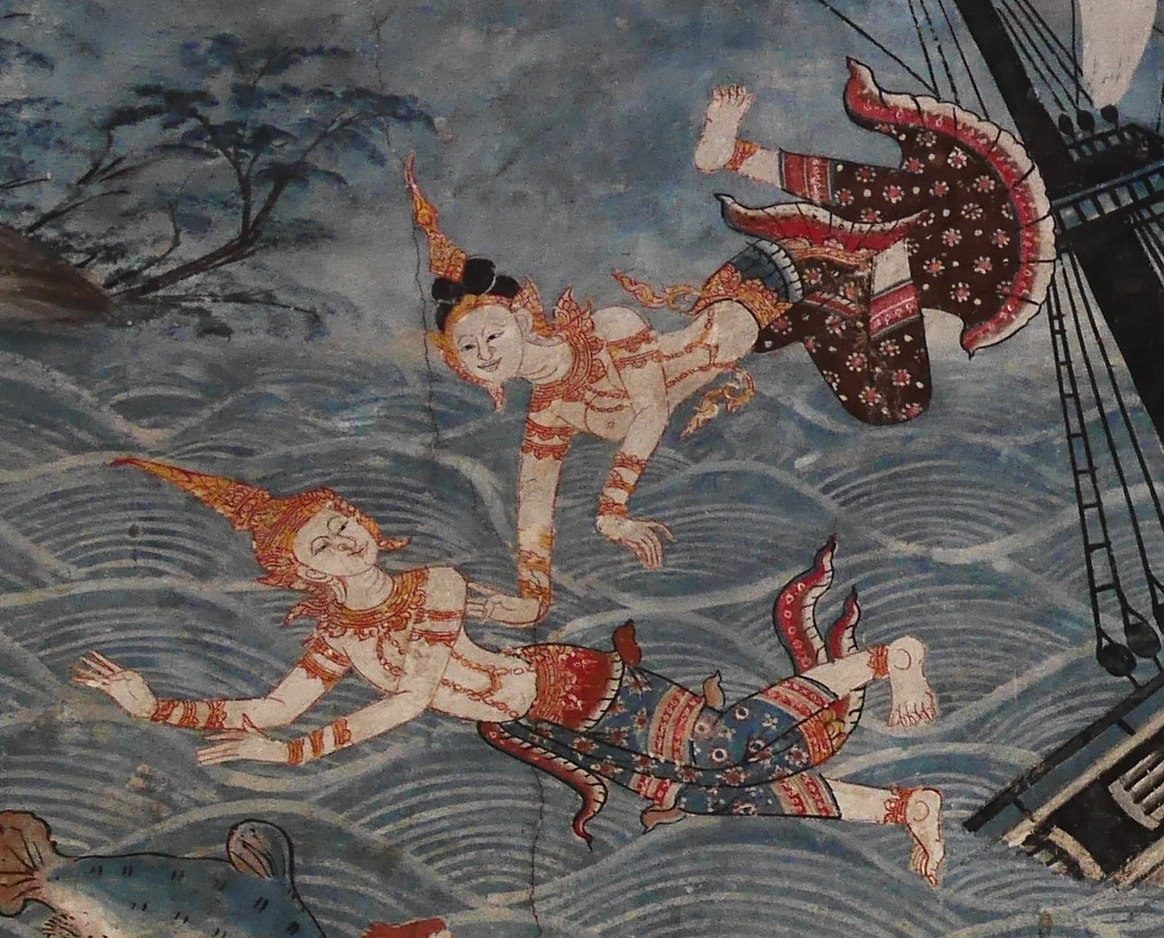
2 min read · 2 sourcesManimekhala (Pali: Maṇīmekhalā) is a goddess in the Hindu-Buddhist mythology. She is regarded as a guardian of the seas, namely the Indian Ocean and the South China Sea as part of the mythology of Southeast Asia. She was placed by Cātummahārājika to protect virtuous beings from shipwreck. She appears in several Buddhist stories including the Mahanipata Jataka (Mahajanaka Jataka), in which she rescues Prince Mahajanaka from a shipwreck. 1
Etymology
In Pali, maṇīmekhalā refers to a girdle or belt of jewels. In Southeast Asia, she is known by various indigenized appellations, including as Mani Maykhala (မဏိမေခလာ) in Burmese, as Moni Mekhala (មណីមេខលា) or Neang Mekhala (នាងមេខលា) in Khmer; as Mani Mekkhala (มณีเมขลา) in Thai. 1
In Mainland Southeast Asia
Archaeological evidence of Manimekhala in the form of reliefs has been found in Zothoke, Myanmar (near Bilin), dating to the first millennium AD. Manimekhala is seen in wat paintings across Mainland Southeast Asia depicting scenes from the Mahajanaka. In Thailand and Cambodia, she is considered a goddess of lightning and the seas. 1
Manimekhala and Ramasura
The story of Manimekhala and Ramasura is mentioned many times in the classical literature of Cambodia and Thailand. It depicts Manimekhala along with Ramasura (usually considered a depiction of Parashurama) and Arjuna. According to legend, the phenomena of lightning and thunder is produced from the flashing of Manimekhala's crystal ball and the sound of Ramasura's axe as he pursues her through the skies. 1
In India and Sri Lanka
In Tamil Nadu, India and Sri Lanka, Manimekalai is considered to be the sea goddess. In the Tamil Buddhist epic poem, the Manimekalai, she puts the eponymous heroine to sleep and takes her to the island Maṇipallavam (Nainatheevu), who later becomes a Buddhist nun. In the mythic cycle of the god Devol, when he approaches Sri Lanka and his ship founders, it is Manimekhalai, on the instructions of the god Śakra, who conjures up a stone boat to save him. 1
Dance
In the classical dance traditions of Thailand and Cambodia, sacred dramatic dances depict the story of Manimekhala and Ramasura. 1
The text above is adapted from the Wikipedia article “Manimekhala”, available under the Creative Commons Attribution-ShareAlike 4.0 licence. 1
Manimekhala is goddess of the seas, according to the structured record cited below. This entry was generated automatically from that record and has not yet been reviewed by a person familiar with the tradition. 2
The source record links this tradition to 2 external registers, which can be verified through the citation. 2