The tradition & historical record
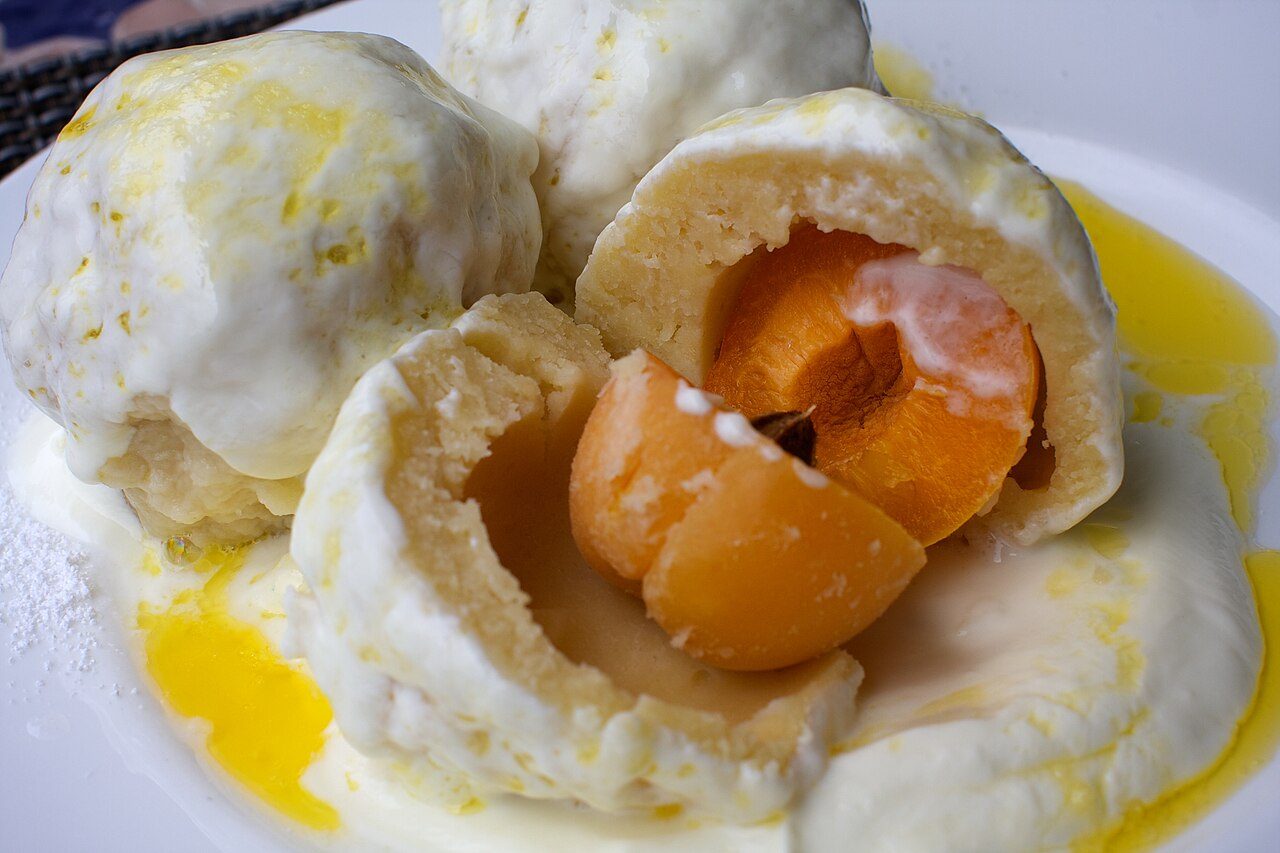
1 min read · 2 sourcesMarillenknödel (German: [maˈʁɪlənˌknøːdl̩] ; Czech: meruňkové knedlíky, lit. apricot dumplings) is a dessert common in Austrian (especially Viennese), Czech, and Hungarian cuisines, and across Central Europe. Marillen is the Austro-Bavarian term for apricots (most of the German-speaking world uses Aprikose), and this dessert is found predominantly in areas where apricot orchards are common, such as the Wachau and Vinschgau regions. Small dumplings (Knödel) are formed from dough, in which cored apricots or mirabelle plums are placed. The dumplings are then boiled in slightly salted water and covered in crispily fried bread crumbs and powdered sugar. The dough is usually made of potato (Erdapfel), though also quark (Topfen) and choux pastry are used. Ferdinand I of Austria famously ordered Marillenknödel when apricots were out of season, to which he replied, "I am the Emperor and I want dumplings!" 1
The text above is adapted from the Wikipedia article “Marillenknödel”, available under the Creative Commons Attribution-ShareAlike 4.0 licence. 1
Marillenknödel is food, according to the structured record cited below. This entry was generated automatically from that record and has not yet been reviewed by a person familiar with the tradition. 2
The source record links this tradition to 2 external registers, which can be verified through the citation. 2