The tradition & historical record
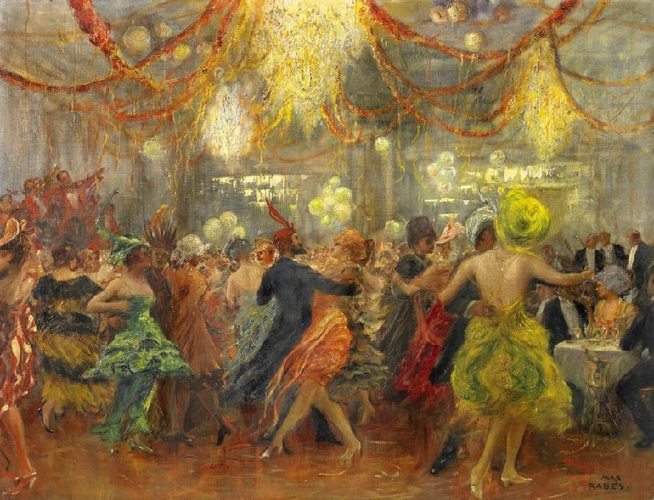
4 min read · 2 sourcesA masquerade ball (or bal masqué) is a special kind of formal ball which many participants attend in costume wearing masks. (Compare the word "masque"—a formal written and sung court pageant.) Less formal "costume parties" may be a descendant of this tradition. A masquerade ball usually encompasses music and dancing. These nighttime events are used for entertainment and celebrations. 1
History
Masquerade balls were a feature of the Carnival season in the 15th century, and involved increasingly elaborate allegorical Royal Entries, pageants, and triumphal processions celebrating marriages and other dynastic events of late medieval court life. The "Bal des Ardents" ("Burning Men's Ball") was held by Charles VI of France, and intended as a Bal des sauvages ("Wild Men's Ball"), a form of costumed ball (morisco). It took place in celebration of the marriage of a lady-in-waiting of Charles VI of France's queen in Paris on January 28, 1393. The King and five courtiers dressed as wildmen of the woods (woodwoses), with costumes of flax and pitch. If they came too close to a torch, the dancers would catch fire. (This episode may have influenced Edgar Allan Poe's short story "Hop-Frog".) Such costumed dances were a special luxury of the Ducal Court of Burgundy. Masquerade balls were extended into costumed public festivities in Italy during the 16th century Renaissance (Italian maschera). They were generally elaborate dances held for members of the upper classes, and were particularly popular in Venice. They have been associated with the tradition of the Venetian Carnival. With the fall of the Venetian Republic at the end of the 18th century, the use and tradition of masks gradually began to decline, until they disappeared altogether. 1
They became popular throughout mainland Europe in the 17th and 18th centuries, sometimes with fatal results. In 1792 Gustav III of Sweden was assassinated at a masquerade ball by the disgruntled nobleman Jacob Johan Anckarström, an event which Eugène Scribe and Daniel Auber turned into the opera Gustave III. 1
Masks
Masquerade masks were worn delicately by the prosperous class at balls. Masquerade masks had many uses including hiding one's identity, and using different colour to express one's freedom of speech and voice one's emotions and opinions without judgement. There were two types of base masquerade masks; black masks and white masks. Designs and patterns were created over the base that was chosen. The main types of masks included masks with a stick (which one could hold to keep the mask in front of their face), the head mask, the full-face mask, and the half face mask. Masquerade masks have been used in classics such as The Phantom of the Opera, Romeo and Juliet, Lone Ranger, and Gossip Girl. They are still used in many types of media today. 1
In French Guiana
In French Guiana, throughout the Carnival period, masked balls (known as paré-masked balls) take place every weekend. These are called Touloulous balls, where the Touloulous (women) are completely disguised and unrecognizable. Recently the Tololos (men) have also taken to wearing disguises. 1
In North America
Masquerade balls continue to be a part of Mardi Gras in the United States, notably Mardi Gras in Mobile, Alabama (organized by mystic societies) and Mardi Gras in New Orleans (organized by krewes). A new resurgence of masquerade balls began in the late 1990s in North America. More recently, the party atmosphere is emphasized and the formal dancing usually less prominent. In present times, masquerade masks are used for costumes during Halloween. Masquerade masks are sold in a wide range of stores in different designs, and colors. 1
Cultural references
The picturesque quality of the masquerade ball has made it a favorite topic or setting in literature. 1
Edgar Allan Poe's short story "The Masque of the Red Death" is based at a masquerade ball in which a central figure turns out to be his costume. A ball in Zürich is featured in the novel Steppenwolf by Hermann Hesse. A masquerade ball is central to the plot of Mikhail Lermontov's 1835 play Masquerade. The play was censored and never staged during Lermontov's lifetime, partly because of the implied criticism of the masquerade balls staged by the aristocratic Engelhardt family. The book, musical and most film adaptations of The Phantom of the Opera have a scene at a masked ball. 1
The text above is adapted from the Wikipedia article “Masquerade ball”, available under the Creative Commons Attribution-ShareAlike 4.0 licence. 1
masquerade ball is social event, according to the structured record cited below. This entry was generated automatically from that record and has not yet been reviewed by a person familiar with the tradition. 2
The source record links this tradition to 11 external registers, which can be verified through the citation. 2