The tradition & historical record
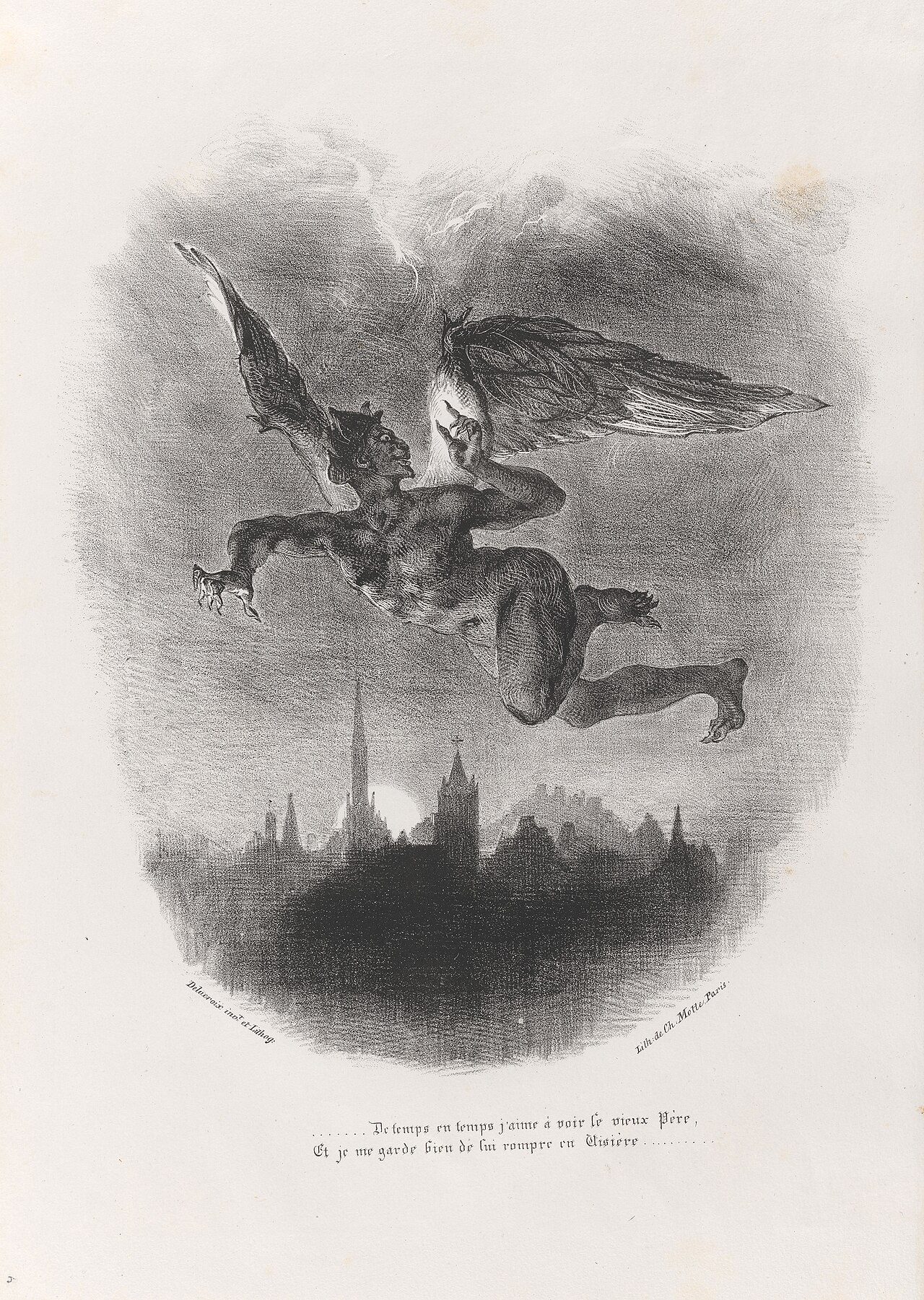
6 min read · 2 sourcesMephistopheles ( MEF-ist-OF-il-eez, German: [mefɪˈstoːfəlɛs] ), also known as Mephostophilis or Mephisto, is a demon featured in German folklore, originating as the chief devil in the Faust legend. He has since become a stock character appearing in other works of arts and popular culture. 1
Origins
Around the 15th to 17th centuries in Europe, the age of witchcraft waned, and the Devil became more of a fixture in literature until the later 18th century. Once the idea of Satan's "metaphysical existence" seemed less pressing, he became a symbol in literature representing evil characters, evil meanings, corruption, etc. Sometimes, authors had a more sympathetic depiction of Satan, which would later be called the Romantic Devil. Those who believed in pantheistic mysticism— the belief that an individual experiences a mystical union with the divine, believing that God and the universe are one—often held that the angels fell from Heaven because they loved beauty and wanted to have Heaven for themselves. This idea led to the work Faust by Johann Wolfgang von Goethe (1749–1832), in which Goethe created his version of the Devil, Mephistopheles. Goethe's Mephistopheles has been highly influential. 1
Devil vs. Mephistopheles
The Enlightenment and Romantic eras in Europe increased the variety of views of the Devil. The Devil, also known as Satan or Lucifer, is understood to be the chief adversary of God. He is the leader of the fallen angels and the chief source of evil and temptation. The Devil is the ruler of Hell and is the prince of evil spirits. In the Christian tradition, the Devil is a creation who was subject to the divine will and who misused the divine nature. Mephistopheles is seen as Hell's messenger, making him the servant of the Devil. In the Faust legend, he plays the roles of trickster, liar, cheater, and negotiator, making deals for souls, although he can also be intelligent, ironic, and charming. Mephistopheles can shapeshift into any animal, person, knight, etc., through magic and illusion. He is the opponent of beauty and freedom, and he causes the death of the individuals and works to ruin lives. 1
Etymology and name meaning
The name Mephistopheles is a corrupted Greek compound. The Greek particle of negation (μή, mē) and the Greek word for "love" or "loving" (φίλος, philos) are the first and last terms of the compound, but the middle term is more doubtful. Three possible meanings have been proposed, and three different etymologies have been offered: 1
"not loving light" or "not a friend of light"(φῶς, phōs; the old form of the name being Mephostopheles) "not loving Faust" or "not a friend of Faust" mephitic, pertaining to poisonous vapors arising from pools, caverns, and springs. The name was invented for the historical alchemist Johann Georg Faust by the anonymous author of the first Faustbuch (published 1587). However, in the Faustbuch he was called Mephostophiles, the name Mephistopheles was coined and popularised by Goethe. In The Merry Wives of Windsor (Act 1, Scene 1), Shakespeare used the name in the form of “Mephostophilus” or "Mephistophilus" (depending on which edition is referenced) as an insult between two characters with one accusing the other being a devil. Shakespeare's spelling uses the Latin version philus instead of the Greek philês. Mephistopheles became a part of magical or demonological lore through a Rennaissance humanist interpretation of Greek and Latin classical texts. In the play, Doctor Faustus (1594), created by Christopher Marlowe, Mephistopheles was written more as a fallen angel than as familiar demon. In the drama Faust, written in two parts by J.W. von Goethe, Mephistopheles appears as cold-hearted, humorous, and ironic. 1
In the Faust legend
Mephistopheles is associated with the Faust legend, based on the historical Johann Georg Faust. In the legend, Faust, an ambitious scholar, makes a deal with the Devil at the price of his soul, with Mephistopheles acting as the devil's agent. The legend has come to symbolize the consequences of what happens when the quest for empowerment and realization escape the "intellectual and moral restrictions of the Christian medieval order." In Doctor Faustus, an adaptation of the legend written by Christopher Marlowe, a psychological depth to the traditional view of the devil is added. Mephisto is not completely evil, because he laments the loss of his happiness, being shunned from God. He is introspective and clever and in this depiction very different from the comical ones in medieval times. He is aware of his role and regrets it, because he only perceives illusions instead of God. The name appears in the late-sixteenth-century Faust chapbooks – stories concerning the life of Johann Georg Faust, written by an anonymous German author. The first of these chapbooks, Historia von D. Johann Fausten (1587) is believed to be the first literary appearance of the Faust and Mephistopheles character. In the 1725 version, which Goethe read, Mephostophiles is a devil in the form of a greyfriar summoned by Faust in a wood outside Wittenberg. From the chapbooks, the name Mephistophilis entered Faustian literature. Many authors have used it, from Goethe to Christopher Marlowe. 1
Goethe's Faust
In Goethe's Faust, the role of Mephistopheles is quite complex, and Josef Kainz describes the role as one of the most significant challenges for an actor in world theater. The character constantly changes in tone throughout the play, giving the character a feeling of minor to no consistency in performance on stage. When Mephisto first meets Faust, he describes how his spirit being “Nothing” conflicts with the world’s spirit of “Something” (Part I Scene III, 1362–1366). The devil is in constant conflict with the world he is placed into, which explains the fluctuation of roles Mephisto portrays on the stage or screen. For an actor to play Goethe's Mephisto, they are called upon to embody this “Nothing” and disconnect themselves from the “Something” that makes them earthly. To achieve this characterization, actors are encouraged to be dramatic and rough in tone and gestures, contradicting traditional elements of classical theater. 1
The text above is adapted from the Wikipedia article “Mephistopheles”, available under the Creative Commons Attribution-ShareAlike 4.0 licence. 1
Mephistopheles is demon, according to the structured record cited below. This entry was generated automatically from that record and has not yet been reviewed by a person familiar with the tradition. 2
The source record links this tradition to 25 external registers, which can be verified through the citation. 2