The tradition & historical record
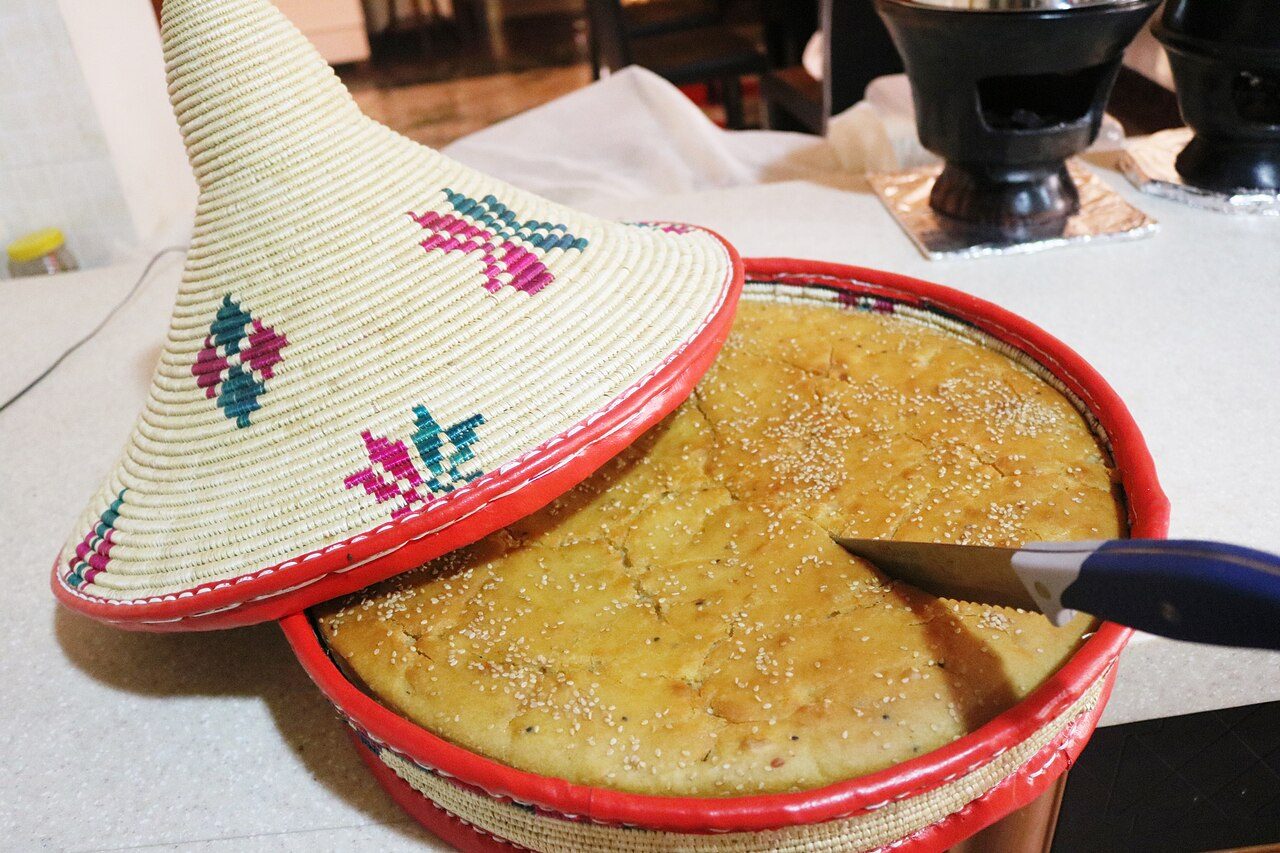
2 min read · 2 sourcesMesob (Amharic: መሶብ) or Harar mesob is a Harari basket used for storing injera, an Ethiopian and Eritrean flatbread. It is widely depicted as a cultural symbol for Ethiopia, made from locally grown and partially dyed grass and palm leaves known for strength and durability. 1
History
In a certain form mesob was identified in Abyssinia as early as the sixteenth century as reported by Portuguese explorer Francisco Álvares; however, the most prominent mesob is of Harar origin. In the mid-1970s Amharas began recruiting Harari artisans to develop a particular mesob which incorporated Abyssinian and Harari designs; this variety came to dominate mesob production in Ethiopia. 1
In popular culture
Although generally described as Ethiopian, mesob baskets belong to a larger tradition of Harari basketry. A mesob is depicted on the 10 birr note. Mesob baskets are used in funeral ceremonies to support the family of the deceased person and the baskets are widely viewed as a symbolical representation of Ethiopian and Eritrean culture and their cuisine. The Harar mesob is known to be a quality mesob with very complex and prized designs. 1
The text above is adapted from the Wikipedia article “Mesob”, available under the Creative Commons Attribution-ShareAlike 4.0 licence. 1
Mesob is basket used to store injera, according to the structured record cited below. This entry was generated automatically from that record and has not yet been reviewed by a person familiar with the tradition. 2