The tradition & historical record
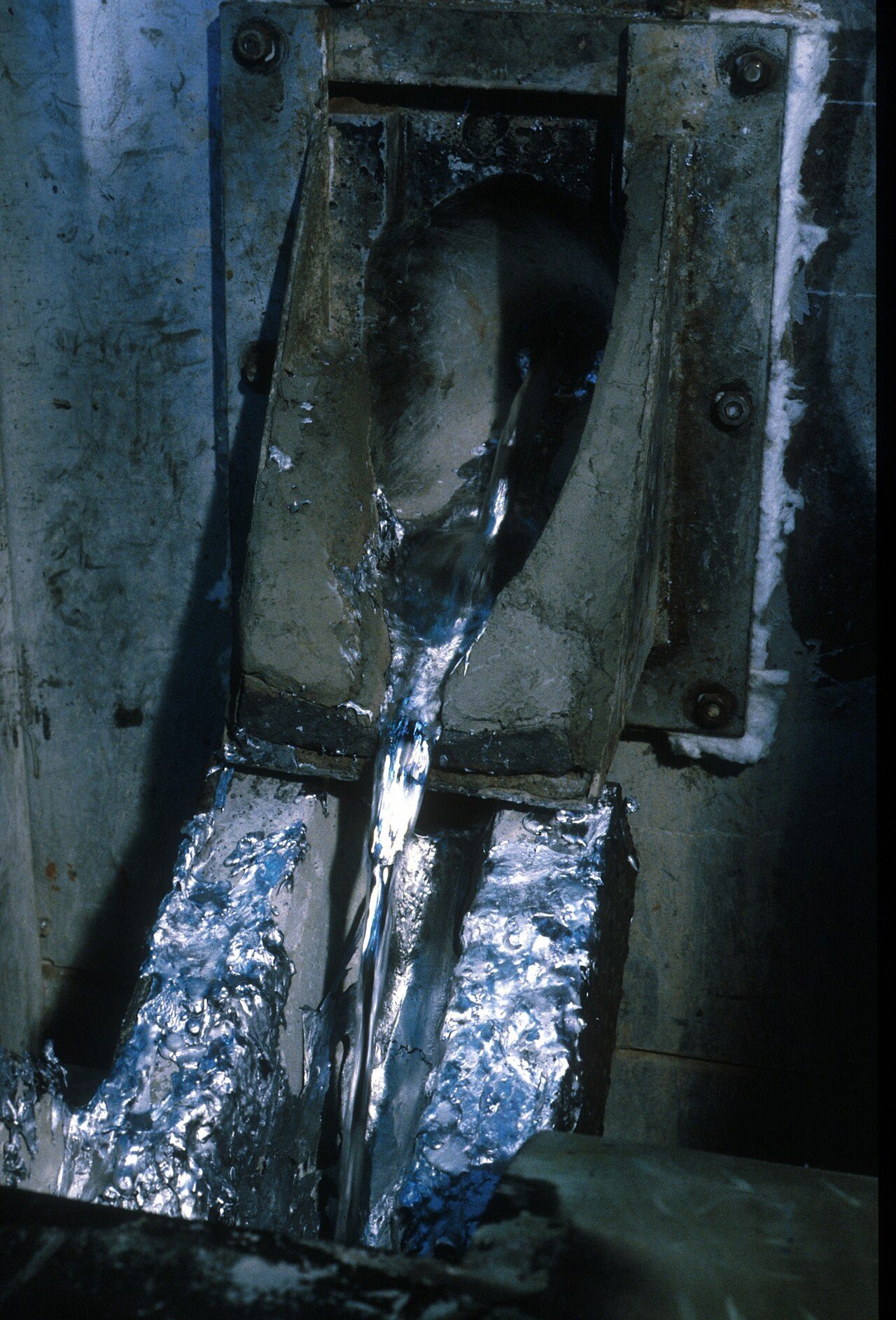
5 min read · 2 sourcesIn metalworking and jewelry making, casting is a process in which a liquid metal is delivered into a mold (usually by a crucible) that contains a negative impression (i.e., a three-dimensional negative image) of the intended shape. The metal is poured into the mold through a hollow channel called a sprue. The metal and mold are then cooled, and the metal part (the casting) is extracted. Casting is most often used for making complex shapes that would be difficult or uneconomical to make by other methods. Casting processes have been known for thousands of years, and have been widely used for sculpture (especially in bronze), jewelry in precious metals, and weapons and tools. Highly engineered castings are found in 90 percent of durable goods, including cars, trucks, aerospace, trains, mining and construction equipment, oil wells, appliances, pipes, hydrants, wind turbines, nuclear plants, medical devices, defense products, toys, and more. Traditional techniques include lost-wax casting (which may be further divided into centrifugal casting, and vacuum assist direct pour casting), plaster mold casting and sand casting. The modern casting process is subdivided into two main categories: expendable and non-expendable casting. It is further broken down by the mold material, such as sand or metal, and pouring method, such as gravity, vacuum, or low pressure. 1
Expendable mold casting
Expendable mold casting is a generic classification that includes sand, plastic, shell, plaster, and investment (lost-wax technique) moldings. This method of mold casting involves the use of temporary, non-reusable molds. 1
Sand casting
Sand casting is one of the most popular and simplest types of casting, and has been used for centuries. Sand casting allows for smaller batches than permanent mold casting and at a very reasonable cost. Not only does this method allow manufacturers to create products at a low cost, but there are other benefits to sand casting, such as very small-size operations. The process allows for castings small enough fit in the palm of one's hand to those large enough for a train car bed (one casting can create the entire bed for one rail car). Sand casting also allows most metals to be cast depending on the type of sand used for the molds. 1
Sand casting requires a lead time of days, or even weeks sometimes, for production at high output rates (1–20 pieces/hr-mold) and is unsurpassed for large-part production. Green (moist) sand, which is black in color, has almost no part weight limit, whereas dry sand has a practical part mass limit of 2,300–2,700 kg (5,100–6,000 lb). Minimum part weight ranges from 0.075–0.1 kg (0.17–0.22 lb). The sand is bonded using clays, chemical binders, or polymerized oils (such as motor oil). Sand can be recycled many times in most operations and requires little maintenance. 1
Loam molding
Loam molding has been used to produce large symmetrical objects such as cannon and church bells. Loam is a mixture of clay and sand with straw or dung. A model of the produced is formed in a friable material (the chemise). The mold is formed around this chemise by covering it with loam. This is then baked (fired) and the chemise removed. The mold is then stood upright in a pit in front of the furnace for the molten metal to be poured. Afterwards the mold is broken off. Molds can thus only be used once, so that other methods are preferred for most purposes. 1
Plaster mold casting
Plaster casting is similar to sand casting except that plaster of paris is used instead of sand as a mold material. Generally, the form takes less than a week to prepare, after which a production rate of 1–10 units/hr-mold is achieved, with items as massive as 45 kg (99 lb) and as small as 30 g (1 oz) with very good surface finish and close tolerances. Plaster casting is an inexpensive alternative to other molding processes for complex parts due to the low cost of the plaster and its ability to produce near net shape castings. The biggest disadvantage is that it can only be used with low melting point non-ferrous materials, such as aluminium, copper, magnesium, and zinc. 1
Shell molding
Shell molding is similar to sand casting, but the molding cavity is formed by a hardened "shell" of sand instead of a flask filled with sand. The sand used is finer than sand casting sand and is mixed with a resin so that it can be heated by the pattern and hardened into a shell around the pattern. Because of the resin and finer sand, it gives a much finer surface finish. The process is easily automated and more precise than sand casting. Common metals that are cast include cast iron, aluminium, magnesium, and copper alloys. This process is ideal for complex items that are small to medium-sized. 1
The text above is adapted from the Wikipedia article “Metal casting”, available under the Creative Commons Attribution-ShareAlike 4.0 licence. 1
metal casting is pouring liquid metal into a mold, according to the structured record cited below. This entry was generated automatically from that record and has not yet been reviewed by a person familiar with the tradition. 2
The source record links this tradition to 17 external registers, which can be verified through the citation. 2