The tradition & historical record
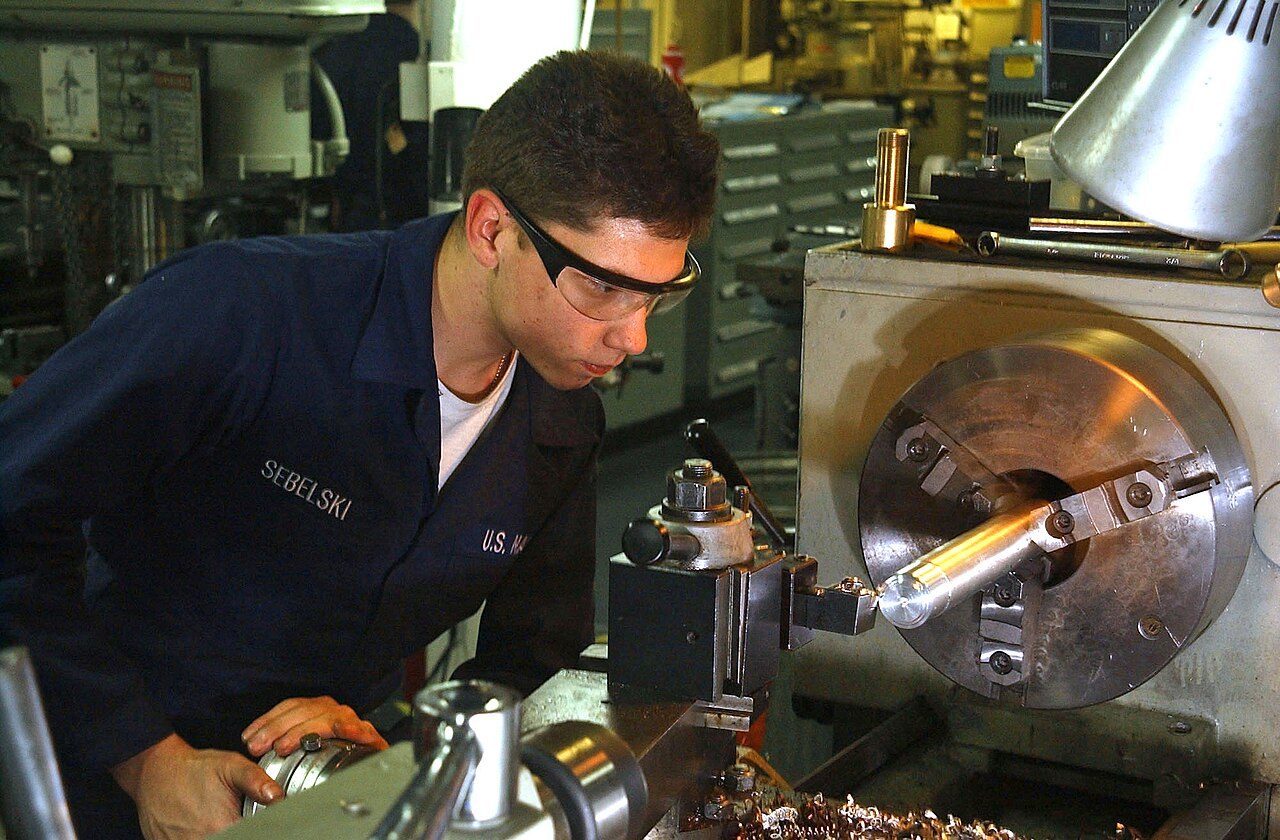
6 min read · 2 sourcesMetalworking is the process of shaping and reshaping metals in order to create useful objects, parts, assemblies, and large scale structures. As a term, it covers a wide and diverse range of processes, skills, and tools for producing objects on every scale: from huge ships, buildings, and bridges, down to precise engine parts and delicate jewellery. The historical roots of metalworking predate recorded history; its use spans cultures, civilizations and millennia. It has evolved from shaping soft, native metals like gold with simple hand tools, through the smelting of ores and hot forging of harder metals like iron, up to and including highly technical modern processes such as machining and welding. It has been used as an industry, a driver of trade, individual hobbies, and in the creation of art; it can be regarded as both a science and a craft. Modern metalworking processes, though diverse and specialized, can be categorized into one of three broad areas known as forming, cutting, or joining processes. Modern metalworking workshops, typically known as machine shops, hold a wide variety of specialized or general-use machine tools capable of creating highly precise, useful products. Many simpler metalworking techniques, such as blacksmithing, are no longer economically competitive on a large scale in developed countries; some of them are still in use in less developed countries, for artisanal or hobby work, or for historical reenactment. 1
Prehistory
The oldest archaeological evidence of copper mining and working was the discovery of a copper pendant in northern Iraq from 8,700 BCE. The earliest substantiated and dated evidence of metalworking in the Americas was the processing of copper in Wisconsin, near Lake Michigan. Copper was hammered until it became brittle, then heated so it could be worked further. In America, this technology is dated to about 4000–5000 BCE. The oldest gold artifacts in the world come from the Bulgarian Varna Necropolis and date from 4450 BCE. Not all metal required fire to obtain it or work it. Isaac Asimov speculated that gold was the "first metal". His reasoning being, that, by its chemistry, it is found in nature as nuggets of pure gold. In other words, gold, as rare as it is, is sometimes found in nature as a native metal. Some metals can also be found in meteors. Almost all other metals are found in ores, a mineral-bearing rock, that require heat or some other process to liberate the metal. Another feature of gold is that it is workable as it is found, meaning that no technology beyond a stone hammer and anvil is needed to work the metal. This is a result of gold's properties of malleability and ductility. The earliest tools were stone, bone, wood, and sinew, all of which sufficed to work gold. At some unknown time, the process of liberating metals from rock by heat became known, and rocks rich in copper, tin, and lead came into demand. These ores were mined wherever they were recognized. Remnants of such ancient mines have been found all over Southwestern Asia. Metalworking was being carried out by the South Asian inhabitants of Mehrgarh between 7000 and 3300 BCE. 1
History
By the historical periods of the Pharaohs in Egypt, the Vedic kings in India, the Tribes of Israel, and the Maya civilization in North America, among other ancient populations, humans had begun to attach value to precious metals over and above any available functional metal tools and weapons. Gold or silver trinkets became luxury goods in antiquity. In some cases rules for ownership, distribution, and trade were created, enforced, and agreed upon by various peoples. By the above periods metalworkers were very skilled at creating objects of adornment, religious artifacts, and trade instruments of precious metals (non-ferrous), as well as weaponry (usually of ferrous metals and/or alloys). Sophisticated techniques were practiced by artisans, blacksmiths, atharvavedic practitioners, alchemists, and other categories of metalworkers around the globe. For example, the granulation technique occurs in numerous ancient cultures before the historic record shows people traveled to far regions to share this process. Metalsmiths today still use this and many other ancient techniques. Over time, metal objects became more common and ever more complex. The need to further acquire and work metals grew in importance. Skills related to extracting metal ores from the earth began to evolve, and metalsmiths became more knowledgeable. Metalsmiths became important members of society. Fates and economies of entire civilizations were greatly affected by the availability of metals and metalsmiths. The metalworker depends on the extraction of precious metals to make jewelry, build more efficient electronics, and for industrial and technological applications from construction to shipping containers to rail, and air transport. 1
General processes
Metalworking generally is divided into three categories: forming, cutting, and joining. Most metal cutting is done by high speed steel tools or carbide tools. Each of these categories contains various processes. Prior to most operations, the metal must be marked out and/or measured, depending on the desired finished product. Marking out (also known as layout) is the process of transferring a design or pattern to a workpiece and is the first step in the handcraft of metalworking. It is performed in many industries or hobbies, although in industry, the repetition eliminates the need to mark out every individual piece. In the metal trades area, marking out consists of transferring the engineer's plan to the workpiece in preparation for the next step, machining or manufacture. Calipers are hand tools designed to precisely measure the distance between two points. Most calipers have two sets of flat, parallel edges used for inner or outer diameter measurements. These calipers can be accurate to within one-thousandth of an inch (25.4 μm). Different types of calipers have different mechanisms for displaying the distance measured. Where larger objects need to be measured with less precision, a tape measure is often used. 1
Casting
Casting achieves a specific form by pouring molten metal into a mold and allowing it to cool, with no mechanical force. Forms of casting include: 1
Investment casting (called lost wax casting in art) Centrifugal casting Die casting Sand casting Shell casting Spin casting 1
Forming processes
These forming processes modify metal or workpiece by deforming the object, that is, without removing any material . Forming is done with a system of mechanical forces and, especially for bulk metal forming, with heat. 1
The text above is adapted from the Wikipedia article “Metalworking”, available under the Creative Commons Attribution-ShareAlike 4.0 licence. 1
metalworking is the craft or profession of making, assembling, and repairing metal structures, components, and objects, such as doors, gates, frames, and locks, according to the structured record cited below. This entry was generated automatically from that record and has not yet been reviewed by a person familiar with the tradition. 2
The source record links this tradition to 32 external registers, which can be verified through the citation. 2