The tradition & historical record
6 min read · 2 sourcesCeramics in Mexico date back thousands of years before the Pre-Columbian period, when ceramic arts and pottery crafts developed with the first advanced civilizations and cultures of Mesoamerica. With one exception, pre-Hispanic wares were not glazed, but rather burnished and painted with colored fine clay slips. The potter's wheel was unknown as well; pieces were shaped by molding, coiling and other methods. After the Spanish Invasion and Conquest, European techniques and designs were introduced, nearly wiping out the native traditions. Indigenous traditions survive in a few pottery items such as comals, and the addition of indigenous design elements into mostly European motifs. Today, ceramics are still produced from traditional items such as dishes, kitchen utensils to new items such as sculptures and folk art. Despite the fame of the prior, the bulk of ceramic items produced in the country are floor and wall tiles along with bathroom fixtures. Mexico has a number of well-known artisan ceramic traditions, most of which are in the center and south of the country. Examples are the Talavera of Puebla, the majolica of Guanajuato, the various wares of the Guadalajara area, and barro negro of Oaxaca. A more recent addition is the production of Mata Ortiz or Pakimé wares in Chihuahua. 1
History
The making of earthenware began to replace stone utensils in Mexico around the Purrón period (2300–1500 BCE). Many of these first ceramics were gourd or squash shaped, a carry over from when these vegetables were used to carry liquids. This earthenware developed into a pottery tradition that mostly used clay thinly coated with a fine clay slip. Most clays in Mexico need temper to regulate water absorption, with one significant exception being the clay used in the Fine Orangeware of the Gulf Coast. 1
Pre-Hispanic vessels were shaped by modeling, coiling or molding. Except for a proto wheel used by the Zapotecs, the potter's wheel was unknown until the Spanish Conquest. Simple pinch pots or coiled pots were usually made by the family, with larger molded pieces made by craftsmen. The earliest molded pieces were simply clay pressed against a pre-existing bowl, but double molds and slip casting came to be used to make bowls with relief decorations. Famous examples of this type exist in Tlaxcala and Puebla states. Many figurines were also made using molds. Sometimes vessels were made with several molded pieces with the upper part finished by coiling. With one exception, pre-Hispanic pieces were not glazed, but rather the finish was made with a slip made of extremely fine clay. This slip often had mineral pigments added for color, which could be added before and/or after firing. Firing was done in an open fire or in a pit. Figurines were often done in the family hearth. Pots were fired in a heap placed on the ground or in a pit and covered with wood. The use of this method for firing most often led to incompletely fired pots, with the notable exception of Fine Orangeware. The only glazed ware from Mesoamerica is called Plumbate. 1
Pottery production
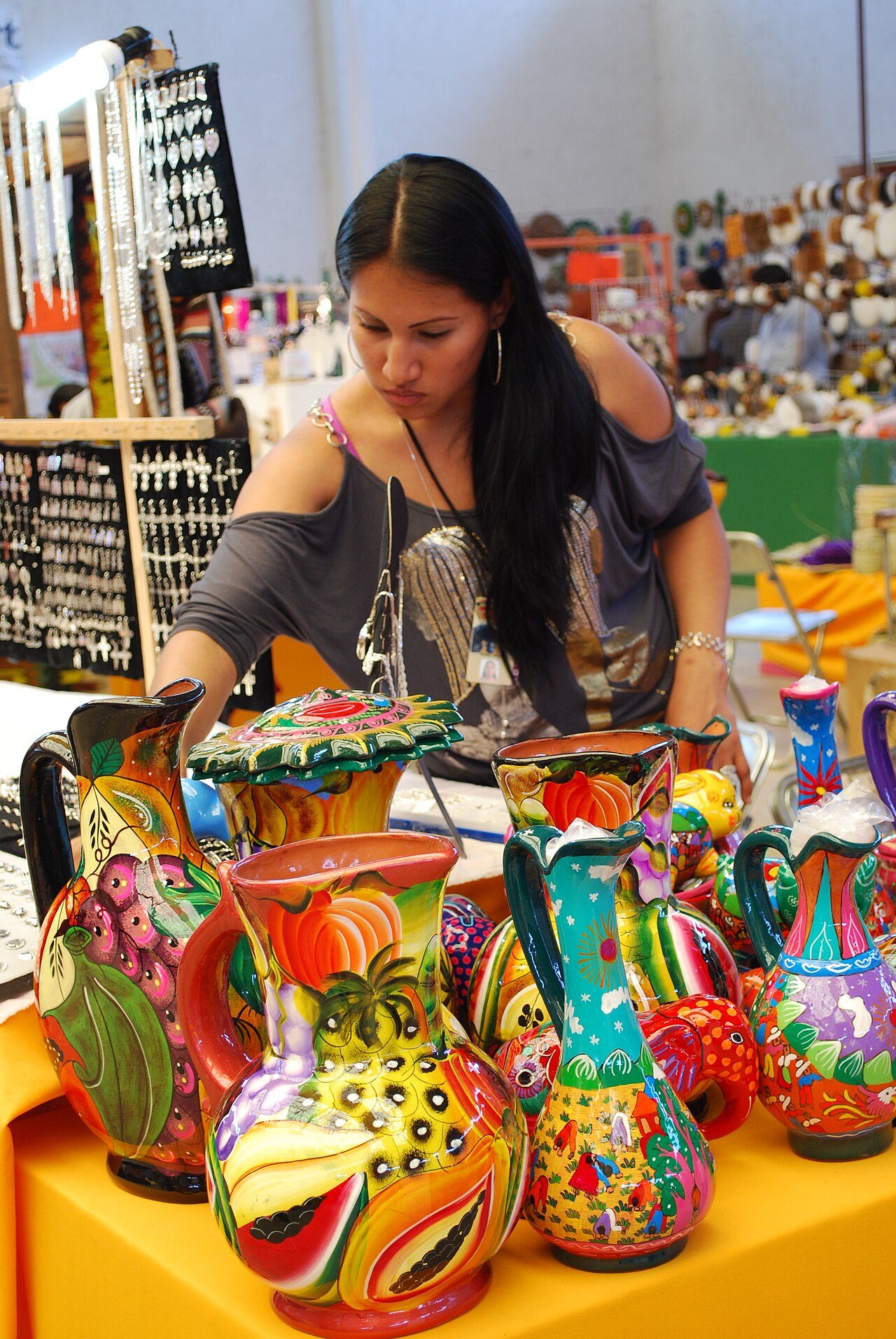
Ceramics is the most practiced craft in Mexico. Shapes and function of the pieces vary from simple flat comals, used for making tortillas to elaborate sculptures called Trees of Life. The most basic forms, such as comals, cazuelas (a type of stew pot), simple bowls and other cooking and storage ware are still based on native designs and forms. Decorative ceramics and figures are almost completely dominated by European traditions, especially in central Mexico. In some cases, there is a blending of traditions, mostly in decorative designs where indigenous elements are combined with European elements. A relatively new tradition in ceramics is called "folk art". These pieces are mostly decorative, such as figures, tiles; and fine wares such as casseroles, teacups, and dishes. These are produced for the Mexican upper class, the international market, and to some extent, tourists. Folk art production is encouraged by government at all levels, with a large number of artisans now signing at least their best pieces. While this segment of the market keeps ties with the past, it is also sensitive to fashion trends as well. This leads to experimentation with new decorative elements and the disappearance of those that do not sell. 1
Imperfections in pieces are less tolerated in local Mexican markets than in some foreign markets. The reason for this is that mechanized production of near perfect copies is still a relatively new phenomenon, so the imperfections that show something was made by hand do not have the "charm" they might in more industrialized countries. Most potters work in family workshops, with everyone participating in the process. 1
Oaxaca
In many parts of Oaxaca state, both functional and decorative pottery and ceramic pieces are produced. Most potters live in the central valleys region of Oaxaca, where some of the best known traditions are. The most traditional potters live in small rural villages such as San Marcos Tlapazola and Vista Hermosa Tonaltepec. The latter is a Zapotec village of about a dozen families, who make very simple, yet light, earth colored cookware and utensils. Most of this pottery is sold to other local villages, but a small regional and international market for this type of pottery has appeared as well. Many Oaxacan villages, like San Marcos Tlapazola, are nearly devoid of working age men, as most have left to work in the United States. Many of the women have begun to make pottery to supplement what their husbands send. Much of the work is sold in the larger towns or cities either by the potters individually or together as a cooperative. The cooperative at Tlapazola sells and exhibits their ware in markets and contests in various parts of Mexico. Most clay is from a local source and generally that source is kept secret. Despite their price, as low as thirty pesos for a pot, much of traditional indigenous cookware is being replaced by mass-produced pots and pans in the rural areas. Fewer young people are taking up the trade, mostly because many want to live in the city. Much of pottery making in Oaxaca has switched from functional ware to decorative wares that appeal to foreign markets and tourists. Some Oaxacan artisans draw on the native use of bright colors and magic realism present in modern works such as those by Rufino Tamayo and Francisco Toledo. Others show a world view that mixes native beliefs and traditions with the Catholic faith. 1
Jalisco
A wide variety of traditional low temperature and higher temperature firing techniques are used in the Guadalajara area, to produce ware from cheap objects to artistic productions. The two main pottery producing municipalities are Tonalá and Tlaquepaque. These two municipalities produce several different types of pottery and ceramics, principally "bruñido", "bandera", "canelo", "petate", "betus" and high-fire/stoneware. The best known of these styles is bruñido, which translates to burnished. 1
Guanajuato
Shortly after the Conquest, European s… 1
The text above is adapted from the Wikipedia article “Mexican ceramics”, available under the Creative Commons Attribution-ShareAlike 4.0 licence. 1
Mexican ceramics is recorded in open cultural data. The structured record cited below does not describe the practice, and this entry has not yet been reviewed by a person familiar with the tradition. 2