The tradition & historical record
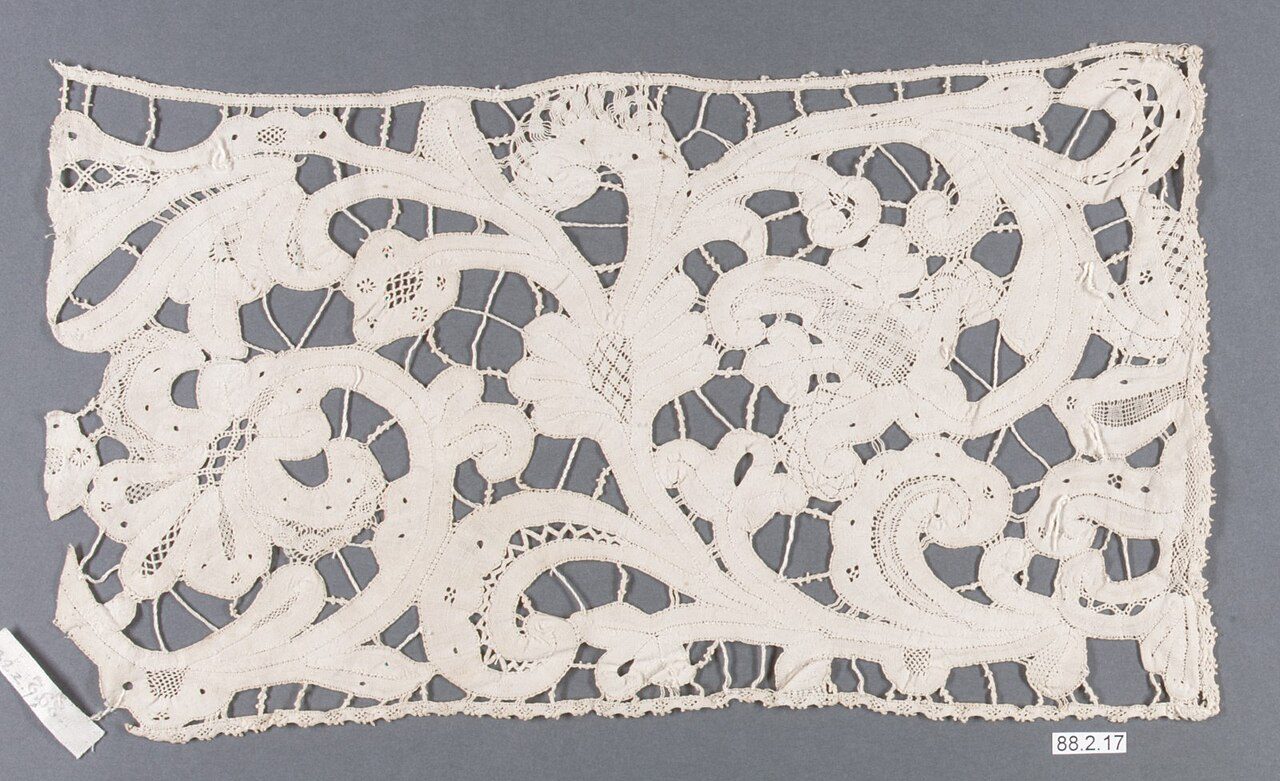
2 min read · 2 sourcesMilanese bobbin lace is a textile used as a fashion accessory or a decorative trim, first becoming popular in the 17th and 18th centuries in Milan. Lacemaking was an important economic activity in Northern Italy, besides touching on social status matters as well as being a culturally significant art form. The earliest versions of the lace consisted of the tape (or braid) mostly filling the space. Typical characteristics of Milanese bobbin lace are scrolls made with curving clothwork tapes and floral motifs, and sometimes also consisting of human or animal figures. Sometimes needle lace techniques were combined with the bobbin lace pieces to create the final product. The lace eventually was made in parts, and joined by bars or filled in with mesh grounds between existing pattern motifs. Novel ornamental features such as small beads affixed for eyes are sometimes found, as well as folded tallies and wheatears that add dimension to figures or edges. Use of the lace in Ecclesiastical settings such as altar cloths and vestments likely represented Church support of the regional lacemaking. Examples of chalice cloths display the lace as edging, for example. Additionally, larger flounces might relate Biblical tales such as the example of the Old Testament story of Joseph, with many human, animal, and even astronomical motifs. 1
The text above is adapted from the Wikipedia article “Milanese bobbin lace”, available under the Creative Commons Attribution-ShareAlike 4.0 licence. 1
Milanese bobbin lace is style of historical bobbin lace developed in Milan, according to the structured record cited below. This entry was generated automatically from that record and has not yet been reviewed by a person familiar with the tradition. 2