The tradition & historical record
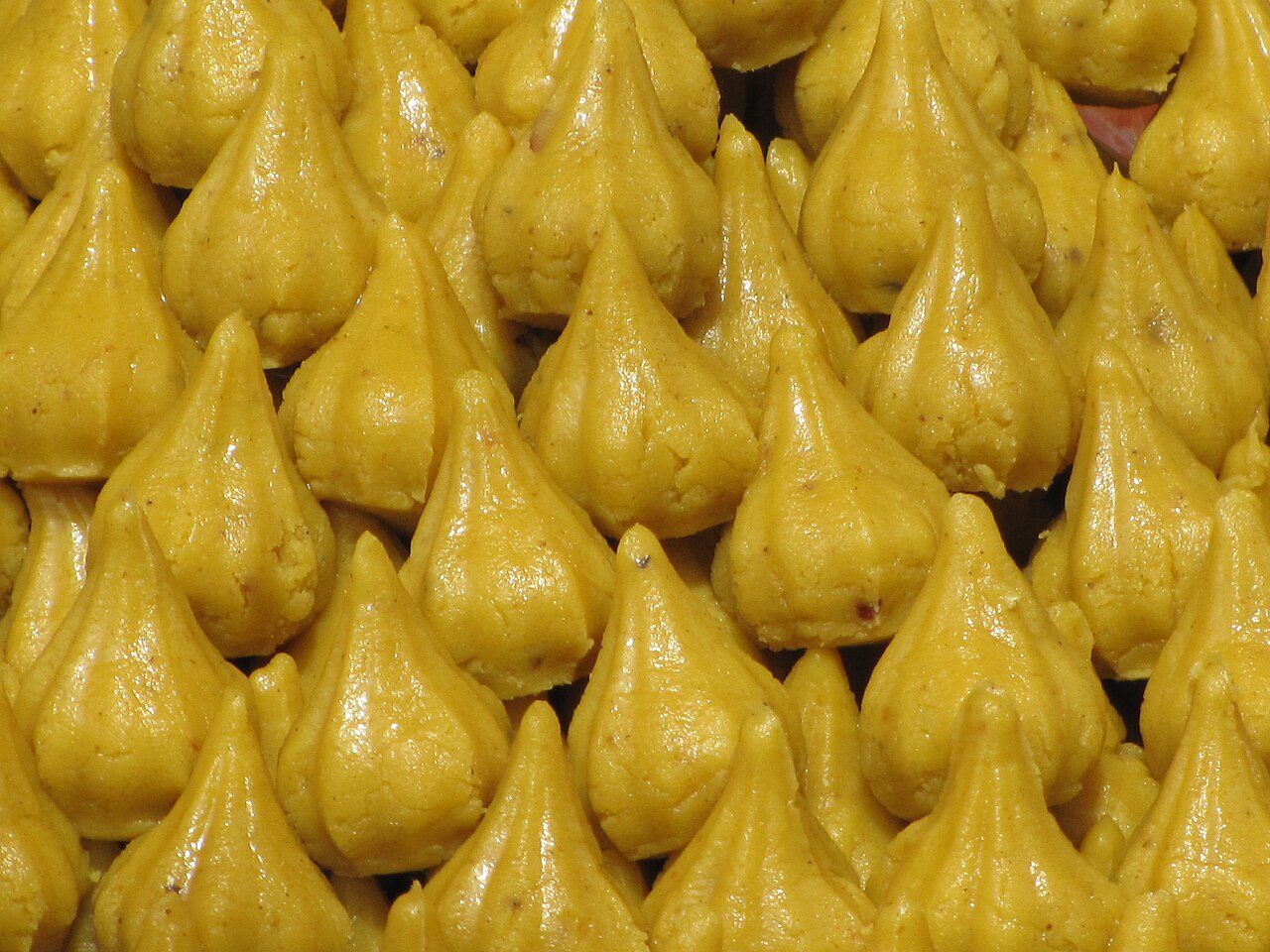
3 min read · 2 sourcesModak (Marathi: मोदक), modakam (Sanskrit: मोदकम्), kolukattai or modaka (Kannada: ಮೋದಕ), also referred to as jilledukayalu in Telugu (జిల్లేడుకాయలు) is an Indian sweet dish popular in many Indian states and cultures. According to Hindu and Buddhist beliefs, it is one of the favourite dishes of Ganesha and the Buddha and is therefore used in prayers. The sweet filling inside a modak consists of freshly grated coconut and jaggery, while the outer soft shell is made from rice flour or wheat flour mixed with khowa or maida flour. There are two distinct varieties of Modak, fried and steamed. The steamed version (called Ukadiche Modak) is often served hot with ghee. 1
History
According to culinary historian Darra Goldstein, modaka is an ancient sweet that dates back to around 200 BCE. Early mentions of modaka are found in Ayurveda, Ramayana and Mahabharata where it is described as a dumpling confectionery with sweet stuffing. Sangam literature similarly mentions modakas as rice dumplings filled with sweet stuffing that were also sold by street vendors in the ancient city of Madurai. The medieval Manasollasa culinary text explains that modakas, as prepared with rice flour and a sweet stuffing with aromatic spices such as cardamom and camphor, were called Varsopalagolakas because they looked like hailstones. Fried modakas are made with wheat flour, while steamed modakas are made from rice flour. In both Hindu and Buddhist contexts, the word 'modaka' is explained as being derived from the words "Moda" and "Pramoda", meaning joy, happiness, delight; modakas being gifts that Ganesha, the god of good luck, and the Buddha bestows on their devotees. The shape of modaka is also said to represent a bag of money. Thus, it is also used to symbolize wealth, and all the sweet pleasures that wealth gives to humans. In a Tantric context, its shape is seen to symbolise an upward pointing triangle, which in Tantric art represents Shiva, i.e. spiritual reality, in contrast to the downward pointing triangle, which represents Shakti, material reality. 1
Hinduism
Modak is considered to be the favourite sweet of the Hindu deity, Ganesha. From it, he gets the moniker modakapriya (one who likes modak) in Sanskrit. The word modak means "small part of bliss" and it symbolises spiritual knowledge. During Ganesh Chaturthi, the puja usually concludes with an offering of 21 or 101 modaks to Ganesha. Modaks made with rice flour shells are often preferred for this purpose, although wheat shell versions are also used. Local businesses outside Ganesh temples across India usually sell pre-packed/ready-made versions of modaks. 1
Buddhism
Modak is also considered to be the favourite sweet of Gautama Buddha. During Buddha's Birthday, modaks are offered to the Buddha. 1
India and Sri Lanka
In India and Sri Lanka, modak has a lot of ingrained historical and cultural significance, with variations all over the two countries. It is known by different names by different linguistic communities, such as modak in Marathi (मोदक), nevri in Konkani (नेवरी), mandaa in Odia (ମଣ୍ଡା), kadubu in Kannada (ಕಡುಬು), kozhukattai in Tamil (கொழுக்கட்டை), kozhukatta in Malayalam (കൊഴുക്കട്ട), jilledukayalu in Telugu (జిల్లేడుకాయలు) and lavariya in Sinhala (ලවාරියා). 1
Cambodia
In Cambodia, num kom (នំគម) is similar to modak. However, the wrapping is much different as num kom does not use rice flour. 1
The text above is adapted from the Wikipedia article “Modak”, available under the Creative Commons Attribution-ShareAlike 4.0 licence. 1
modak is Indian food, according to the structured record cited below. This entry was generated automatically from that record and has not yet been reviewed by a person familiar with the tradition. 2
The source record links this tradition to 3 external registers, which can be verified through the citation. 2