The tradition & historical record
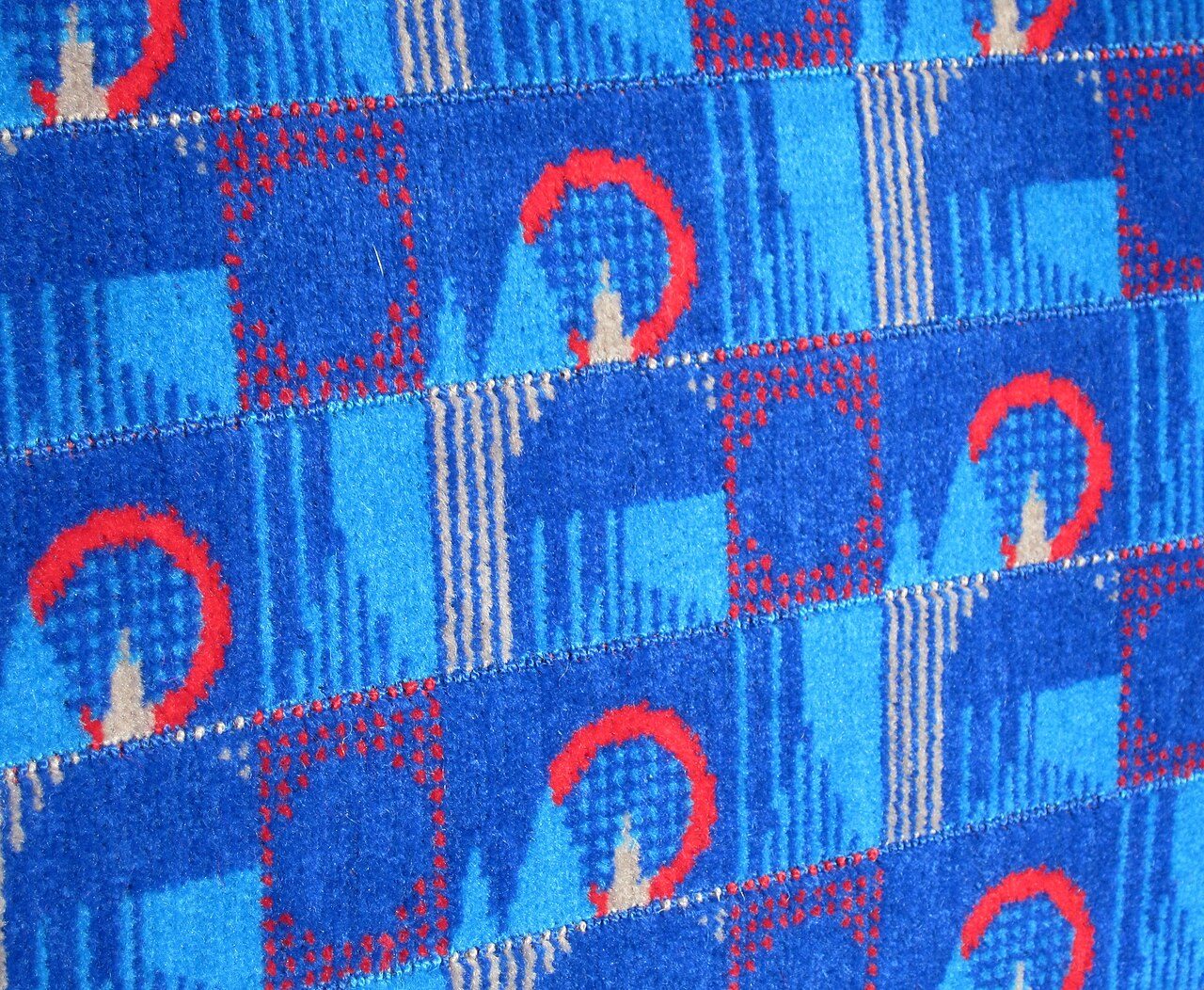
2 min read · 2 sourcesMoquette is a type of woven pile fabric in which cut or uncut threads form a short dense cut or loop pile. The pile's upright fibres form a flexible, durable, non-rigid surface with a distinctive velvet-like feel. Traditional moquette weave fabrics are made today from a wool nylon face with an interwoven cotton backing, and are ideally suited to applications such as public transport. 1
Origin
Moquette originated in France, where it was woven by hand. Named after the French word for carpet, its standard width was a Flemish ell of 27 inches. There were two finishes: moquette velouté, which had a cut pile like English Wilton carpet, and moquette bouclé, which had an uncut pile like Brussels carpet. It is still woven in Yorkshire using traditional techniques. 1
Carpeting
As of 1946, a moquette carpet was on display in the banquet room of Mount Vernon, allegedly a gift from Louis XVI to George Washington. It depicted the American coat of arms in the center and had a green background with gold stars on it. It is 210 inches (530 cm) by 186 inches (470 cm) and constructed of wool, linen, and cotton. As of February 2023, it was listed as not on display at Mount Vernon under the ownership of the Mount Vernon Ladies' Association. 1
Clothing
Moquette is occasionally used in clothing. In 1932–33, the United States Army Air Corps B-2 leather flight jackets were lined with moquette which was not as bulky as sheepskin. 1
Public transport upholstery
Due to its durability, moquette is used as public transit seat coverings in many countries. Because it was relatively cheap to produce and readily available, the fabric began to be used in London in the 1920s. It is still used a century later, particularly to upholster the seats of London Underground's Tube trains. Such seat covers may be designed with intricate bright colored patterns to conceal wear. These may reflect local culture and history, such as "Barman" or "Landmark" designed in 2010 for London public transportation seat coverings that depict local landmarks. 1
The text above is adapted from the Wikipedia article “Moquette”, available under the Creative Commons Attribution-ShareAlike 4.0 licence. 1
moquette is woven pile fabric with cut or uncut pile, according to the structured record cited below. This entry was generated automatically from that record and has not yet been reviewed by a person familiar with the tradition. 2
The source record links this tradition to 3 external registers, which can be verified through the citation. 2