The tradition & historical record
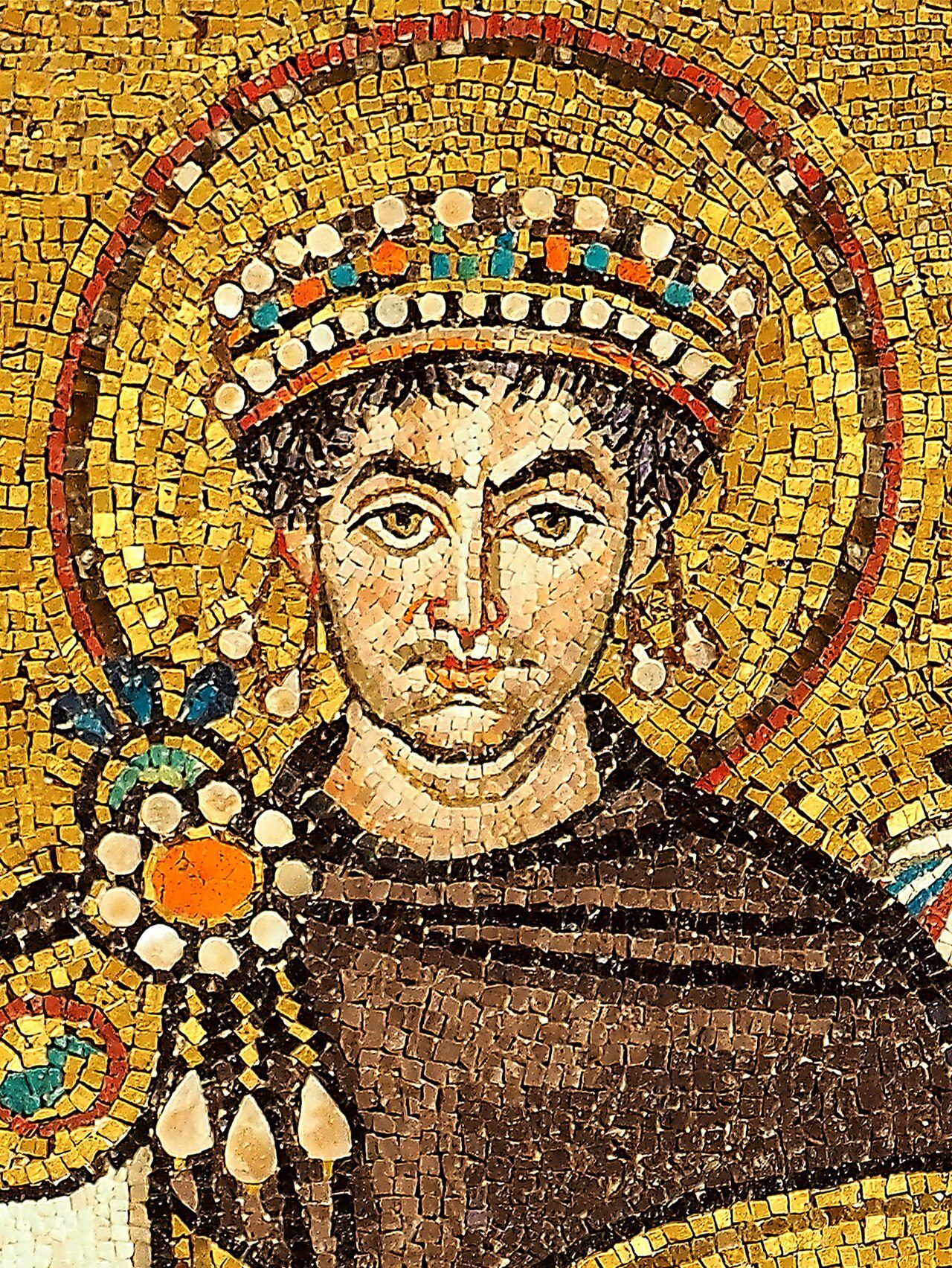
6 min read · 2 sourcesA mosaic () is a pattern or image made of small regular or irregular pieces of colored stone, glass or ceramic, held in place by plaster/mortar, and covering a surface. Mosaics are often used as floor and wall decoration, and were particularly popular in the Ancient Roman world. Mosaic today includes murals and pavements, but also artwork, hobby crafts, industrial and construction forms. Mosaics have a long history, starting in Mesopotamia in the 3rd millennium BC. Pebble mosaics were made in Tiryns in Mycenean Greece; mosaics with patterns and pictures became widespread in classical times, both in Ancient Greece and Ancient Rome. Early Christian basilicas from the 4th century onwards were decorated with wall and ceiling mosaics. Mosaic art flourished in the Byzantine Empire from the 6th to the 15th centuries; that tradition was adopted by the Norman Kingdom of Sicily in the 12th century, by the eastern-influenced Republic of Venice, and among the Rus. Mosaic fell out of fashion in the Renaissance, though artists like Raphael continued to practice the old technique. Roman and Byzantine influence led Jewish artists to decorate 5th and 6th century synagogues in the Middle East with floor mosaics. Figurative mosaic, but mostly without human figures, was widely used on religious buildings and palaces in early Islamic art, including Islam's first great religious building, the Dome of the Rock in Jerusalem, and the Umayyad Mosque in Damascus. 1
Mosaic materials
Traditional mosaics are made of small cubes of roughly square pieces of stone or hand made glass enamel of different colours, known as tesserae. Some of the earliest mosaics were made of natural pebbles, originally used to reinforce floors. Mosaic skinning (covering objects with mosaic glass) is done with thin enameled glass and opaque stained glass. Modern mosaic art is made from any material in any size ranging from carved stone, bottle caps, and found objects. 1
History
The earliest known examples of mosaics made of different materials were found at a temple building in Abra, Mesopotamia, and are dated to the second half of 3rd millennium BC. They consist of pieces of colored stones, shells and ivory. Excavations at Susa and Chogha Zanbil show evidence of the first glazed tiles, dating from around 1500 BC. However, mosaic patterns were not used until the times of Sassanid Empire and Roman influence. 1
Greek and Roman
Bronze Age pebble mosaics have been found at Tiryns; mosaics of the 4th century BC are found in the Macedonian palace-city of Aegae, and the 4th-century BC mosaic of The Beauty of Durrës discovered in Durrës, Albania in 1916, is an early figural example; the Greek figural style was mostly formed in the 3rd century BC. Mythological subjects, or scenes of hunting or other pursuits of the wealthy, were popular as the centrepieces of a larger geometric design, with strongly emphasized borders. Pliny the Elder mentions the artist Sosus of Pergamon by name, describing his mosaics of the food left on a floor after a feast and of a group of doves drinking from a bowl. Both of these themes were widely copied. Greek figural mosaics could have been copied or adapted paintings, a far more prestigious artform, and the style was enthusiastically adopted by the Romans so that large floor mosaics enriched the floors of Hellenistic villas and Roman dwellings from Britain to Dura-Europos. Most recorded names of Roman mosaic workers are Greek, suggesting they dominated high quality work across the empire; no doubt most ordinary craftsmen were slaves. Splendid mosaic floors are found in Roman villas across North Africa, in places such as Carthage, and can still be seen in the extensive collection in Bardo Museum in Tunis, Tunisia. There were two main techniques in Greco-Roman mosaic: opus vermiculatum used tiny tesserae, typically cubes of 4 millimeters or less, and was produced in workshops in relatively small panels which were transported to the site glued to some temporary support. The tiny tesserae allowed very fine detail, and an approach to the illusionism of painting. 1
Zoroastrian Persia
Tilework had been known there for about two thousand years when cultural exchange between Sassanid Empire and Romans influenced Persian artists to create mosaic patterns. Shapur I decorated his palace with tile compositions depicting dancers, musicians, courtesans, etc. This was the only significant example of figurative Persian mosaic, which became prohibited after Arab conquest and arrival of Islam. 1
Early Christian art
With the building of Christian basilicas in the late 4th century, wall and ceiling mosaics were adopted for Christian uses. The earliest examples of Christian basilicas have not survived, but the mosaics of Santa Constanza and Santa Pudenziana, both from the 4th century, still exist. The winemaking putti in the ambulatory of Santa Constanza still follow the classical tradition in that they represent the feast of Bacchus, which symbolizes transformation or change, and are thus appropriate for a mausoleum, the original function of this building. In another great Constantinian basilica, the Church of the Nativity in Bethlehem the original mosaic floor with typical Roman geometric motifs is partially preserved. The so-called Tomb of the Julii, near the crypt beneath St Peter's Basilica, is a 4th-century vaulted tomb with wall and ceiling mosaics that are given Christian interpretations. The Rotunda of Galerius in Thessaloniki, converted into a Christian church during the course of the 4th century, was embellished with very high artistic quality mosaics. Only fragments survive of the original decoration, especially a band depicting saints with hands raised in prayer, in front of complex architectural fantasies. In the following century Ravenna, the capital of the Western Roman Empire, became the center of late Roman mosaic art (see details in Ravenna section). Milan also served as the capital of the western empire in the 4th century. In the St Aquilinus Chapel of the Basilica of San Lorenzo, mosaics executed in the late 4th and early 5th centuries depict Christ with the Apostles and the Abduction of Elijah; these mosaics are outstanding for their bright colors, naturalism and adherence to the classical canons of order and proportion. 1
The text above is adapted from the Wikipedia article “Mosaic”, available under the Creative Commons Attribution-ShareAlike 4.0 licence. 1
mosaic is image or writing made from an assemblage of small pieces of colored glass, stone, or other materials, according to the structured record cited below. This entry was generated automatically from that record and has not yet been reviewed by a person familiar with the tradition. 2
The source record links this tradition to 69 external registers, which can be verified through the citation. 2