The tradition & historical record
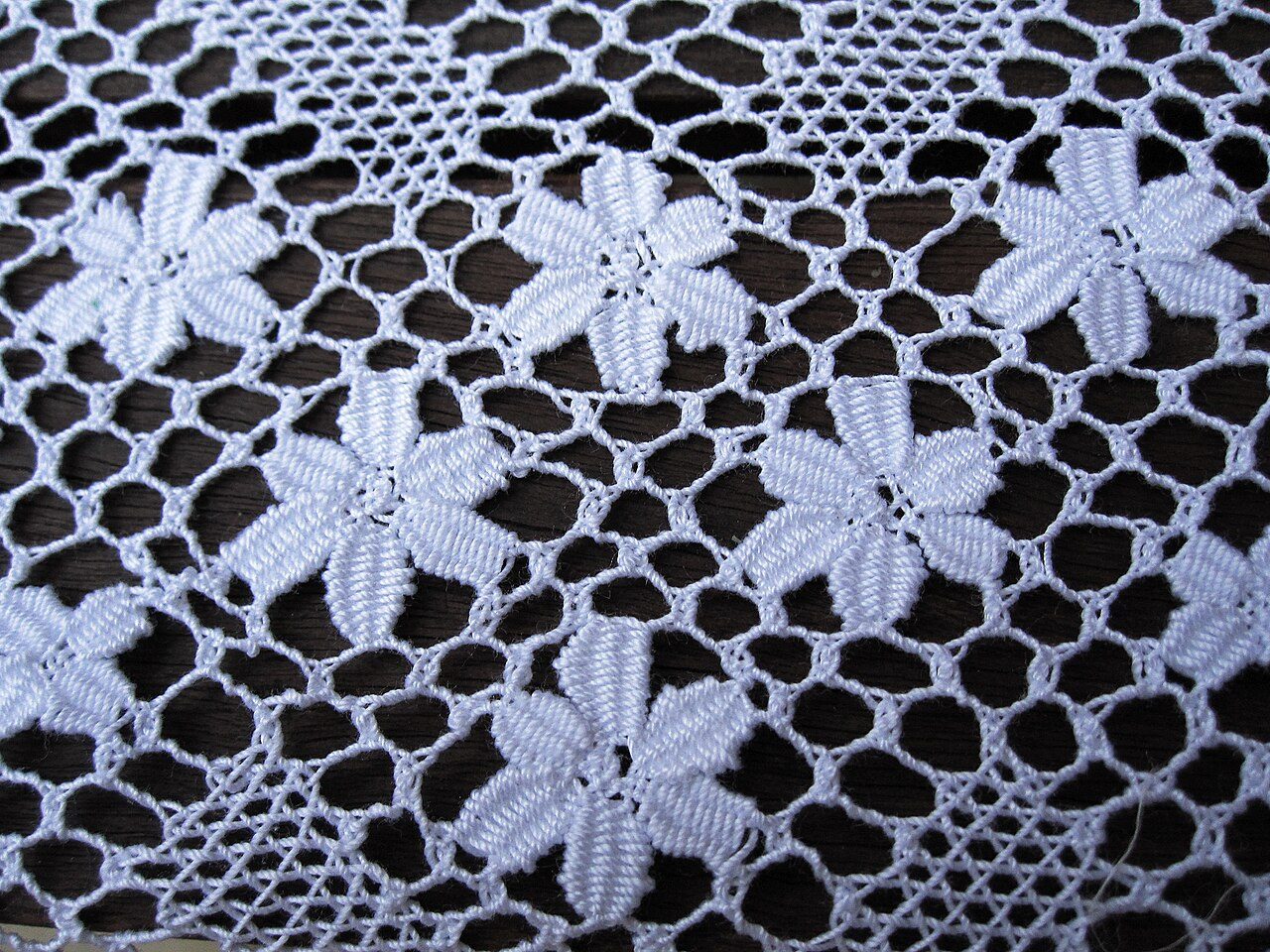
2 min read · 2 sourcesMundillo is a craft of handmade bobbin lace that is cultivated and honored on the island of Puerto Rico and Panama. 1
Description
The term 'mundillo' means 'little world', referring to the cylindrical pillow on which the lace maker ('Mundillista') weaves intricate designs. The decorative lace is created using wooden bobbins about the diameter of a pencil, which are wound with thread that is twisted and crossed to form a pattern. Depending on the pattern, as few as two dozen or as many as several hundred bobbins may be used. In addition to its use as edging and borders on tablecloths and handkerchiefs, and for traditional shirt collars and trim, mundillo is also used to decorate items for special occasions, such as wedding dresses, baptismal gowns, and the cloths used to adorn religious icons. It is said that it was once common for lovers to exchange mundillo lace with romantic inscriptions. Bobbin lace was brought to Puerto Rico from Spain, where it had thrived in major commercial markets as well as a cottage industry in Galicia, Castilla, and Catalonia. In Spain, lace is called encaje, because it was worked on separately and then joined to material (the Spanish word for "join" is encajar). In the 20th century, lacemaking became an important economic activity by women of the island. Prior to WWII, lace provided income for many families to supplement the wages of men who had traveled off-island for work. A revival of the tradition in the 1960s and 1970s engaged a new generation of lacemakers. 1
The text above is adapted from the Wikipedia article “Mundillo”, available under the Creative Commons Attribution-ShareAlike 4.0 licence. 1
Mundillo is handmade bobbin lace, according to the structured record cited below. This entry was generated automatically from that record and has not yet been reviewed by a person familiar with the tradition. 2
The source record links this tradition to 1 external register, which can be verified through the citation. 2