The tradition & historical record
3 min read · 2 sourcesIn Mesoamerican folk religion, a nagual or nahual (both from the Nahuatl word nāhualli [naˈwaːlːi]) is a human being who has the power to shapeshift into their tonal animal counterpart. Nagualism is tied to the belief one can access power and spiritual insight by connecting with the tonal animal within. 1
Etymology
The word nagual derives from the Nahuatl word nāhualli [naˈwaːlːi], an indigenous religious practitioner, identified by the Spanish as a 'magician'. In English, the word is often translated as "transforming witch," but translations without negative connotations include "transforming trickster," "shape shifter," "pure spirit," or "pure being." 1
Beliefs
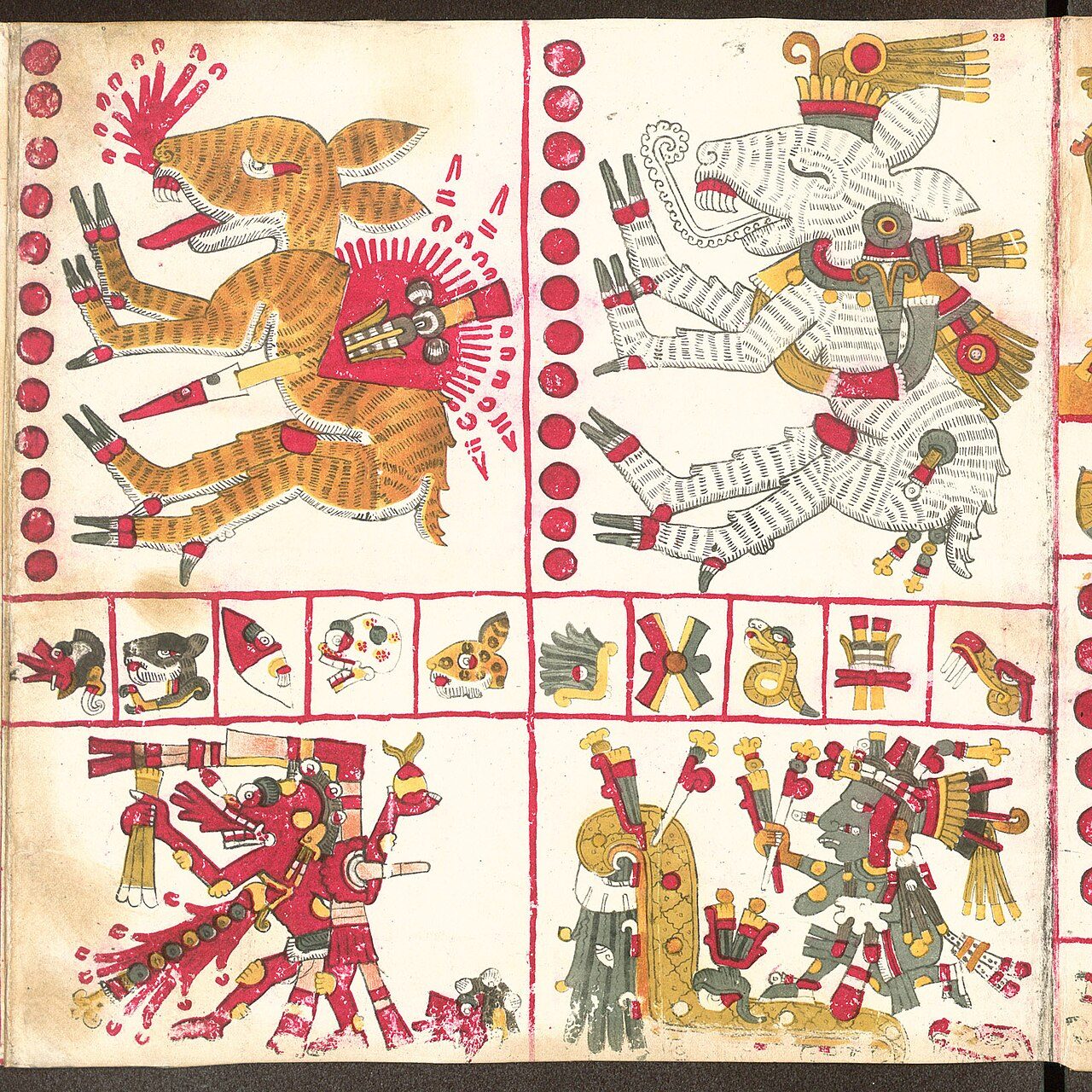
Naguals use their powers for good or evil according to their personality. The general concept of nagualism is Mesoamerican in origin. Nagualism is linked with pre-Columbian shamanistic practices through Pre-classic Olmec and Toltec depictions that are interpreted as human beings transforming themselves into animals. The system is linked with the Mesoamerican calendrical system, used for divination rituals. Birth dates often determine if a person can become a nagual. Mesoamerican belief in tonalism, wherein every person has an animal counterpart to which their life force is linked, is drawn upon by nagualism. However, modern scholars have struggled to grasp the ever-evolving and contentious meanings associated with Mesoamerican Nahua terms like nahualli and tonalli. This includes their derivatives, such as nahualismo and tonalismo. Hence, it's recommended to use clearer, descriptive language. For instance, instead of discussing nahualism, we can talk about the belief that certain individuals, often in influential social roles, possess specific spiritual abilities. These abilities allow them to transform into animals or even natural phenomena like lightning, wind, clouds, or fireballs, enabling them to perform remarkable feats while in these "disguises." The nagual trait is acquired at birth, along with other characteristics associated with a person's birth day. Each day is associated with an animal that has strong and weak aspects. A person born on "Dog Day" would have both strong and weak 'dog' aspects. In Nahuatl the word tonalli is used to refer both to a day and to the animal associated with that day. The nagual is considered different; where the tonal is the day spirit itself, the nagual is the familiar spirit of the day. 1
Practice
The practice of Nagualism was often accompanied by use of hallucinogens, including peyote, ololiuqui, and psylocibin mushrooms known as teonanácatl. Use of these medicinal herbs were said to unlock powers of perception and insight in those performing the nagual rituals. 1
The text above is adapted from the Wikipedia article “Nagual”, available under the Creative Commons Attribution-ShareAlike 4.0 licence. 1
nagea is shapeshifting sorcerer in Mesoamerican folk religion, according to the structured record cited below. This entry was generated automatically from that record and has not yet been reviewed by a person familiar with the tradition. 2
The source record links this tradition to 3 external registers, which can be verified through the citation. 2