The tradition & historical record
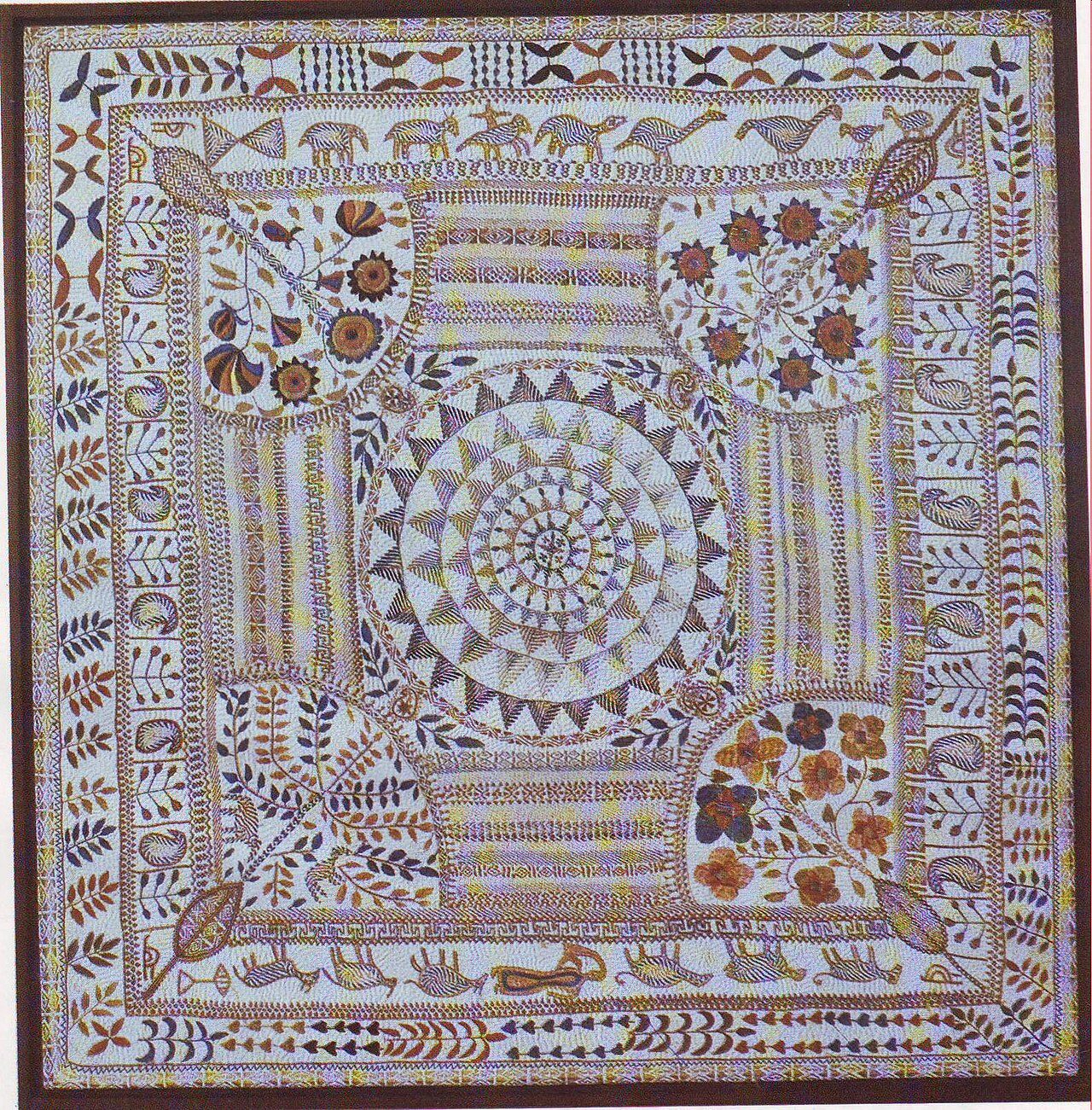
4 min read · 2 sourcesNakshi kantha, a type of embroidered quilt, is a centuries-old Bengali art tradition of the Bengal region, notably in Bangladesh and the Indian states of West Bengal, Tripura, and parts of Assam. The basic materials used are thread and old cloth. Nakshi kanthas are made throughout Bangladesh, primarily in the areas of Mymensingh, Jamalpur, Bogra, Rajshahi, Faridpur, Jessore, and Chittagong. The colourful patterns and designs that are embroidered resulted in the name "Nakshi Kantha," which was derived from the Bengali word "naksha," referring to artistic patterns. Early kanthas had a white background accented with red, blue, and black embroidery; later, yellow, green, pink, and other colours were also included. The running stitch, called the "kantha stitch," is the main stitch used for this purpose. Traditionally, kanthas were produced for family use. Today, following the revival of the nakshi kantha, they are produced commercially. 1
Etymology
The word kantha has no discernible etymological root. The exact origin of the word is not precisely known, although it probably has a precursor in kheta (meaning "field" in Bengali). According to Niaz Zaman, the word kantha originates from the Sanskrit word kontha, which means rags, as kantha is made of rags. 1
Tradition
Like any other folk art, kantha making is influenced by factors such as the materials available, daily needs, climate, geography, and economic conditions. The earliest form of kantha was probably the patchwork kantha, and the kanthas of the decorative appliqué type evolved from this. 1
In literature
The earliest mention of Bengali kantha is found in the medieval Bengali literature Chaitanya Charitamrita by Krishnadasa Kaviraja, written during the late 16th century. The Bengali poet Jasimuddin wrote the poem Nakshi Kanthar Math about nakshi kantha. 1
Making
Traditionally, old sarees, lungis, and dhotis were used to make kanthas. Kantha making was not a full-time occupation; women in almost every household were experts in the art. Rural women worked during their leisure time or the rainy season, so it was common for a kantha to take months or even years to complete. At least three to six sarees were needed to make a standard-sized kantha. In contemporary kanthas, new cotton cloths are used instead. Traditionally, the thread was collected from old sarees, although this is rarely done today. When a kantha is being made, the sarees are first joined to achieve the required size, and then layers are spread out on the ground. The cloths are smoothed, ensuring no folds or creases are left in between. During the process, the cloth is kept flat on the ground with weights placed on the edges. The four edges are then stitched, and two or three rows of large running stitches are made to keep the kantha together. At this stage, the kantha can be folded and stitched during leisure time. Originally, designs and motifs were not drawn on the cloth. The design was first outlined with needle and thread, followed by the focal points, and then the filling motifs were added. In a kantha with a predominant central motif, the centre was done first, followed by the corner designs and other details. In some types of kanthas (such as carpet, lik, and sujni), wooden blocks were used to print the outline. Today, the blocks are replaced by patterns drawn on tracing paper. 1
Types
The following is how kanthas are categorised, according to the stitch type: 1
The text above is adapted from the Wikipedia article “Nakshi kantha”, available under the Creative Commons Attribution-ShareAlike 4.0 licence. 1
Nakshi kantha is a type of embroidered quilt, according to the structured record cited below. This entry was generated automatically from that record and has not yet been reviewed by a person familiar with the tradition. 2
The source record links this tradition to 4 external registers, which can be verified through the citation. 2