The tradition & historical record
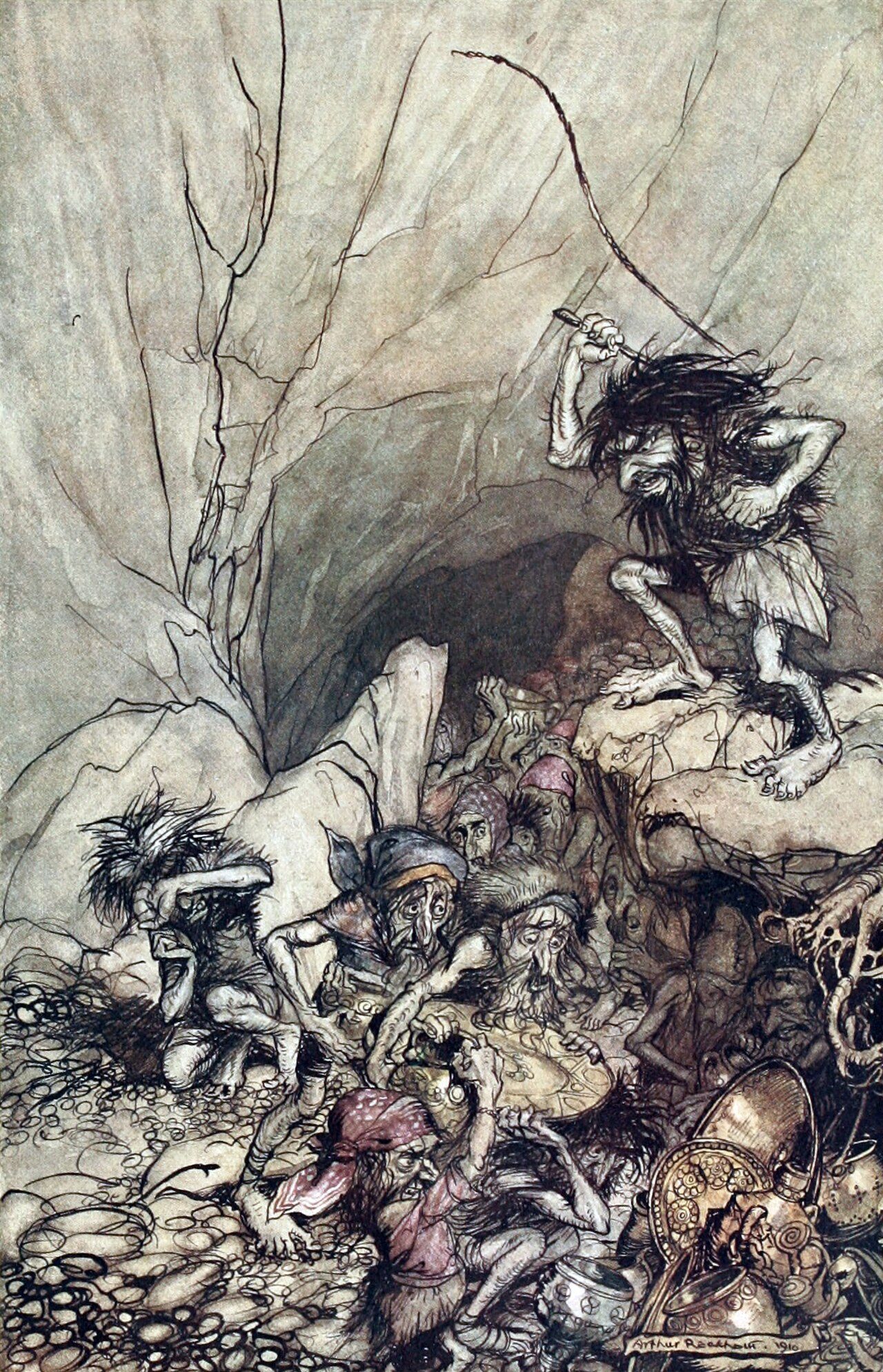
6 min read · 2 sourcesThe term Nibelung (German) or Niflungr (Old Norse) is a personal or clan name with several competing and contradictory uses in Germanic heroic legend. It has an unclear etymology, but is often connected to the root of German Nebel, meaning 'mist'. The term in its various meanings gives its name to the Middle High German heroic epic the Nibelungenlied. The most widespread use of the term Nibelung denotes the Burgundian royal house, also known as the Gibichungen (German) or Gjúkingar (Old Norse). A group of royal brothers led by king Gunther or Gunnar, the Gibichungs are responsible for the death of the hero Siegfried or Sigurd and are later destroyed at the court of Attila the Hun (called Etzel in German and Atli in Old Norse). This is the only use of the term attested in the Old Norse legends. In medieval German, several other uses of the term Nibelung are documented besides the reference to the Gibichungs: it refers to the king and inhabitants of a mythical land inhabited by dwarfs and giants in the first half of the Nibelungenlied, as well as to the father and one of two brothers fighting over a divided inheritance. This land and its inhabitants give their name to the "hoard of the Nibelungs" (Middle High German der Nibelunge hort). 1
In Waltharius
The earliest surviving probable mention of a form of the name 'Nibelung' occurs in the Latin poem Waltharius, believed to have been composed around the year 920. In lines 555–6 of that poem Walter, seeing Guntharius (Gunther) and his men approaching says (in the Chronicon Novaliciense text, usually taken to be the oldest): 1
Nōn assunt Avarēs hīc, sed Francī Nivilōnēs, cultōrēs regiōnis. 1
The translation is: "These are not Avars, but Frankish Nivilons, inhabitants of the region." The other texts have nebulones 'worthless fellows' instead of nivilones, a reasonable replacement for an obscure proper name. (Medieval scribes often used b and v interchangeably in Latin texts, so Nivilones represents a reasonable Latinization of Germanic Nibilungos.) This is the only text to connect the Nibelungs with Franks. Since the Franks conquered the Burgundians in 534, Burgundians could loosely be considered Franks of a kind and confused with them. The name Nibelunc became a Frankish personal name in the 8th and 9th centuries, at least among the descendants of Childebrand I, Duke of Burgundy (who died c. 752). In the poem, the center of Gunther's "Frankish" kingdom is the city of Worms on the Rhine. Worms functioned as the capital of the First Kingdom of Burgundy in the early fifth century CE; historical sources record Gunther (Gundahar) (died 437) as a Burgundian king in this period. 1
Norse tradition
In the eddic poem (see Poetic Edda) Atlakviða, the word Niflungar is applied three times to the treasure (arfr) or hoard (hodd) of Gunnar (the Norse counterpart of German Gunther). It is also applied once to Gunnar's warriors and once to Gunnar himself. It elsewhere appears unambiguously as the name of the lineage to which the brothers Gunnar and Högni (Hǫgni) belong and seems mostly interchangeable with Gjúkingar or Gjúkungar, meaning descendants of Gjúki, Gjúki being Gunnar's father. The variant form Hniflungr also occurs as the name of Högni's son in the eddic poem Atlamál, and as a term for the children borne by Gunnar's sister Gudrún (Guðrún) to Atli (Attila the Hun). It appears to be a general term for "warrior" in Helgakviða Hundingsbana I. Hniflungar might be of separate origin, meaning descendants of Hnef, referring to the Hnæf son of Hoc who is prominent in the Old English Finnesburg Fragment. However h was early dropped initially before other consonants in Norwegian dialects which might have led to the adding of h to names in other dialects where it did not originally belong. 1
Lex Burgundionum
In the Lex Burgundionum, issued by the Burgundian king Gundobad (c. 480–516), it is decreed that those who were free under the kings Gibica, Gundomar, Gislaharius, and Gundaharius will remain free. But as will be seen below, legendary tradition often makes Gibiche or Gjúki (that is Gibica) the father of Gunther/Gunnar and names Giselher (the same name as Gislaharius) as one of Gunther/Gunnar's brothers. In Norse tradition another brother is named Gutthorm (Gutþormr) which looks like a slight garbling of Gundomar. German tradition provides instead a third brother named Gernot, which may be a substitution of a more familiar name for an unfamiliar one. In the Nibelungenlied, all three brothers are called kings. If these legends preserve authentic tradition, then historically Gibica of the Burgundian Laws might have been the father of the three kings Gundomar, Gislaharius, and Gundaharius who shared the kingdom among them, presumably with Gundaharius as the high king (the sharing of the throne between brothers was a common tradition among the Germanic tribes, see Germanic king). But if so, the order of the names here is puzzling. One would expect Gundaharius to be named immediately after Gibica. 1
German tradition
In the Waltharius King Gibicho of the Franks is father of Guntharius, that is Gunther, and both father and son are called kings of the Franks, not kings of the Burgundians, though their city is Worms on the Rhine. Another king called Heriricus rules the Burgundians and is father of Hiltgunt, the heroine of the tale. The only other kinsman of Gunther who appears here is Hagano (Hagen). But Hagano's exact familial relation to Guntharius is not given. The Old Norse Þiðrekssaga is a medieval translation of German legendary material into Norwegian. Here Gunther (given the Old Norse form Gunnar) and his brothers are sons and heirs of Irung (in one place) or Aldrian (elsewhere) by Aldrian's wife Ode. The sons are named Gunnar, Gernoz, and Gisler. Ode also bears a daughter named Grímhild. One later passage adds Guthorm. But Guthorm is never mentioned again and is possibly an addition from Norse tradition by the translator or by an early copyist. Hǫgni (German Hagen) appears as their maternal half-brother, fathered on Ode by an elf when Ode once fell asleep in the garden while her husband was drunk. Yet one passage names Hǫgni's father as Aldrian. There are confusions and doublings in the Þiðrekssaga and it may be that Aldrian was properly the name of Hǫgni's elf father. Gunnar and his legitimate brothers are often called Niflungar and their country is named Niflungaland. Their sister Grímhild bore to Atli (Attila) a son named Aldrian who is slain by Hǫgni. At the end of the resultant battle, Hǫgni, though mortally wounded, fathered a son on Herad, one of Þiðrek's relations. This son, named Aldrian, accomplished Atli's death and became Jarl of Niflungaland under Brynhild (Brynhildr). In the Faroese Hǫgnatáttur a similar tale is told. 1
Norse tradition
The Skáldskaparmál names the founder of the Niflung lineage as Nefi, one of the second set of nine sons of Halfdan the Old who founded many famous legendary lineages. 1
The text above is adapted from the Wikipedia article “Nibelung”, available under the Creative Commons Attribution-ShareAlike 4.0 licence. 1
Nibelung is Norse/German clan name, according to the structured record cited below. This entry was generated automatically from that record and has not yet been reviewed by a person familiar with the tradition. 2
The source record links this tradition to 10 external registers, which can be verified through the citation. 2