The tradition & historical record
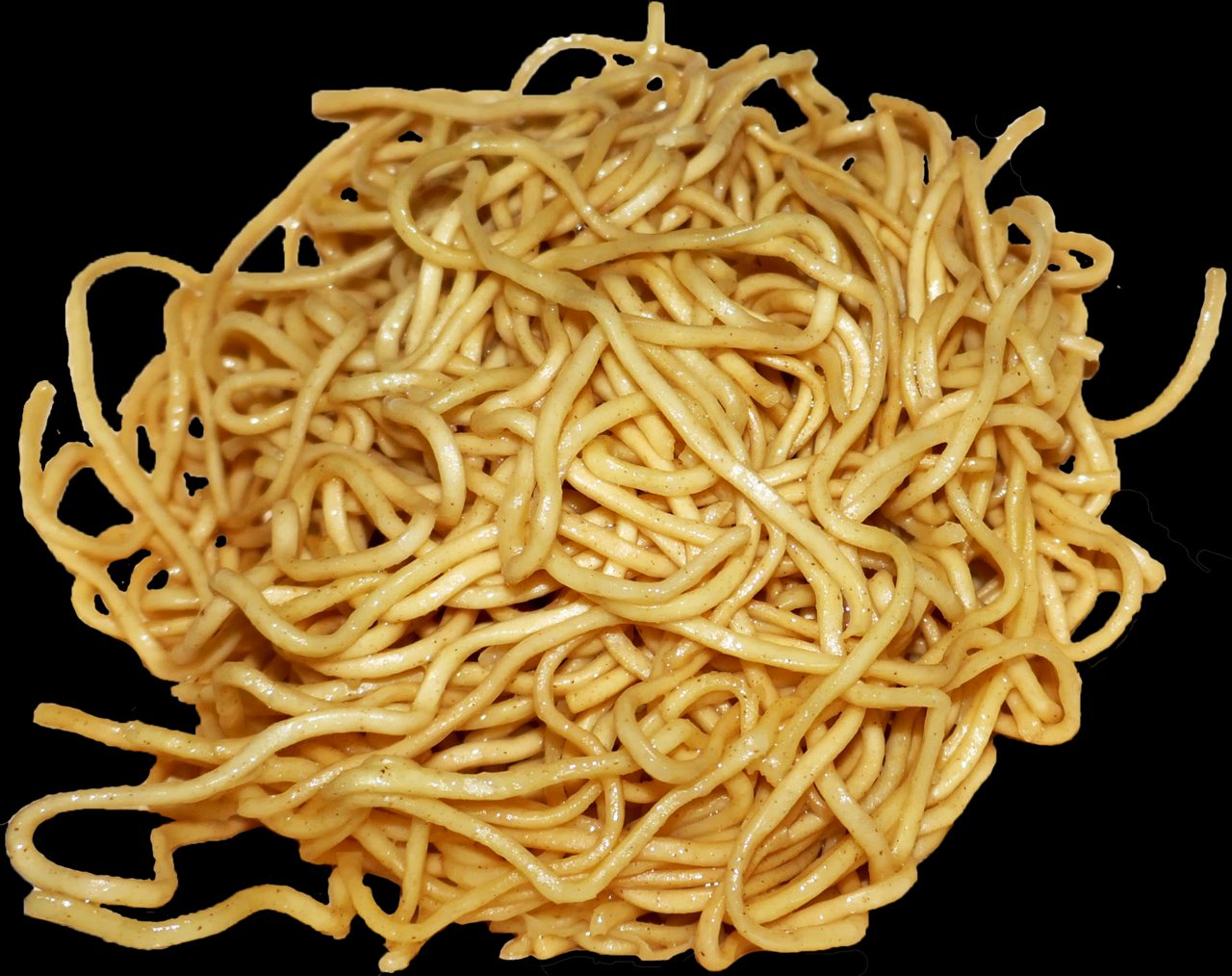
5 min read · 2 sourcesNoodles are a type of food typically made from unleavened dough which is rolled flat and cut, stretched, or extruded into long strips or strings. Noodles are a staple food in many cultures and made into a variety of shapes. The most common noodles are those derived from Chinese cuisine or Italian cuisine. Italian noodles are generally referred to as pasta. In Chinese cuisine, the overarching term for noodles is 麵 (miàn in Mandarin), which refers specifically to dough-based noodles made from wheat or other grain-based dough. Chinese noodles also include another category, called 粉 (fěn), which are not made by kneading dough but from a starch slurry, such as rice noodles (mǐfěn, 米粉), and cellophane noodles (fěnsī, 粉丝 / 粉絲). These are not made from wheat dough, but are still regarded as noodles in English due to their physical form and culinary role. While long, thin strips may be the most common, many varieties of noodles are cut into waves, helices, tubes, strings, or shells, or folded over, or cut into other shapes. Noodles are usually cooked in boiling water, sometimes with cooking oil or salt added. They can also be steamed, pan-fried, deep-fried, or baked. Noodles are often served with an accompanying sauce or in a soup, the latter being known as noodle soup. Noodles can be refrigerated for short-term storage or dried and stored for future use. 1
Etymology
The word for noodles in English was borrowed in the 18th century from the German word Nudel (German: [ˈnuːdl̩] ). The German word likely came from Knodel or Nutel, and referred to any dumpling, though mostly of wheat. Colloquial uses for noodle to refer to someone's head, or to a "dummy" are unrelated, and likely came from the older English word noddle. 1
Origin
The oldest physical evidence of noodles was from 4,000 years ago in China. In 2005, a team of archaeologists reported finding an earthenware bowl that contained 4,000-year-old noodles at the Lajia archaeological site, made by the Qijia culture. These noodles were said to resemble lamian, a type of Chinese noodle. Analyzing the husk phytoliths and starch grains present in the sediment associated with the noodles, they were identified as millet belonging to Panicum miliaceum and Setaria italica. However, other researchers cast doubt that Lajia's noodles were made from specifically millet: it is difficult to make pure millet noodles, it is unclear whether the analyzed residue were directly derived from Lajia's noodles themselves, starch morphology after cooking shows distinctive alterations that does not fit with Lajia's noodles, and it is uncertain whether the starch-like grains from Laijia's noodles are starch as they show some non-starch characteristics. The earliest written record of noodles is found in a book dated to the Eastern Han period (25–220 CE). Noodles made from wheat dough became a prominent food for the people of the Han dynasty. Serventi and Sabban, in Pasta: The Story of a Universal Food, noted that wheat-based pasta traditions were established in China long before they had appeared in Europe. Food historian Gil Marks documented that the practise of boiling strips of dough in water originated in China and that this tradition did not take hold in Europe until the medieval period. Previously, European dough recipes were generally baked or fried rather than boiled, with Moorish Spain being the exception. Marks wrote that noodles spread from China along the Silk Road to Central Asia and reached Persia by around the fourth century. 1
East Asia
There are over 1,200 types of noodles commonly consumed in China today. They vary widely according to the region of production, ingredients, shape or width, and manner of preparation. Due to the vast diversity of Chinese noodles, there is no single Chinese word equivalent to the Western concept of "noodles," nor is the notion of "noodles" as a unified food category recognized within Chinese cuisine. In Standard Mandarin, miàn (simplified Chinese: 面; traditional Chinese: 麵) means "dough" but can be used to refer to noodles made from wheat flour and grains such as millet, sorghum, and oats. Similarly, fěn (粉) means "powder" but can be used to refer to noodles made from other starches, particularly rice flour and mung bean starch. Wheat noodles in Japan (udon) were adapted from a Chinese recipe as early as the 9th century. Innovations continued, such as noodles made with buckwheat (naengmyeon) were developed in the Joseon Dynasty of Korea (1392–1897). Ramen noodles, based on southern Chinese noodle dishes from Guangzhou but named after the northern Chinese lamian, became common in Japan after World War II. 1
Central Asia
Kesme or erişte noodles were eaten by Turkic peoples by the 13th century. 1
West Asia
Ash reshteh (noodles in thick soup with herbs) is one of the most popular dishes in some middle eastern countries such as Iran. The Latinized word itrium referred to a kind of boiled dough. Arabs adapted noodles for long journeys in the fifth century, the first written record of dry pasta. Muhammad al-Idrisi wrote in 1154 that itriyya was manufactured and exported from Norman Sicily. Itriyya was also known by the Persian Jews during early Persian rule (when they spoke Aramaic) and during Islamic rule. It referred to a small soup noodle, of Greek origin, prepared by twisting bits of kneaded dough into shape, resembling Italian orzo. 1
The text above is adapted from the Wikipedia article “Noodles”, available under the Creative Commons Attribution-ShareAlike 4.0 licence. 1
noodle is type of staple food made from some type of unleavened dough, according to the structured record cited below. This entry was generated automatically from that record and has not yet been reviewed by a person familiar with the tradition. 2
The source record links this tradition to 24 external registers, which can be verified through the citation. 2