The tradition & historical record
6 min read · 2 sourcesThe Odyssey (, ODD-iss-ee; Ancient Greek: Ὀδύσσεια, romanized: Odýsseia [odyˈsːeːˌja]) is one of two major epics of ancient Greek literature attributed to Homer. It is one of the oldest surviving works of literature and remains popular with modern audiences. Like the Iliad, the Odyssey is divided into 24 books. It follows the heroic king of Ithaca, Odysseus (also known by the Latin variant Ulysses), and his homecoming journey after the ten-year-long Trojan War. His journey from Troy to Ithaca lasts an additional ten years, during which time he encounters many perils and all of his crewmates are killed. In Odysseus's long absence, he is presumed dead, leaving his wife Penelope and son Telemachus to contend with a group of unruly suitors competing for Penelope's hand in marriage. The Odyssey was first composed in Homeric Greek around the 8th or 7th century BC; by the mid-6th century BC, it had become part of the Greek literary canon. In antiquity, Homer's authorship was taken as true, but contemporary scholarship predominantly assumes that the Iliad and the Odyssey were composed independently, as part of long oral traditions. Given widespread illiteracy, the poem was performed for an audience by an aoidos or rhapsode. Key themes in the epic include the ideas of nostos (νόστος; 'return', homecoming), wandering, xenia (ξενία; 'guest-friendship'), testing, and omens. 1
Dating
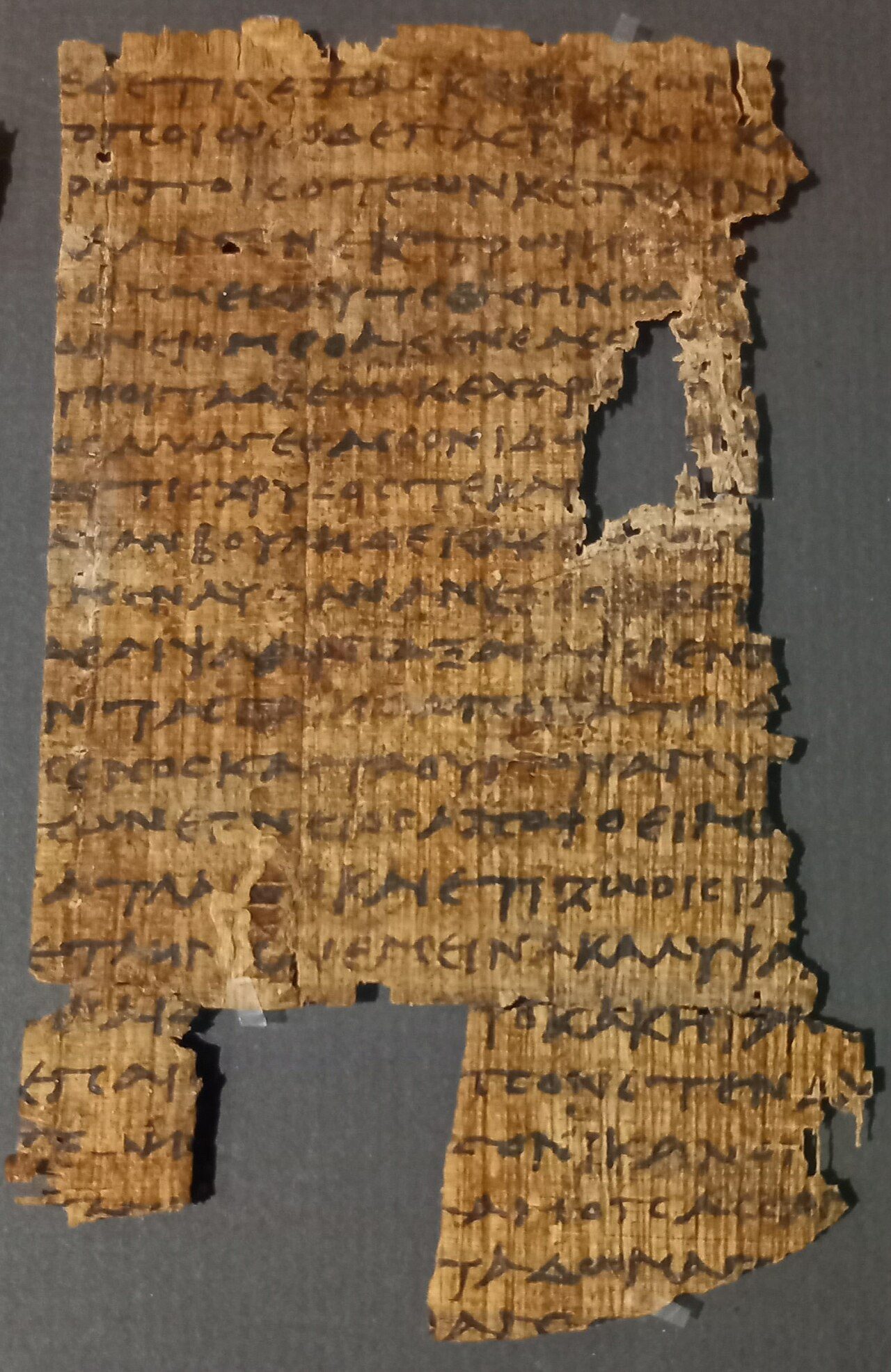
Many suggestions have been made for dating the composition of the Iliad and the Odyssey, but there is no consensus. Robert Lamberton says that the epics "[straddled] the beginnings of widespread literacy" from the middle of the 5th century BC, but the poems' language can be dated to long before this period. The Greeks began adopting a modified version of the Phoenician alphabet to create their own writing system during the eighth century BC; if the Homeric poems were among the earliest products of that literacy, they would have been composed towards the latter portion of that century. According to Rudolf Pfeiffer, they were probably written down, but there is no evidence for their publishing or physical dissemination for consumption by a literate audience. Dating is further complicated by the fact that the Homeric poems, or sections of them, were performed by rhapsodes for hundreds of years. 1
Composition and authorship
Scholars agree that the Homeric epics developed as part of an oral tradition over hundreds of years. In the early twentieth century, Milman Parry and Albert Lord demonstrated that they prominently contained the characteristics of oral poetry, which would allow even an illiterate poet to improvise large poems, composing them through speech. Scholars do not agree on how the poems emerged from this tradition, and it is not clear whether oral tradition can claim full credit for their composition. In the nineteenth century, a series of related questions about the epics' authorship became known as the Homeric Question. Sources from antiquity created mythic narratives to explain Homer. Debate still persists today over many of the Homeric questions; for example, concerning the compositional relationship between the Iliad, the Odyssey, and the largely lost poems of the Epic Cycle; about whether Homer lived and, if he did, when; and whether the poems reflect any geographical, historical or cultural reality. While Herodotus attributes the Iliad and the Odyssey to Homer, other works have also historically been attributed to him, including the Homeric Hymns. Textual reconstructions indicate the poems have taken many forms. As feedback is an important component of live performance, the content of the poem may have varied from telling to telling. This context is important for understanding and interpreting the epics; John Miles Foley writes that performance is a crucial part of their meaning. The performance of epic poetry is a subject of both poems, with the Odyssey actually depicting professional singers like Phemius and Demodocus. 1
Influences
Scholars note strong influences from Near Eastern mythology and literature in the Odyssey. Martin West notes substantial parallels between the Epic of Gilgamesh and the Odyssey. Both Odysseus and Gilgamesh are known for traveling to the ends of the earth and on their journeys go to the land of the dead. On his voyage to the underworld, Odysseus follows instructions given to him by Circe, who is located at the edges of the world and associated with solar imagery. Like Odysseus, Gilgamesh gets directions on reaching the land of the dead from a divine helper: the goddess Siduri, who, like Circe, dwells by the sea at the ends of the earth, whose home is also associated with the sun. Gilgamesh reaches Siduri's house by passing through a tunnel underneath Mount Mashu, the high mountain from which the sun comes into the sky. West argues that the similarity of Odysseus's and Gilgamesh's journeys to the edges of the earth are the result of the influence of the Gilgamesh epic upon the Odyssey. Classical folklorist Graham Anderson notes other patterns—the heroes of the Odyssey and Gilgamesh meet women who can transform people into animals; are involved in the death of divine cattle; unhappily enjoy the presence of a "voluptuous lady in an other-worldly paradise" following a voyage through the underworld. Scholars have explored whether figures originate within the poem or belong to a tradition outside of it. William Bedell Stanford notes there are some indications that Odysseus existed independently of Homer, although it is inconclusive. Adrienne Mayor says that the Austrian paleontologist Othenio Abel made unfounded claims about the fifth-century BC philosopher Empedocles connecting the cyclops Polyphemus to prehistoric elephant skulls. 1
Geography
Scholars are divided on whether any of the places visited by Odysseus are real. The events in the main sequence of the Odyssey (excluding Odysseus's embedded narrative of his wanderings) have been said to take place across the Peloponnese and the Ionian Islands. Many have attempted to map Odysseus's journey, but largely agree that the landscapes—especially those described in books 9 to 11—include too many mythical elements to be truly mappable. For instance, there are challenges ascertaining whether Odysseus's homeland of Ithaca is the same island that is now called Ithakē (modern Greek: Ιθάκη); the same is true of the route described by Odysseus to the Phaeacians and their island of Scheria. British classicist Peter Jones writes that the poem was likely updated many times by oral story-tellers across several centuries before it was written down, making it "virtually impossible" to say "in what sense [the poem] reflects a historical society or accurate geographical knowledge". Modern scholars tend to explore Odysseus's journey metaphorically rather than literally. 1
Synopsis
Ten years after the Achaeans (Greeks) won the Trojan War, Odysseus, king of Ithaca, has yet to return home from Troy. In his absence, 108 boorish suitors court his wife Penelope. 1
The text above is adapted from the Wikipedia article “Odyssey”, available under the Creative Commons Attribution-ShareAlike 4.0 licence. 1
Odyssey is epic poem attributed to Homer, according to the structured record cited below. This entry was generated automatically from that record and has not yet been reviewed by a person familiar with the tradition. 2
The source record links this tradition to 80 external registers, which can be verified through the citation. 2