The tradition & historical record
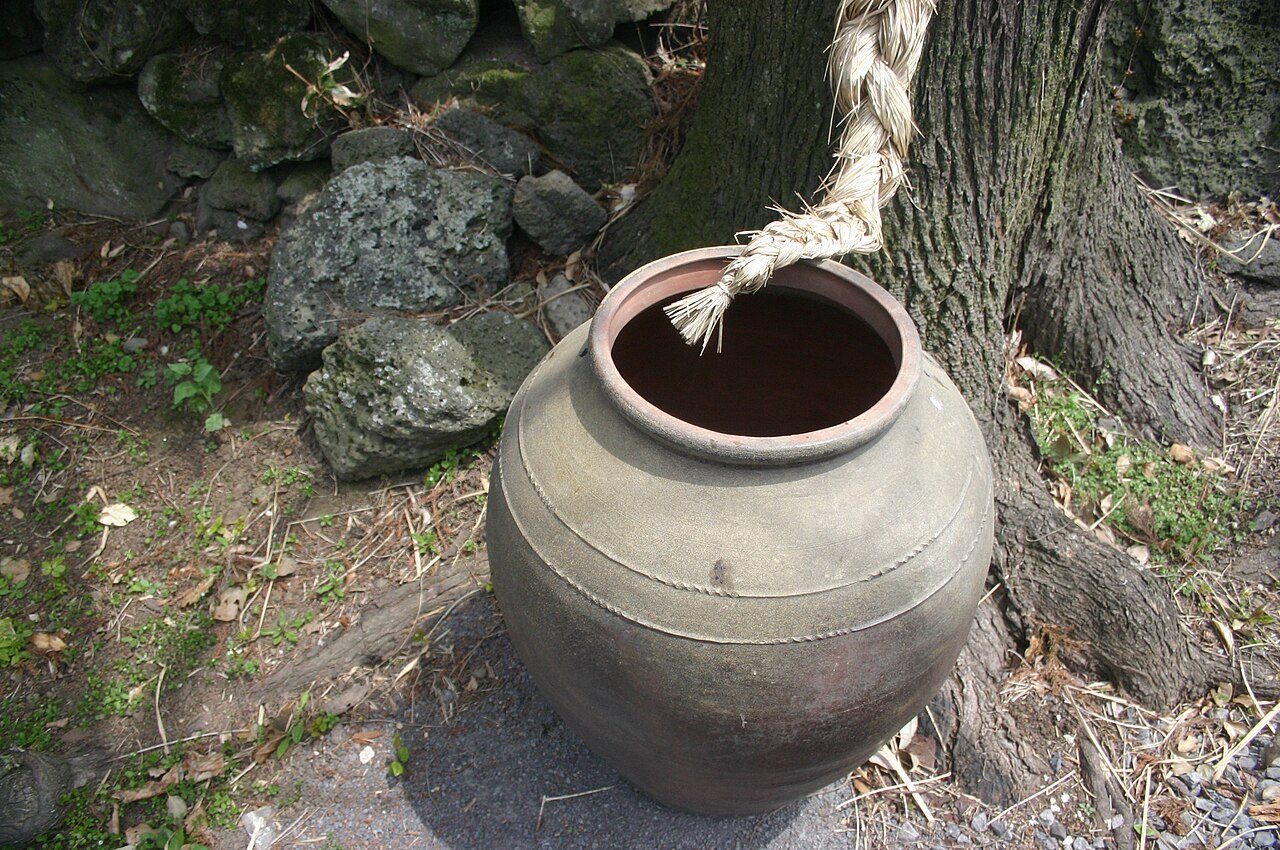
4 min read · 2 sourcesOnggi (Korean: 옹기) are earthenware jars extensively used as tableware and storage containers in Korea. The term includes both unglazed earthenware, fired near 600 to 700°C, and pottery with a dark brown glaze fired at over 1100 °C. Onggi have been used continuously from prehistoric Korean states to the modern day; however, they primarily see use as traditional storage and ornaments today. In Korea, onggi are often referred to by size: danji (Korean: 단지) for small jars; hangari (Korean: 항아리) for medium sized jars; and dok (Korean: 독) for large crocks. 1
The origin of onggi dates to around 4000 to 5000 BCE. The types of earthenware include patternless, mumun, and a red-and-black variety. The patternless earthenware is made with lumps of clay and fine sand. The predecessor of Goryeo celadon and Joseon white porcelain, the black/red earthenware excludes any sand in its creation process. The earthenware's color is determined by both the iron content of the clay and the method used to fire it. The modern onggi shape dates back from the Joseon era. 1
History
Ong (옹; 甕, 瓮) refers to a clay jar. Pottery has been used on the Korean peninsula since prehistoric times for food storage. In the Three Kingdoms period, images of large and small pottery appear on the murals of Anak Tomb No. 3 in Goguryeo, and in Baekje and Silla. Records indicate that they were used to store rice, liquor, oil, soy sauce, and salted fish. Onggi was also commonly used to preserve drinking water. According to the historical text Kyŏngguk taejŏn, during the early Joseon period, there were 104 onggi craftspeople (옹장) in fourteen institutions, including Bongeunsa. Many records about onggi are found in Sejong Sillok Jiriji (세종실록지리지, "King Sejong's Treatise on Geography"), which includes further details about Korean pottery: "There are three kilns that make the yellow onggi in Chogye-gun and Jinju-mok, Gyeongsang Province". Korea has long been known for its fermented foods made in onggi. A passage from the Records of the Three Kingdoms reads: "Goguryeo people have a custom of making fermented foods". 1
Uses
Onggi has a more microporous structure than porcelain. This feature facilitates fermentation of food. Food commonly made in onggi includes gochujang, doenjang, kimchi, and soy sauce. With proper porosity and permeability, onggi can give an optimally ripe quality to fermented foods. Fine-tuned onggi containers are highly suitable for various kinds of fermented products. The abundance of soybeans, which grow naturally in Korea, fresh resources from the sea surrounding the Korean Peninsula, and a proper climate for microbial development all play a significant factor in the importance and usage of fermentation for food processing. The development and refinement of onggi ware contributed to the development of fermented dishes in Korean cuisine. Large onggi ware were typically stored on a jangdokdae, an elevated floor near the house. 1
Features
Onggi are made by a specialized group of workmen called onggijang (Korean: 옹기장). The design of the pots is influenced by the characteristics and climate of the regions in which they are made. As a result, the shape, size, and manufacturing method of onggi vary from region to region. Nevertheless, onggi types share similarities: biodegradability, porosity, resistance to rot, and firmness or "vertebration". Due to the low firing temperatures often used in producing onggi, they are archaeologically rarely found as the shards eventually return to its former clay state or are used as grog. Features of onggi include its breathability, stability, suitability for fermentation, economical price, porosity, and diverse usage. 1
Suitability for fermentation
The most significant characteristic of Korean cuisine is its use of fermented food, utilizing onggi pots for the fermentation process. Other foods and items can also be stored in containers originally meant for fermentation, such as tobacco, candlesticks, and cooked rice. Since the materials to make onggi can be easily and cheaply obtained, onggi has traditionally retailed at a low price, making it obtainable for the lower and middle class. 1
Porosity
Before firing, the onggijang (onggi craftsperson) glazes its surface. This glaze plays a key role in providing a waterproof surface and preventing leaks. Additionally before firing a large amount of sand particles are added to the body of the clay, acting as passages for air. This way, air but not water can pass through the pottery. Koreans describe this phenomenon as "onggi breathing". This property contributes to its widespread use in making fermented foods. 1
The text above is adapted from the Wikipedia article “Onggi”, available under the Creative Commons Attribution-ShareAlike 4.0 licence. 1
onggi is type of Korean earthenware, according to the structured record cited below. This entry was generated automatically from that record and has not yet been reviewed by a person familiar with the tradition. 2
The source record links this tradition to 1 external register, which can be verified through the citation. 2