The tradition & historical record
7 min read · 2 sourcesThe Orkneyinga saga (Old Norse: [ˈorknˌœyjeŋɡɑ ˈsɑɣɑ]; Scottish Gaelic: Seanchas Arcach nan Lochlannach; also called the History of the Earls of Orkney and Jarls' Saga) is a narrative of the history of the Orkney and Shetland islands and their relationship with other local polities, particularly Norway and Scotland, written in Old Norse. The saga has "no parallel in the social and literary record of Scotland" and is "the only medieval chronicle to have Orkney as the central place of action". The main focus of the work is the line of jarls who ruled the Earldom of Orkney, which constituted the Norðreyjar or Northern Isles of Orkney and Shetland and there are frequent references to both archipelagoes throughout. The narrative commences with a brief mythical ancestry tale and then proceeds to outline the Norse take-over of the Norðreyjar by Harald Fairhair – the take-over is not in doubt although the role of the king is no longer accepted by historians as a likelihood. The saga then outlines, with varying degrees of detail, the lives and times of the many jarls who ruled the islands between the 9th and 13th centuries. The extent to which the earlier sections in particular can be considered genuine history rather than fiction has been much debated by scholars. There are several recurring themes in the Orkneyinga saga, including strife between brothers, relationships between the jarls and the Norwegian crown, and raiding in the Suðreyjar – the Hebrides and elsewhere. 1
Development and versions
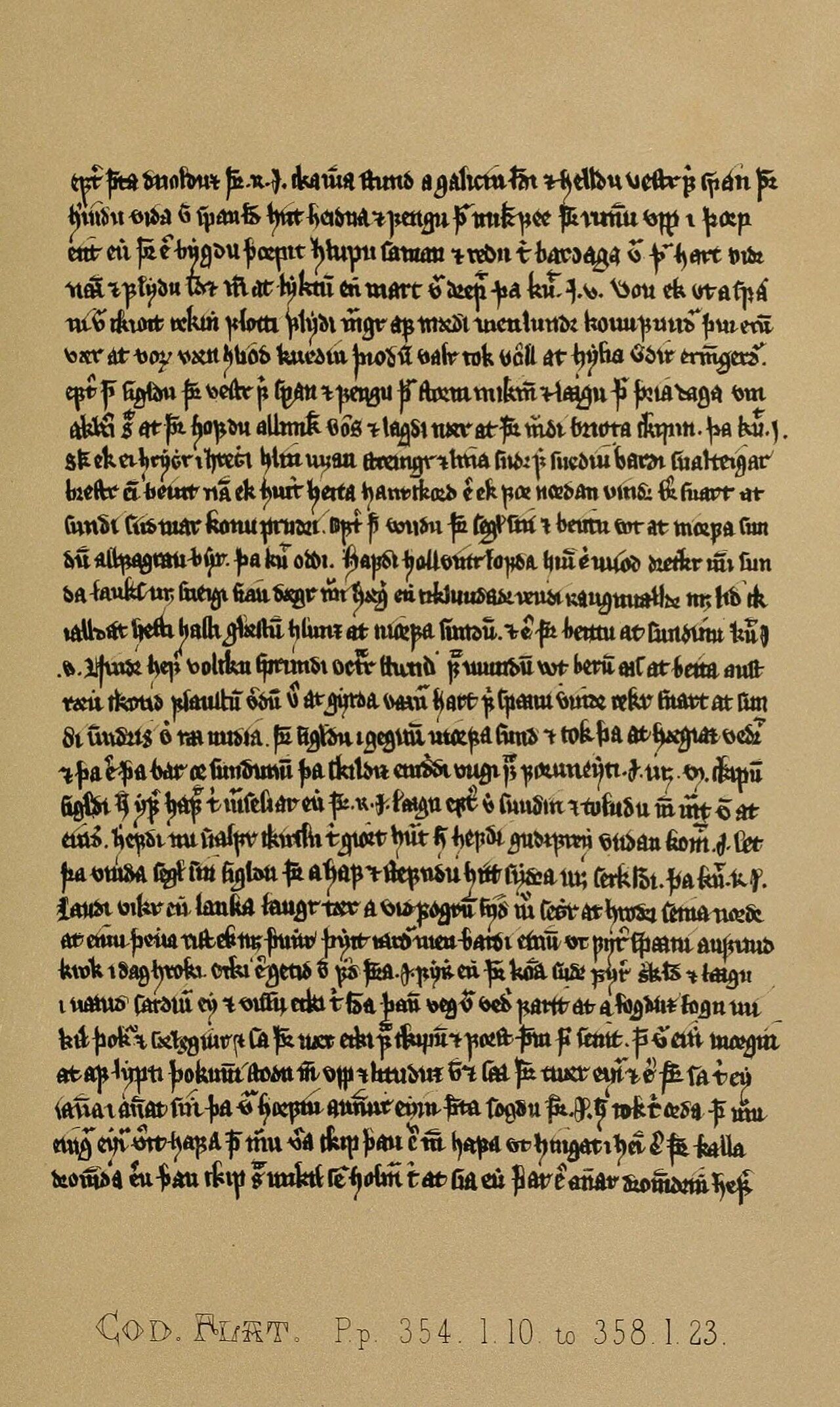
The original text of this Norse saga was written in the late twelfth century. It no longer exists. A new version was written in the early thirteenth century (three centuries after some of the earliest events it records) by an unknown Icelandic author who was probably associated with the cultural centre at Oddi. Orkneyinga saga belongs to the genre of "Kings' Sagas" within Icelandic saga literature, a group of histories of the kings of Norway, the best known of which is Heimskringla, written by Snorri Sturluson. Indeed, Snorri used Orkneyinga saga as one of his sources for Heimskringla which was compiled around 1230 (and then Heimskringla became in turn a source for later versions of the Orkneyinga saga). As was generally the case with Icelandic language writing of this period, the aims of the saga were to provide a sense of social continuity through the telling of history combined with an entertaining narrative drive. The saga is thought to have been compiled from a number of sources, combining family pedigrees, praise poetry and oral legends with historical facts. In the case of the Orkneyinga saga the document outlines the lives of the earls of Orkney and how they came about their earldom. Woolf (2007) suggests that the task that the Icelandic compiler was faced with was not dissimilar to trying to write a "history of the Second World War on the basis of Hollywood movies". He also notes that a problem with medieval Icelandic historiography in general is the difficulty of fixing of a clear chronology based on stories created in a largely illiterate society in which "AD dating was probably unknown". As the narrative approaches the period closer to the time it was written down, some historians have greater confidence in its accuracy. 1
Narrative
The first three chapters of the saga are a brief folk legend that sets the scene for later events. It commences with characters associated with the elements – Snaer (snow), Logi (flame), Kari (storm) and Frosti (frost) and also gives a unique explanation for how Norway came to be named as such, involving Snaer's grandson Nór. There is also a reference to claiming land by dragging a boat over a neck of land (reprised in chapter 41 when Magnus Barefoot uses the same trick) and the division of the land between Nór and his brother Gór, which is a recurring theme in the saga. This legend also gives the Orkney jarls an origin involving a giant and king called Fornjót who lived in the far north. This clearly distinguishes them from the Norwegian kings as described in the Ynglingatal and may have been intended to give the jarls a more senior and more Nordic ancestry. Having dealt with the mythical ancestry of the earls, the saga then moves on to topics that are apparently intended as genuine history. 1
Harald Fairhair and the voyage to the west
The next few chapters deal with the creation of the Earldom of Orkney; they are brief and contain much less detail than the later events the saga describes. The saga states that Rognvald Eysteinsson ruled the earldom of Møre from the King of Norway, Harald Fairhair. Earl Rognvald accompanied the king on an expedition where they conquered the islands of Shetland, called Hjaltland, and Orkney, before they continued on to Scotland, Ireland and the Isle of Man. During this campaign Rognvald's son Ivarr was killed and in compensation Harald granted Earl Rognvald rule over Orkney and Shetland. Rognvald Earl thereafter returned to Norway, giving these islands to his brother Sigurd Eysteinsson. Sigurd had been the forecastleman on Harald's ship and after sailing back east the king "gave Sigurd the title of earl". Sigurd "the Mighty" then died in a curious fashion, following a battle with Máel Brigte of Moray. Sigurd's son Gurthorm ruled for a single winter after this and died childless. Rognvald's son Hallad then inherited the title. However, unable to constrain Danish raids on Orkney, he gave up the earldom and returned to Norway, which "everyone thought was a huge joke." First written down in the early 13th century, the saga is informed by the Norwegian politics of the day. Once, historians could write that no-one denied the reality of Harald Fairhair's expeditions to the west (recounted in detail in the Heimskringla), but this is no longer the case. 1
Torf-Einarr
Hallad's failure led to Rognvald flying into a rage and summoning his sons Thorir and Hrollaug. He asked which of them wanted the islands but Thorir said the decision was up to the earl himself. Rognvald predicted that Thorir's path would keep him in Norway and that Hrollaug was destined seek his fortune in Iceland. Einarr, the youngest of his natural sons, then came forward and offered to go to the islands. Rognvald said: "Considering the kind of mother you have, slave-born on each side of her family, you are not likely to make much of a ruler. But I agree, the sooner you leave and the later you return the happier I'll be." Despite his father's misgivings, on arrival on the islands, Einarr fought and defeated two Danish warlords who had taken residence there. Einarr then established himself as earl and founded a dynasty which retained control of the islands for centuries after his death. The scene in which Einarr's father scorns him is a literary device which often figures in Old Norse literature. The dialogue between the father and his sons has been interpreted as being about Rognvald's desire to cement his own position as Earl of Møre and an allusion to the early history of Iceland, where the saga was written. 1
Sigurd the Stout
The death of Earl Sigurd Hlodvirsson (980–1… 1
The text above is adapted from the Wikipedia article “Orkneyinga saga”, available under the Creative Commons Attribution-ShareAlike 4.0 licence. 1
Orkneyinga saga is Scandinavian-Scottish literary work, according to the structured record cited below. This entry was generated automatically from that record and has not yet been reviewed by a person familiar with the tradition. 2
The source record links this tradition to 8 external registers, which can be verified through the citation. 2