The tradition & historical record
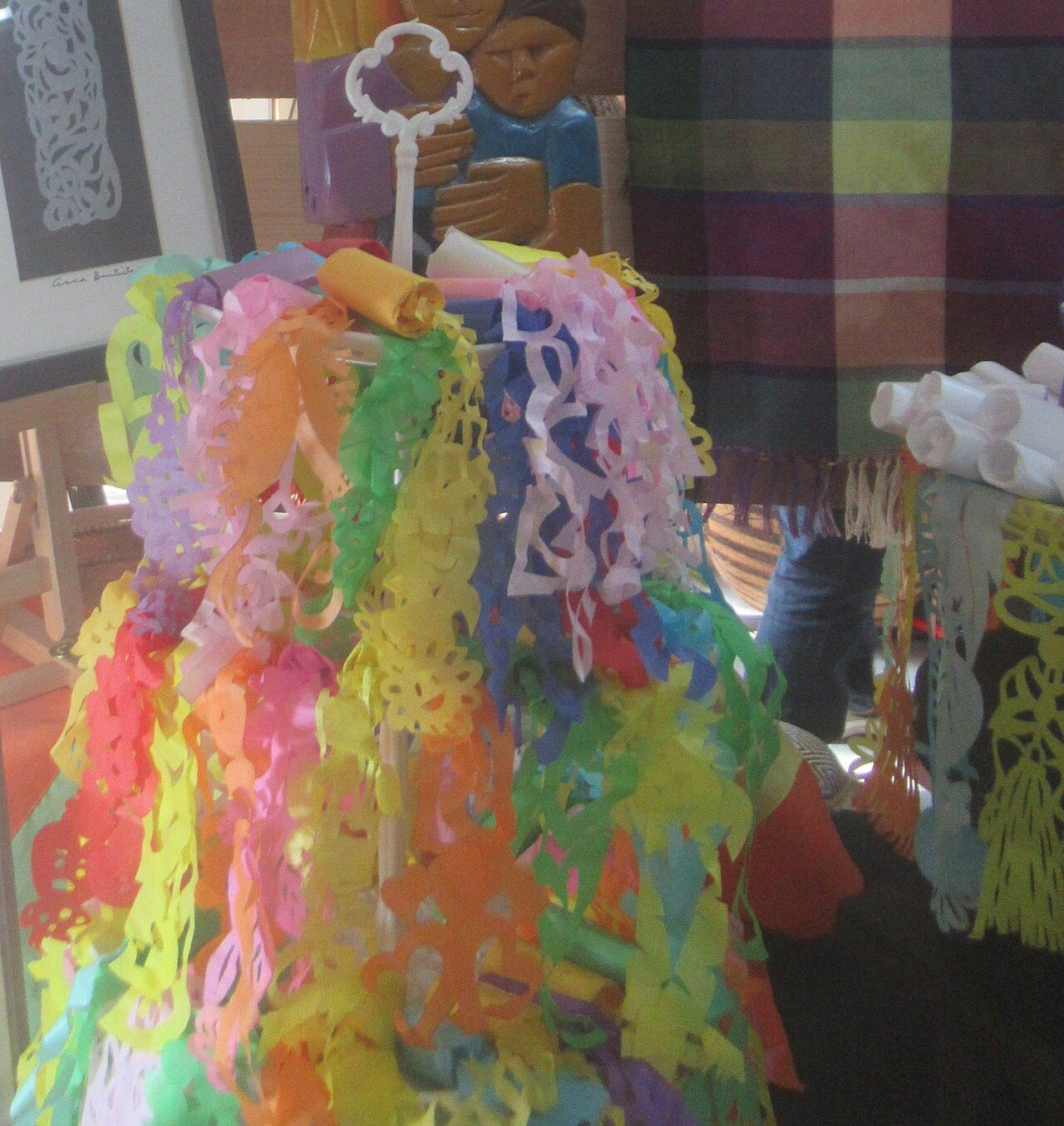
1 min read · 2 sourcesPabalat, or borlas de pastillas, is a form of papercutting originating in the province of Bulacan in the Philippines. It involves making intricate papercut designs from wrappers used in pastillas and laminated as bookmarks, and usually made from papel de japon (Japanese paper). Among the well-known practitioners of the craft are San Miguel residents Nene Luz Ocampo and her daughter, Naty Ocampo-Castro. The origin of the art form is vague, but according to Luz Ocampo, the art form may have been derived from Chinese papercutting brought by Chinese merchants. The form may also have been an offshoot of papel picado from Mexico. There are also variations in pabalat making in Bulacan. In San Miguel, a stencil is used in tracing a pattern on the paper for pabalat-making, while in Malolos, a stencil is not used, preferring to create the design in a "free-form" and impromptu fashion. 1
The text above is adapted from the Wikipedia article “Pabalat”, available under the Creative Commons Attribution-ShareAlike 4.0 licence. 1
Pabalat is recorded in open cultural data. The structured record cited below does not describe the practice, and this entry has not yet been reviewed by a person familiar with the tradition. 2
The source record links this tradition to 1 external register, which can be verified through the citation. 2