The tradition & historical record
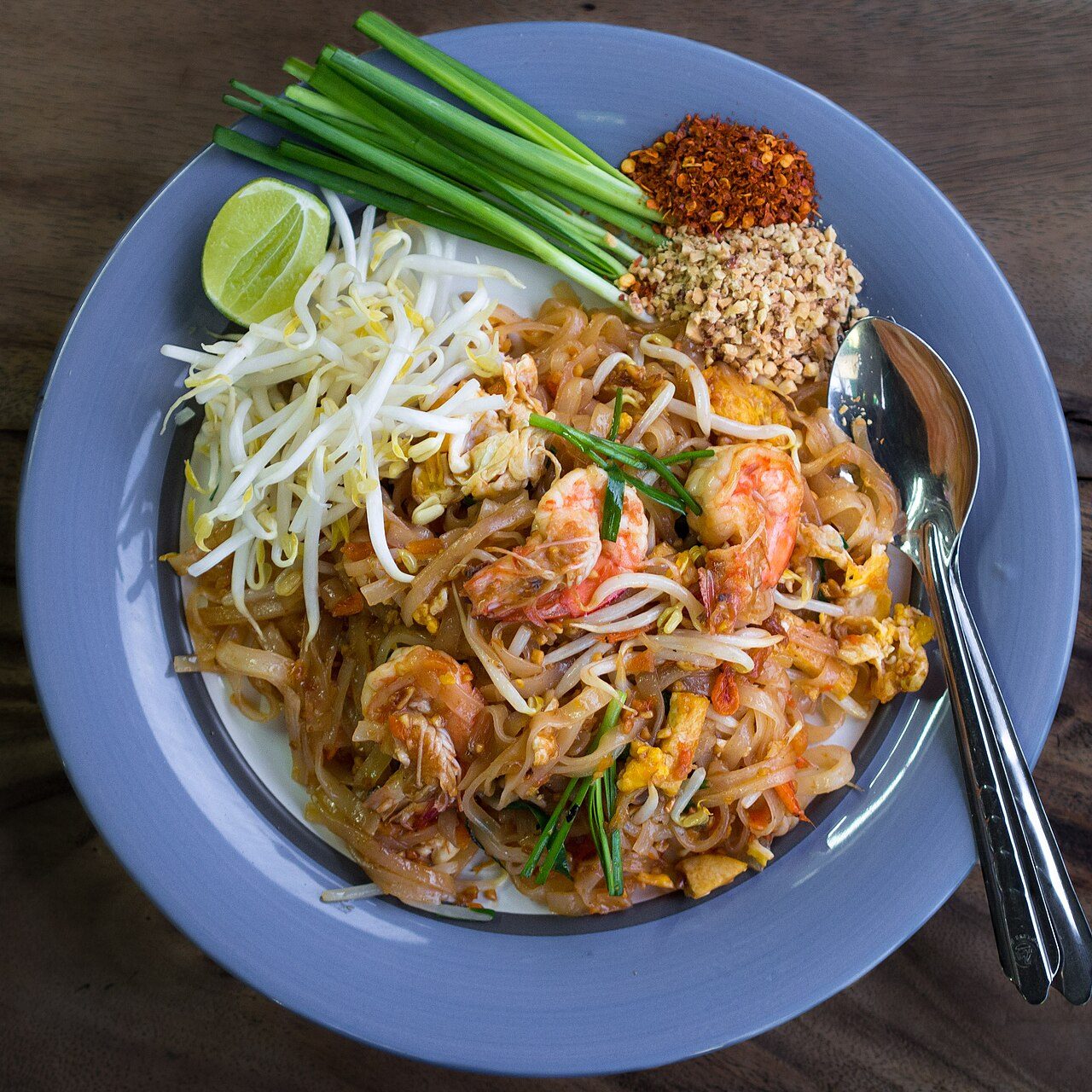
3 min read · 2 sourcesPad thai ( or ; Thai: ผัดไทย, RTGS: phat thai, ISO: p̄hạd thịy, pronounced [pʰàt̚ tʰāj] ) is a stir-fried rice noodle dish commonly served as a street food in Thailand as part of Thai cuisine. It is typically made with rice noodles, shrimp, peanuts, green onions, scrambled egg, sugar and bean sprouts. The ingredients are fried in a wok. 1
History
Pad thai was originally called kuai tiao pad thai, but this was later shortened to simply pad thai. Kuai tiao (ก๋วยเตี๋ยว) is a Thai borrowing from the Teochew word guê2 diao5 (粿條), which means a type of thick Chinese rice noodle also known as shahe fen. The word kuai tiao has cognates in several other Southeast Asian countries where Chinese immigrants settled; with kuyteav in Cambodia, hủ tiếu in Vietnam, and kway teow in Malaysia and Singapore being analogues. Although stir-fried rice noodles were introduced to Thailand from China centuries ago, the dish pad thai was invented in the mid-20th century. American author Mark Padoongpatt maintains that pad thai is "...not this traditional, authentic, going back hundreds of years dish. It was actually created in the 1930s in Thailand. The dish was created because Thailand was focused on nation-building. So this dish was created using rice noodles and it was called pad thai as a way to galvanize nationalism." The commonly held explanation of pad thai's provenance is that during World War II, Thailand suffered a rice shortage due to the war and floods. To reduce domestic rice consumption, the Thai government under Prime Minister Plaek Phibunsongkhram promoted consumption of noodles instead. His government promoted rice noodles and helped to establish the modern identity of Thailand. As a result, a new noodle dish called sen chan pad thai (named after Chanthaburi Province) was created. Pad thai has since become one of Thailand's national dishes. Another explanation by Thai-American food writer Kasma Loha-unchit suggests that pad thai was invented by the Thai Chinese immigrants, because "for a dish to be so named in its own country clearly suggests an origin that isn't Thai". 1
Ingredients
Pad thai is made with rice noodles, which are stir fried with eggs and chopped firm tofu, flavored with tamarind juice, fish sauce, dried shrimp, garlic, shallots, and sometimes red chili pepper and palm sugar, and served with lime wedges and often crushed roasted peanuts. It may contain other vegetables like bean sprouts, green onions, garlic chives, preserved radish, and raw banana flowers. It may also contain fresh shrimp, crab, squid, or other fish or meat. Many of the ingredients are provided on the side as condiments, such as red chili pepper, lime wedges, roasted peanuts, bean sprouts, garlic chives, and other miscellaneous fresh vegetables. Vegetarian versions may substitute the fish sauce with soy sauce and omit the shrimp entirely. 1
The text above is adapted from the Wikipedia article “Pad thai”, available under the Creative Commons Attribution-ShareAlike 4.0 licence. 1
pad thai is stir-fried noodle dish from Thailand, according to the structured record cited below. This entry was generated automatically from that record and has not yet been reviewed by a person familiar with the tradition. 2
The source record links this tradition to 8 external registers, which can be verified through the citation. 2