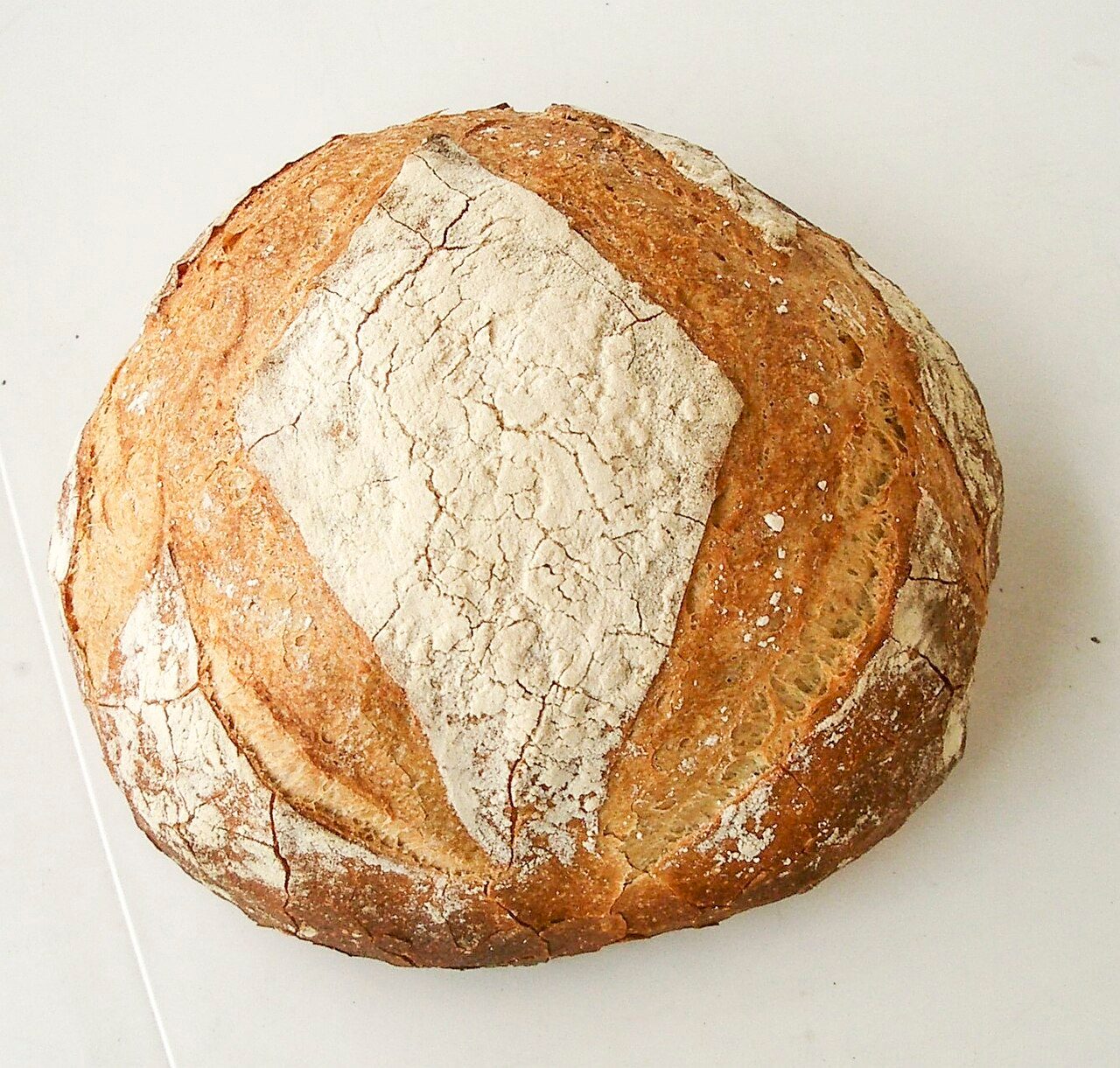
The tradition & historical record
2 min read · 2 sourcesPain de campagne (French pronunciation: [pɛ̃ də kɑ̃paɲ], "country bread"), also called "French sourdough", is typically a large round loaf ("miche") made from either natural leavening or baker's yeast. Most traditional versions of this bread are made with a combination of white flour with whole wheat flour and/or rye flour, water, leavening and salt. For centuries, French villages had communal ovens where the townsfolk would bring their dough to be baked, and the loaves weighed from 1.5 to 5.5 kilograms (3–12 lb). Such large loaves would feed a family for days or weeks, until the next baking day. Before the advent of roller milling, virtually all wheat was milled by stone grinding. In order to produce a lighter, less chewy bread, the whole wheat flour was sifted or bolted using mesh or cloth. This resulted in a whiter flour that still retained some of the bran and germ. The addition of rye flour in some recipes probably originates from the presence of rye growing among the wheat. All the grain was harvested together, and as much as 10 percent of it would be rye. Rye flour ferments more quickly than wheat flour, and it imparts a distinctive flavor to traditional pains de campagne. With the rise of commercial yeast at the turn of the 20th century, pain de campagne fell out of favor in French cities, where it was replaced by the baguette. 1
The text above is adapted from the Wikipedia article “Pain de campagne”, available under the Creative Commons Attribution-ShareAlike 4.0 licence. 1
pain de campagne is French risen bread, according to the structured record cited below. This entry was generated automatically from that record and has not yet been reviewed by a person familiar with the tradition. 2
The source record links this tradition to 4 external registers, which can be verified through the citation. 2