The tradition & historical record
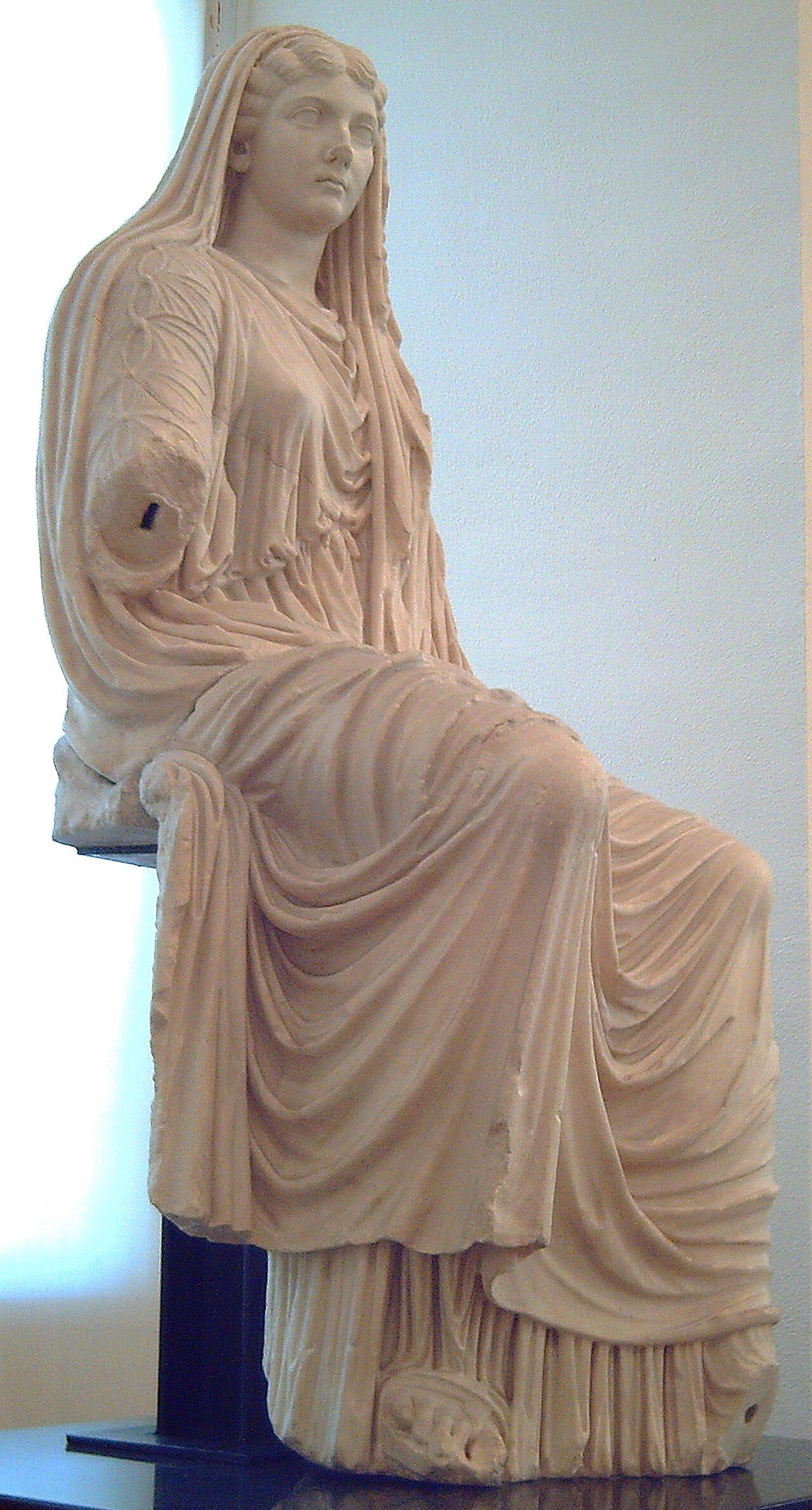
2 min read · 2 sourcesThe palla was an elegant cloak or mantle that was wrapped around the body. It was worn outside the house by (affluent) Roman women. It was a luxurious version of the Roman men's pallium. The palla was a traditional ancient Roman mantle worn by women, fastened by brooches. The shape was rectangular instead of semi-circular, as with the traditional toga. The garment dates to the 3rd century BC, but the type of dress must be much older. In Latin literature, the term palla is used ambiguously. It can denote not only a cloak, but also a foot-length sleeveless dress with straps (or a brooch) worn directly on the skin. The second is a common dress form in the entire Mediterranean world. In a Greek cultural context, this is called peplos. In a Roman cultural context, if worn by a Roman matron, it also takes the name stola. 1
The text above is adapted from the Wikipedia article “Palla (garment)”, available under the Creative Commons Attribution-ShareAlike 4.0 licence. 1
palla is draped, rectangular mantle worn by women of Ancient Rome, fastened with fibulae or brooches, according to the structured record cited below. This entry was generated automatically from that record and has not yet been reviewed by a person familiar with the tradition. 2
The source record links this tradition to 9 external registers, which can be verified through the citation. 2