The tradition & historical record
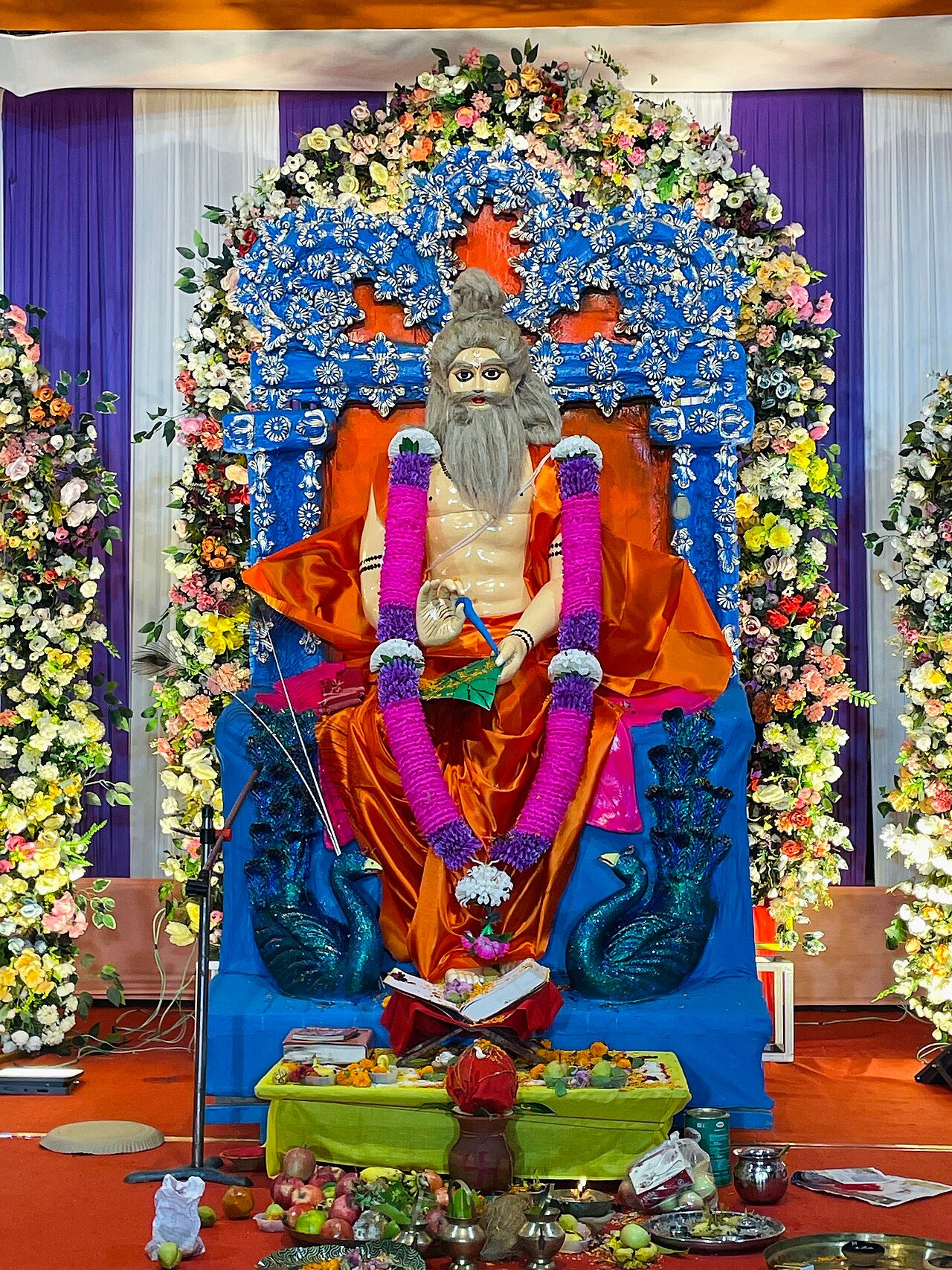
2 min read · 2 sourcesPargat Diwas, or Valmiki Jayanti, is an annual Indian festival celebrated in particular by the Balmiki religious group, to commemorate the birth of the ancient Indian poet and philosopher Valmiki, who is thought to have lived around 500 BCE. The festival date is determined by the Indian lunar calendar, and falls on the full moon (Purnima) of the month of Ashwin, typically in late September or early October. Valmiki is revered in India as the author of the Indian epic poem Ramayana, and is also worshipped as the avatar of God by members of the Balmiki sect. Valmiki himself appears as a major character in the Ramayana, as a monk who receives the banished queen Sita into his hermitage and acts as teacher to her twin sons, Lava and Kusha. The "epic metre" in traditional Indian poetry is attributed to Valmiki, with verses consisting of memorable rhyming couplets, suggesting that the poem was intended for public recitation, a common Indian oral tradition. On Pargat Diwas, portraits of Valmiki, typically depicted as a monk wearing saffron-coloured robes and holding a quill and paper, are paraded in processions called Shobha Yatra through the main streets of the Balmiki sect's locality, accompanied by street devotional singing. 1
The text above is adapted from the Wikipedia article “Pargat Diwas”, available under the Creative Commons Attribution-ShareAlike 4.0 licence. 1
Pargat Diwas is birth festival of Hindu sage, Valmiki, according to the structured record cited below. This entry was generated automatically from that record and has not yet been reviewed by a person familiar with the tradition. 2
The source record links this tradition to 1 external register, which can be verified through the citation. 2