The tradition & historical record
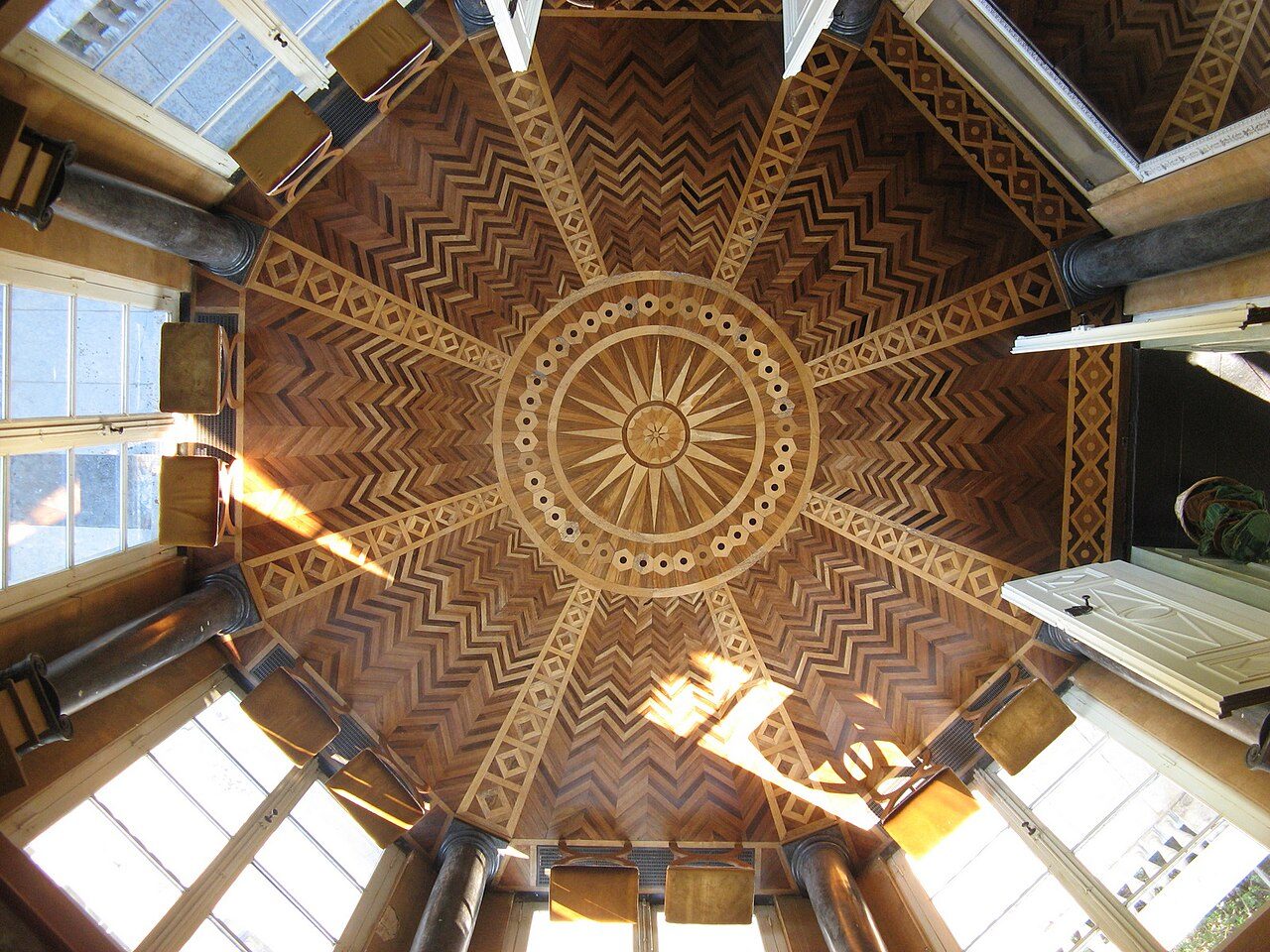
2 min read · 2 sourcesParquet (French: [paʁkɛ]; French for "a small compartment") is a geometric mosaic of wood pieces used for decorative effect in flooring. Parquet patterns are often entirely geometrical and angular—squares, triangles, lozenges—but may contain curves. The most popular parquet flooring pattern is herringbone. 1
Etymology
The word derives from the Old French parchet (the diminutive of parc), literally meaning "a small enclosed space". 1
History
Large diagonal squares known as parquet de Versailles were introduced in 1684 as parquet de menuiserie ("woodwork parquet") to replace the marble flooring that required constant washing, which tended to rot the joists beneath the floors. Such parquets en losange were noted by the Swedish architect Daniel Cronström at Versailles and at the Grand Trianon in 1693. 1
Materials
Woods contrasting in color and grain, such as oak, walnut, cherry, lime, pine, maple etc. are sometimes employed, and in the more expensive kinds the richly coloured mahogany and sometimes other tropical hardwoods are also used. While not technically a wood, bamboo is also a popular material for modern floors. Parquet floors were formerly usually adhered with hot bitumen. Today modern cold adhesives are usually used. 1
Repair
Parquet floors are usually long lasting if maintained correctly. Unstuck blocks are re-glued. Bitumen-glued blocks require use of either hot bitumen, cold bitumen emulsion, or a spirit based parquet adhesive. 1
Domestic use
Parquet floors are often found in bedrooms and hallways. They are considered better than regular floor tiles since they feel warmer underfoot. However they do little to absorb sounds such as walking, vacuum cleaning and television, which can cause problems in multi-occupancy dwellings. 1
The text above is adapted from the Wikipedia article “Parquet”, available under the Creative Commons Attribution-ShareAlike 4.0 licence. 1
parquetry is ornate wooden floor design, according to the structured record cited below. This entry was generated automatically from that record and has not yet been reviewed by a person familiar with the tradition. 2
The source record links this tradition to 19 external registers, which can be verified through the citation. 2