Textile

Pasapali Sari

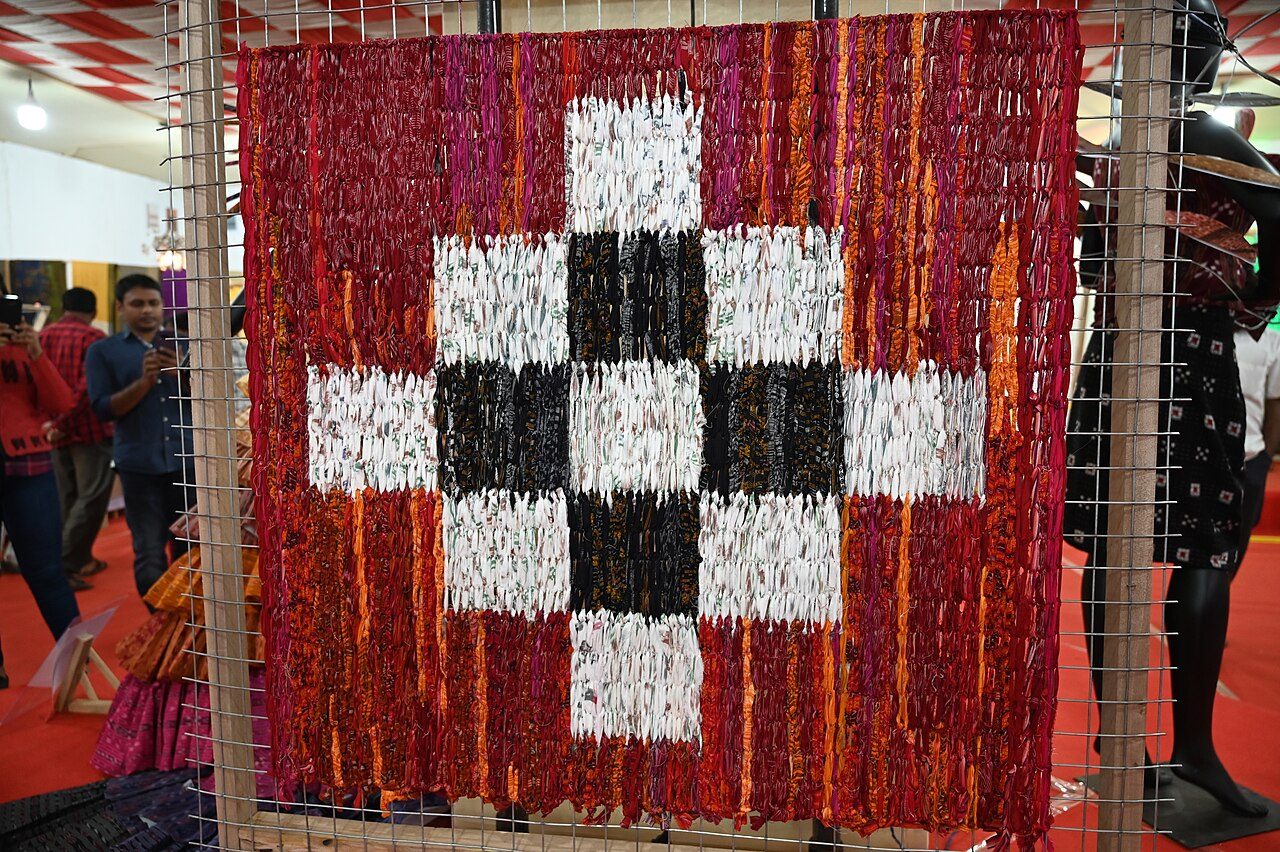
Pasapali sari also known as Saktapar is a Bandha (Ikat) handloom sari weaved mainly in the Bargarh district of Odisha, India. The name Pasapali is derived from pasā or gambling games using Chess board.

Pasapali, resembling chess-like boards used for certain games, is a traditional motif of the sarees of Odisha. It is especially popular in the Bargarh district. It is made by the technique of knotting.
Photo: Prateek Pattanaik · CC BY-SA 4.0+ Add licensed photo →

The tradition & historical record

1 min read · 2 sources

Pasapali sari also known as Saktapar is a Bandha (Ikat) handloom sari weaved mainly in the Bargarh district of Odisha, India. The name Pasapali is derived from pasā or gambling games using Chess board. These saris have intricate check patterns of contrast colors resembling the chess boards which gives it such name. 1

The text above is adapted from the Wikipedia article “Pasapali sari”, available under the Creative Commons Attribution-ShareAlike 4.0 licence. 1

Pasapali Sari is recorded in open cultural data. The structured record cited below does not describe the practice, and this entry has not yet been reviewed by a person familiar with the tradition. 2

The source record links this tradition to 1 external register, which can be verified through the citation. 2

No recording linked yet — know one? Point at it →
Sources on Record
[1]Wikipedia: Pasapali sari · encyclopedia
Sourced or Silent · Still Open

Questions awaiting a cited source

+ Answer with a source →
How many people perform it today?
When is it first attested, and by whom?

Other rooms in Textile

Same family · with a photograph