The tradition & historical record
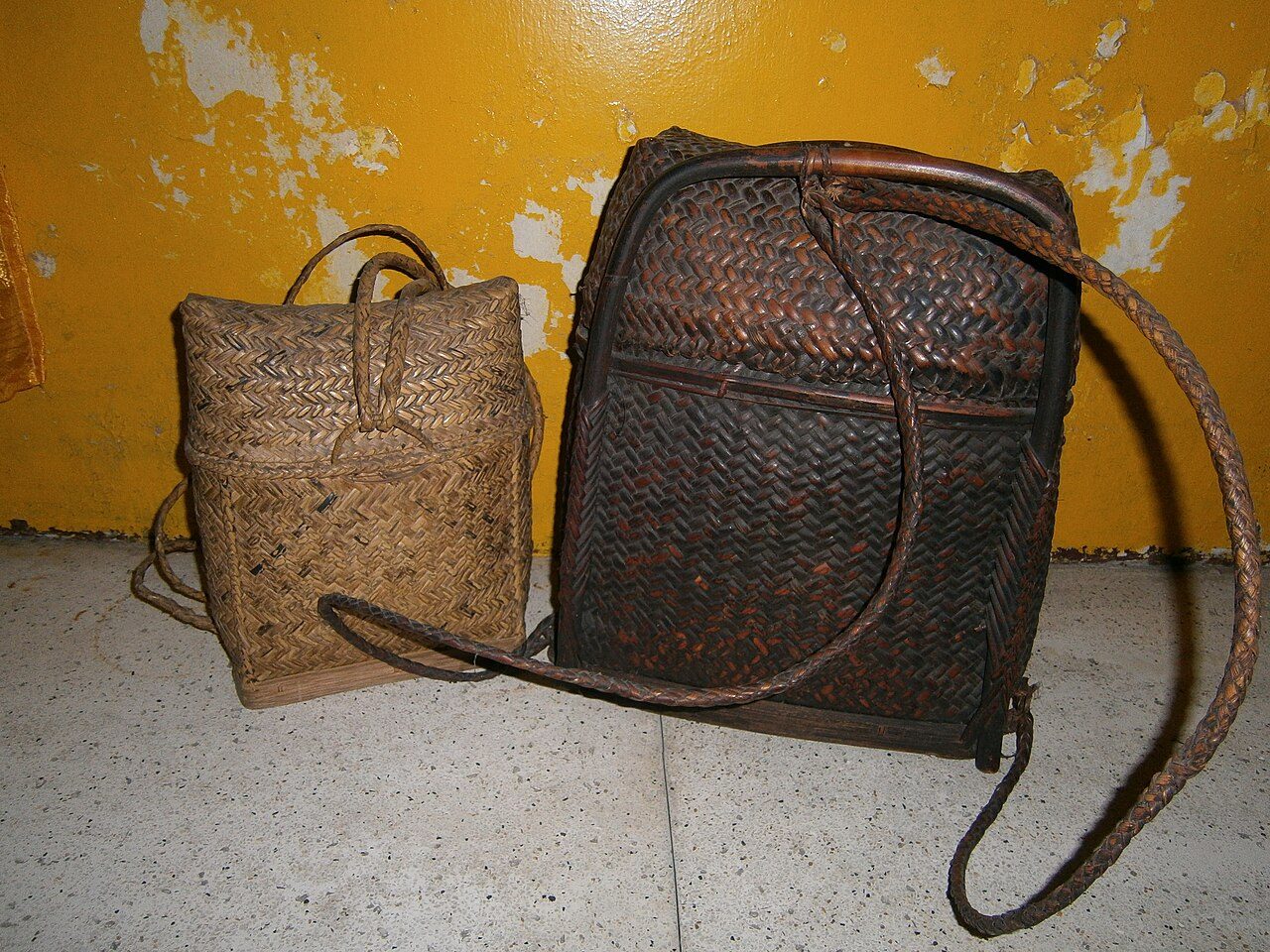
2 min read · 2 sourcesThe pasiking (English term: knapbasket) is the indigenous basket-backpack found among the various ethno-linguistic groups of Northern Luzon in the Philippines. These artifacts, whether handwoven traditionally or their 21st century contemporary variations, are considered exemplars of functional basketry in the Philippines and among Filipinos. The sacred, ritual pasiking of the Ifugao tribal group is called the inabnutan, not to be confused with the more common bangeo. Both of those types have abnut palm bast and/or apangdan vine weatherproofing. The bangaw has a rigid, fixed flap over the shoulders, while the inabnutan has a flexible woven flap. 1
Another sacred, ritual pasiking of the Highland Philippine Bontoc and Kankanaey peoples is called the takba. Representing an ancestor figure, the takba is an active participant in begnas rituals. These takba must be fed or its contents recharged periodically. To neglect or disrespect a takba is to risk punishment of becoming "bagtit" or demented. Some of the Northern Philippine tribal groups called Igorots or Cordillerans that weave pasiking are the Apayaos or Isneg, the Tinguian of Abra province, the Kalingas of Kalinga province, the Gaddang, the Bugkalot, the Applai, the Bontocs of Bontoc, Mountain Province, the Ilagod, the Bago, the Kankana-ey, the Balangao, the Ibaloi, the Ifugaos, the Ikalahan, the Kalanguya, the Karao, and the Ilongots. 1
The text above is adapted from the Wikipedia article “Pasiking”, available under the Creative Commons Attribution-ShareAlike 4.0 licence. 1
pasiking is indigenous basket-backpack of Northern Luzon in the Philippines., according to the structured record cited below. This entry was generated automatically from that record and has not yet been reviewed by a person familiar with the tradition. 2
The source record links this tradition to 1 external register, which can be verified through the citation. 2