The tradition & historical record
6 min read · 2 sourcesPasta (UK: , US: ; Italian: [ˈpasta]) is a type of food typically made from an unleavened dough of wheat flour mixed with water or eggs, and formed into sheets or other shapes, then cooked by boiling or baking. Pasta was originally only made with durum, although the definition has been expanded to include alternatives for a gluten-free diet, such as rice flour, or legumes such as beans or lentils. Pasta is a staple food of Italian cuisine, and many historians believe that pasta in a form recognizable today was introduced to Italy through Sicily in the Middle Ages as a result of Mediterranean trade networks. 1
Categories of pasta
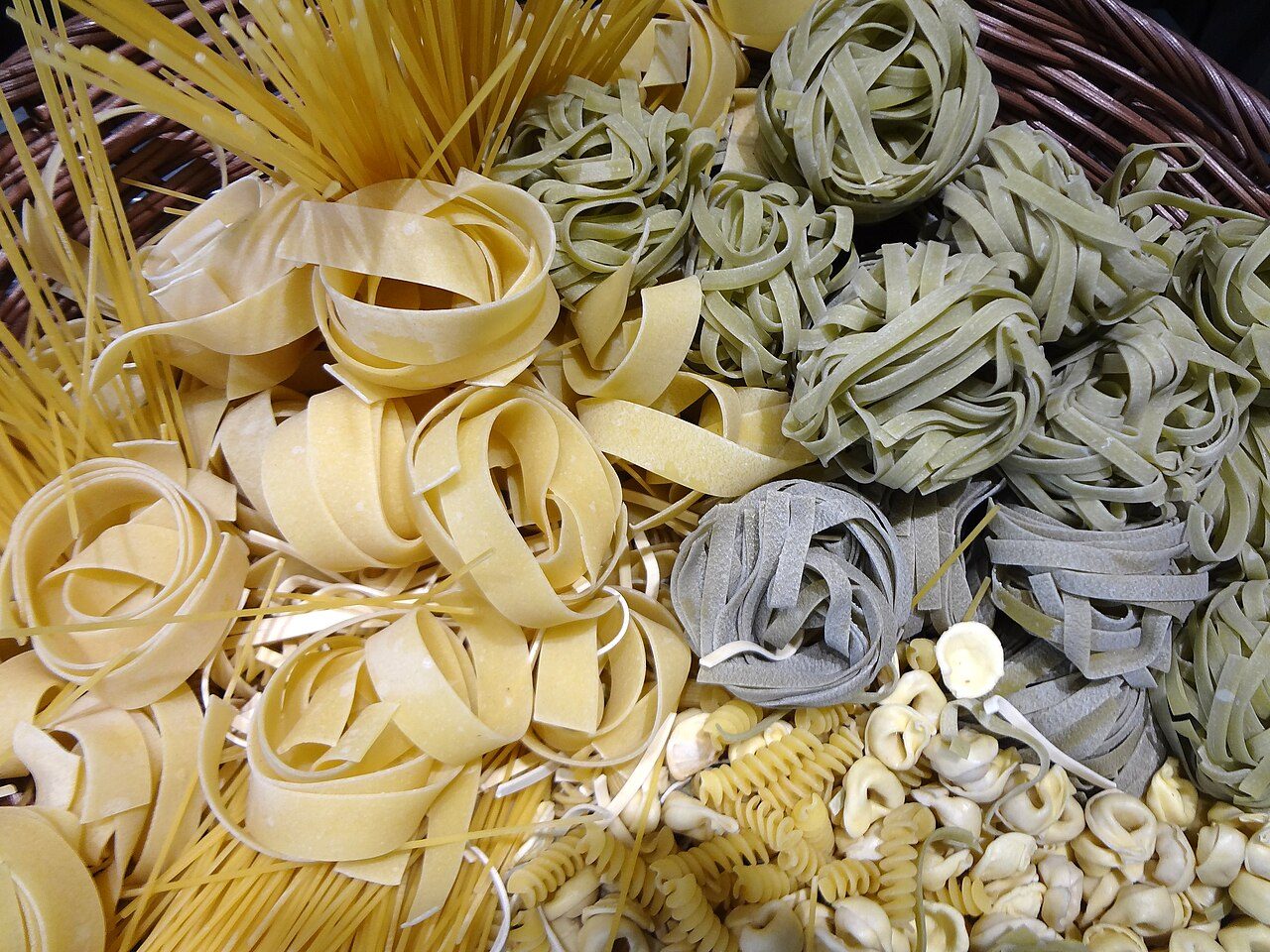
Pastas are divided into two broad categories: dried (Italian: pasta secca) and fresh (Italian: pasta fresca). Most dried pasta is produced commercially via an extrusion process, although it can be produced at home. Fresh pasta is traditionally produced by hand, sometimes with the aid of simple machines. Fresh pastas available in grocery stores are produced commercially by large-scale machines. Both dried and fresh pastas come in a number of shapes and varieties, with 310 specific forms known by over 1,300 documented names. In Italy, the names of specific pasta shapes or types often vary by locale. For example, the pasta form cavatelli is known by 28 different names depending upon the town and region. Both fresh and dried pastas are classically used in one of three kinds of prepared dishes: as pasta asciutta (or pastasciutta), cooked pasta is plated and served with a complementary sauce or condiment; a second classification of pasta dishes is pasta in brodo, in which the pasta is part of a soup-type dish. A third category is pasta al forno, in which the pasta is incorporated into a dish that is subsequently baked in the oven. Pasta dishes are generally simple, but individual dishes vary in preparation. Some pasta dishes are served as a small first course or for light lunches, such as pasta salads. Other dishes may be portioned larger and used for dinner. Pasta sauces similarly may vary in taste, color and texture. 1
Types of pasta
Common forms of pasta include long and short shapes, tubes, flat shapes or sheets, miniature shapes for soup, those meant to be filled or stuffed, and specialty or decorative shapes. Long pasta is typically made with the rolling and cutting method or by extruding. They are generally complemented with thinner toppings to prevent chunks of meat or vegetables in a thick sauce from sticking to the pasta. Short pastas are made by extrusion and are usually paired with thicker sauces as their shape allows them to hold the sauce better. Stuffed pasta is pasta folded to hold ingredients like meat and vegetables. 1
Etymology
The word pasta's earliest appearances in the English language are in the 1830s. It comes from the Italian pasta, meaning "paste", from the Late Latin pasta, itself from the Greek pastē, meaning "barley porridge". 1
Early history and origins
Some Italian writers have claimed that evidence of Etruscans making pasta dates back to 400 BCE. However, many food historians do not believe this claim is supported by sufficient archaeological evidence and instead believe that the dish was only established in Italy during the Middle Ages. Ancient Mediterranean cultures produced various forms of dough-based foods that had similarities to pasta. In the 1st-century writings of Horace, lagana (sing.: laganum) were fine sheets of fried dough and were an everyday foodstuff. Writing in the 2nd century, Athenaeus of Naucratis provides a recipe for lagana which he attributes to the 1st-century Chrysippus of Tyana: sheets of dough made of wheat flour and the juice of crushed lettuce, then flavored with spices and deep-fried in oil. An early 5th-century cookbook describes a dish called lagana that consisted of layers of dough with meat stuffing, an ancestor of modern-day lasagna. However, the method of cooking these sheets of dough does not correspond to the modern definition of either a fresh or dry pasta product, which only had similar basic ingredients and perhaps the shape. 1
Spread of noodles and medieval development
Noodles made from wheat was a prominent food in China during the Han dynasty. According to Françoise Sabban and Silvano Serventi in Pasta: The Story of a Universal Food, wheat-based pasta traditions had developed in China long before they became established in Europe. According to food historian Gil Marks in Encyclopedia of Jewish Food, European dough-based recipes were commonly baked or fried and "strips of dough" were not boiled in water before the medieval period. Marks wrote that noodle-making traditions spread from China along the Silk Road to Central Asia and reached Persia by the fourth or fifth century. In Persia, they were known as laksha, the Farsi word for "slippery". This food later reached Sicily and Spain through Arab influence, where noodles were known as itriya. Marks estimated it subsequently spread to mainland Italy sometime after the tenth century. Historians have noted several lexical milestones relevant to pasta, none of which changes these basic characteristics. For example, the works of the 2nd-century Greek physician Galen mention itrion, homogeneous compounds made of flour and water. The Jerusalem Talmud records that itrium, a kind of boiled dough, was common in Palestine from the 3rd to 5th centuries. A dictionary compiled by the 9th-century Arab physician and lexicographer Isho bar Ali defines itriyya, the Arabic cognate, as string-like shapes made of semolina and dried before cooking. The geographical text of Muhammad al-Idrisi, compiled for the Norman king of Sicily Roger II in 1154, mentions itriyya manufactured and exported from Norman Sicily: 1
West of Termini there is a delightful settlement called Trabia [along the Sicilian coast east of Palermo]. Its ever-flowing streams propel a number of mills. 1
The text above is adapted from the Wikipedia article “Pasta”, available under the Creative Commons Attribution-ShareAlike 4.0 licence. 1
pasta is Italian food made from flour, eggs and water and shaped in different forms, usually cooked and served with a sauce, according to the structured record cited below. This entry was generated automatically from that record and has not yet been reviewed by a person familiar with the tradition. 2
The source record links this tradition to 46 external registers, which can be verified through the citation. 2