The tradition & historical record
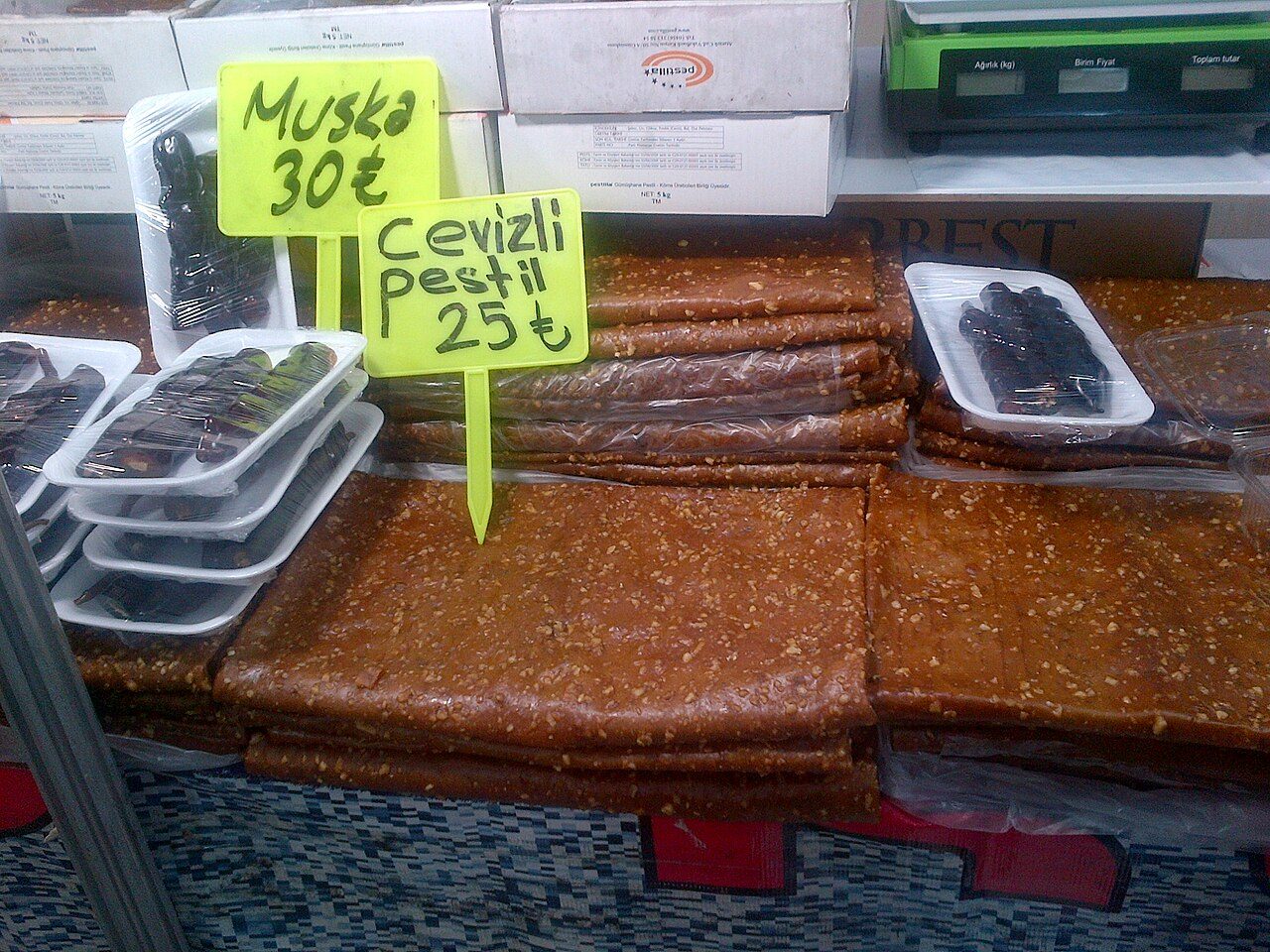
3 min read · 2 sourcesPestil is a traditional dried fruit pulp that is commonly produced in Anatolia and Armenia. It is known under different names such as bastegh or pastegh (Armenian: պաստեղ), t'tu lavash (Armenian: թթու լավաշ, lit. 'sour lavash'), bestil, and fruit leather. Fruit leather is made from mechanically pulverizing fruit, then spreading it out to dry into a tough, yet flexible and edible material which can be kept preserved for several months in an airtight container. It is a popular dessert in Armenia and Turkey. Pestil might be made with different types of fruit beside plums. Pomegranates, grapes, apples, apricots, pears, peaches and watermelons are popular choices. 1
Etymology and history
According to Robert Dankoff, the term bastik, used in much of Anatolia including Bursa, Kayseri, and Van, derives from Armenian pasteł (պաստեղ, "pastegh" / "fruit leather") which in turn derives from Ancient Greek pastillos (πάστιλλος, "pastille"). This word and the fruit leather it describes was first attested in Middle Armenian as պաստեղ (pasteġ) in the year 1227 AD. According to Turkish-Armenian linguist Nişanyan Sevan, pestil and pastillo are cognates and pastillo might have derived from Italian pastello. The dictionary asserts that the relationship between pestil and French pastille is ambiguous. The first Turkish attestation of the word is dated back to 1501 dictionary Câmiü'l-Fürs. The origins of pastegh may be traced back to the times when Armenia was part of the Achaemenid Empire as the Satrapy of Armenia. Pestil is known as malban (Arabic: ملبن) in Arabic. 1
Armenia
To make Armenian pastegh, apricots, sour cherries, plums, peaches, grapes, pomegranates, or other fruits are pressed, and the juice is boiled with sugar and thickened with flour or cornstarch. This mixture is then spread evenly over heavy muslin sheets, about 1/8 inch thick, and left to dry overnight. The following day, the sheets are hung outdoors to finish drying. Once the fruit puree has dried, it is sprayed with water to facilitate easy removal from the muslin. 1
Levant
A version of pestil called Malban (Arabic: ملبن; not to be confused with jok malban, or Turkish delight, which is also called malban) is prepared in the Levant region, it is made by boiling grape juice, semolina flour is added to the boiling grape juice, and finally nigella seeds are added to the mix, the resulting mix is shaped into a sheet of fruit leather. Malban is especially popular in the cities of Hebron and Homs, Hebron in particular produces large amounts of grapes annually, some of which are turned into malban if fresh grapes remain unsold. It is attested as early as 1923 in Palestinian folk songs according to ethnographer Tawfiq Canaan. 1
The text above is adapted from the Wikipedia article “Pestil”, available under the Creative Commons Attribution-ShareAlike 4.0 licence. 1
pestil is Turkish dessert, according to the structured record cited below. This entry was generated automatically from that record and has not yet been reviewed by a person familiar with the tradition. 2
The source record links this tradition to 3 external registers, which can be verified through the citation. 2