The tradition & historical record
2 min read · 2 sourcesPhilippine ceramics refers to ceramic art and pottery designed or produced as a form of Philippine art. 1
History
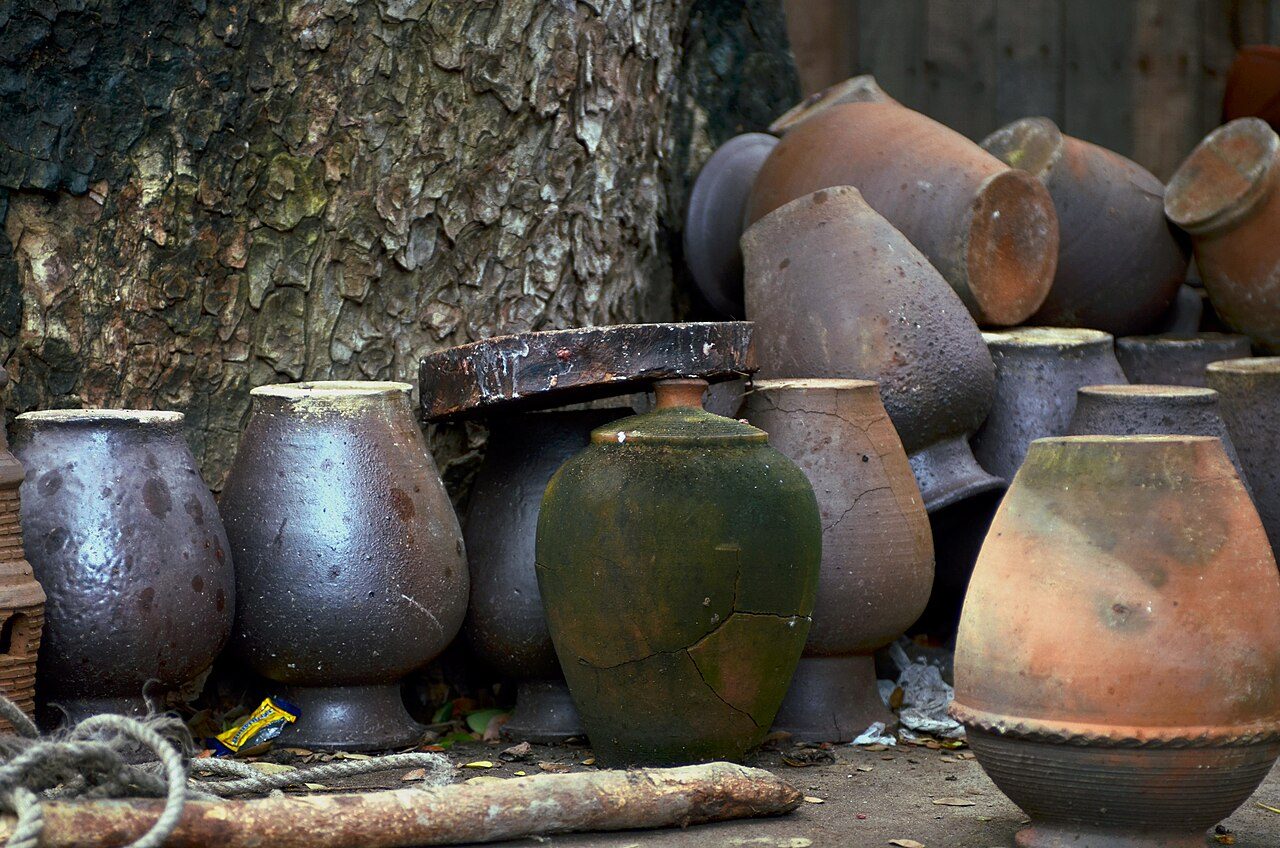
Traditional pot-making in certain areas of the Philippines would use clay found near the Sibalom River. Molding the clay required the use of wooden paddles, and the clay had to be kept away from sunlight. Native Filipinos created pottery since 4200 years ago. They used these ceramic jars to hold the deceased. Other pottery used to hold remains of the deceased were decorated with anthropomorphic designs. These anthropomorphic earthenware pots date back to 5 BC. - 225 A.D and had pot covers shaped like human heads. Filipino pottery had other uses as well. During the Neolithic period of the Philippines, pottery was made for water vessels, plates, cups, and for many other uses. Kalinga Pottery Ceramic vessels of Kalinga are divided into three types: rice cooking (ittoyom), vegetable/meat cooking (oppaya), and water storage (immosso) pots. According to Skibo, the rice cooking pots are usually larger, thinner and have a smaller opening than vegetable/meat pots. On the other hand, water storage pots have an average and uniform size and a smaller neck size. Except for water storage pots, which have a uniform size, the other two kinds can come in three different sizes, large, medium and small. Although this is true in some cases, another larger type of vegetable/meat pot and smaller water storage pot exists. • Manufacture of Kalinga potteries 1
The first step in the manufacture of pots is the acquisition of the starting material, clay. The clay is then pounded, added with enough amount of water, to reach the wanted flexibility, and placed in a rotating plate. Using the hand-modeling and coil-and-scrape techniques, the height, thickness and shape of the pot is established. 1
The text above is adapted from the Wikipedia article “Philippine ceramics”, available under the Creative Commons Attribution-ShareAlike 4.0 licence. 1
Philippine ceramics is ceramic art in Philippine, according to the structured record cited below. This entry was generated automatically from that record and has not yet been reviewed by a person familiar with the tradition. 2
The source record links this tradition to 1 external register, which can be verified through the citation. 2