The tradition & historical record
6 min read · 2 sourcesPhilippine mythology is rooted in the many indigenous Philippine folk religions. Philippine mythology exhibits influence from Hindu, Muslim, Buddhist, and Christian traditions. Philippine mythology includes concepts akin to those in other belief systems, such as the notions of heaven (kaluwalhatian, kalangitan, kamurawayan), hell (kasamaan, sulad), and the human soul (kaluluwa, kaulolan, makatu, ginoand kud,...). The primary use of Philippine mythology is to explain the nature of the world, human existence, and life's mysteries. Myths include narratives of heroes, deities (anito, Diwata), and mythological creatures. These myths were transmitted through oral tradition, handed down through generations guided by spiritual leaders or shamans, (babaylan, katalonan, mumbaki, baglan, machanitu, walian, mangubat, bahasa,...), and community elders. 1
Oral literature
Oral literature (also known as folk literature) consists of stories that passed down the generations by speech or song. All Philippine mythologies originated as oral literature. Stories naturally change and proliferate. Despite many recording projects, the majority have yet to be properly documented. These traditions were intentionally influenced with by the Spanish through the 16th century influence of Christian mythology. Examples include the Biag ni Lam-ang and the Tale of Bernardo Carpio, where certain characters were imposed with Spanish names and influence. Interest in oral literature grew in the 21st century due to interest among the youth, alongside with literary works, television, radio, and social media. 1
Written literature
Spanish chroniclers have claimed that the indigenous population of the Philippines did not have written religious literature. However, scholars agree that statements of denial likely reflected a desire by the colonizers to deny the existence of what they did not approve. For example, the Spanish chronicler Chirino stated that the natives had no religious writings, but on the same account narrated that a native possessed an indigenous poetic book. The book was utilized by the natives to express a "deliberate pact" with what the Spanish called with prejudice as "the devil", which contextually was an indigenous god and not a demon. The book was burned on order of the Spanish. The scholar Beyer also noted of the time when a Spanish priest boasted about burning indigenous religious writings, specifically "more than three hundred scrolls written in the native character". Even Chinese sources maintain the existence of indigenous religious texts from the Philippines. In 1349, the Chinese Wang Ta-yuan recorded that widows of important leaders spent the rest of their lives poring over religious texts. Spanish sources note that native writings were written on native reeds and leaves using iron points and other local pens, similar to how things are written on a papyrus, and formed into scrolls or books. Some were also written on bamboos. Juan de Plasencia wrote the Relacion de las Costumbres de Los Tagalos in 1589, documenting the traditions of the Tagalog people. Miguel de Loarca wrote Relacion de las Yslas Filipinas and Pedro Chirino added Relacion de las Yslas Filipinas (1604). 1
History
The indigenous religions of the Philippines developed through a variety of migrations and trade routes. Scholars theorized that Austronesians arrived through the "Out-of-Taiwan model", crossing from mainland Asia to Taiwan, and later the Philippines, continuing to other islands. The Austronesians are believed to have brought animist beliefs incorporating shamanism, ancestor worship, totemism, and tattoos. Beliefs in benevolent and malevolent spirits was established by their arrival. By 200 to 300 CE, Hindu mythologies arrived in the Philippines through trade routes and migration. Hinduism brought Indianized traditions to the Philippines, including indigenous epics such as Ibalong, Siday, and Hinilawod, folk stories, and superstitions that blended with indigenous polytheisims. The concept of good and bad demons, prevalent in Indian societies, became widespread in the archipelago. These demons were regarded as both evil and good. Indigenous religions were not replaced by Hinduism, rather, the former absorbed traditions and beliefs from it. Gender-variant deities and shamans became widespread. Humanoid mythical creatures emerged alongside a variety of belief systems. Around 900 CE, Chinese influence spread in some areas, adding Sinified and Buddhist belief systems. The most prominent was belief in ghosts. By 1300 CE, Muslim traders arrived in the southern Philippines, bringing with them Islamic myth and belief systems. Many in the southern and western Philippines converted to Islam. In the middle of the 16th century, the Spanish arrived from Latin America and brought with them Ibero-American Christian myth (for example, veneration to Our Lady of Guadalupe). 1
Regional mythology
Filipino mythologies from different ethnic groups have similarities such as: 1
The Bicolano people and the Visayan myths use different names for their deities, but the activities in their creation myths are similar; Deities named Mayari/Malayari/Apûng Malyari, are prevalent in Tagalog, Kapampangan, and Sambal mythologies; The moon deity Bulan and serpent deity Bakunawa appear in Hiligaynon, Karay-a, Cebuano and Bicolano mythologies; Moon-swallowing monsters named Tambanokano in Mandaya and Manobo mythologies. The Mandaya Tambanokano is portrayed as a crab, while the Manobo Tambanokano is depicted as a tarantula or scorpion; Foe-deities named Gugurang and Asuang appear in Bicolano mythology and in Hiligaynon mythology named Agurang and Aswang; and A deity named Kabunian appears in the mythologies of the Ibaloi people, the Bontoc people, and the Ifugao people. The deities, heroes, and creatures are different from each other, and do not form a unified narrative. Each story has multiple versions. In many cases, stories vary from place to place even within a single ethnic group. 1
The 7,000 Philippines islands divide into three main regions: Luzon, Visayas, and Mindanao (which is subdivided into North and South). The difference in mythologies and belief systems is by ethnic group instead than geography. Some ethnic groups have influence in only a few towns, while others span provinces. Buddhism and Hinduism in the Philippines is influential. 1
Luzon
Pre-colonial Luzon was split among Hindu-Buddhist, Muslim, and animist worshippers. 1
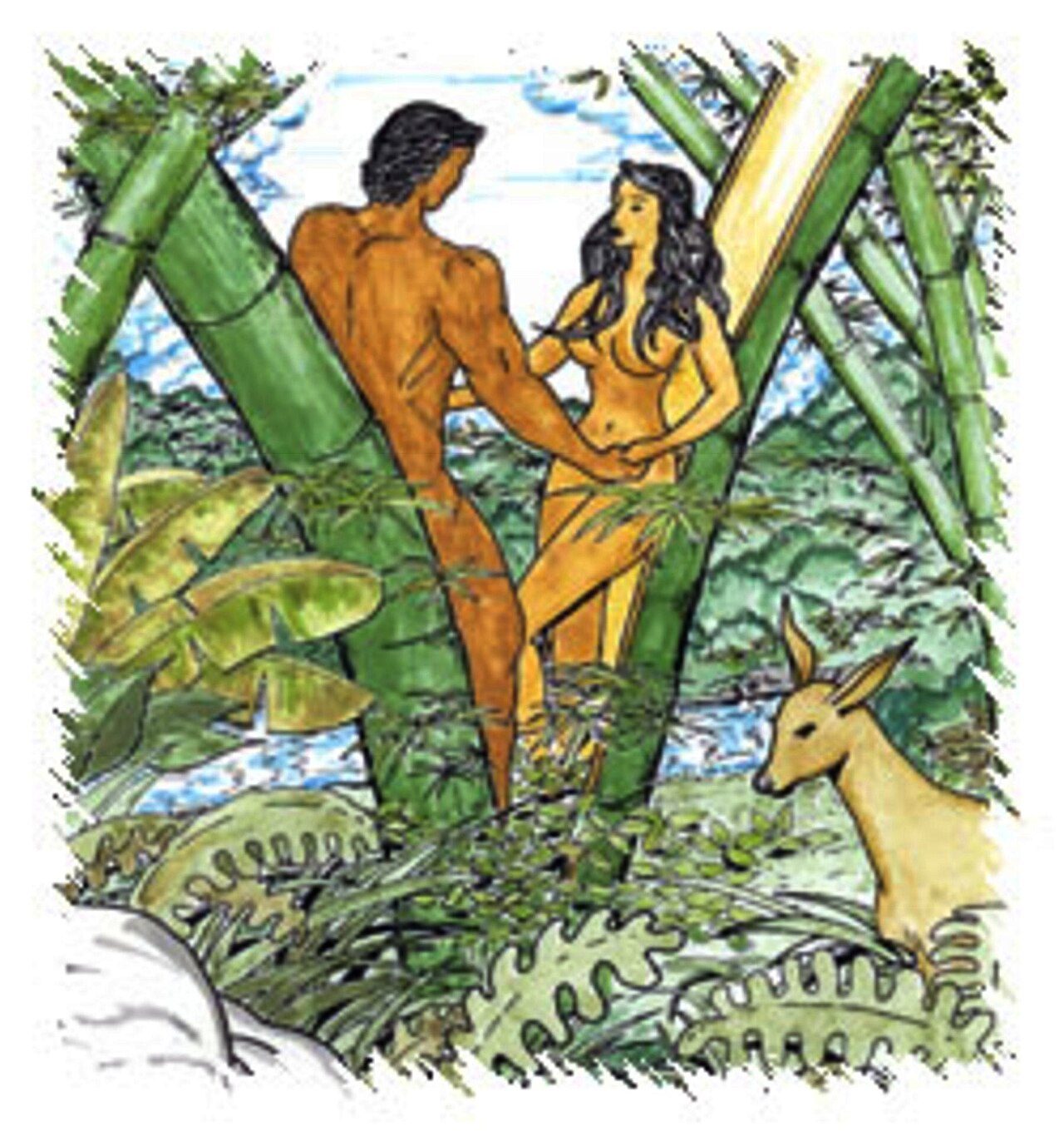
Creation Story – Story of Bathala (Tagalog) the story explains how Bathala became the ruler of the universe, the etiological explanation of the coconut tree, and how everything on Earth came to be The Creation – Lumawig (Igorot) Lumawig is a spirit god who created people in different areas and explains why people speak different languages. The Flood Story – Lumawig (Igorot) Lumawig's two sons flood the Earth to bring up mountains so that they can catch pig and deer. However, this drowned all the people on Earth except for a brother and sister. 1
The text above is adapted from the Wikipedia article “Philippine mythology”, available under the Creative Commons Attribution-ShareAlike 4.0 licence. 1
Philippine mythology is a body of myths, tales, and superstitions held by Filipinos, according to the structured record cited below. This entry was generated automatically from that record and has not yet been reviewed by a person familiar with the tradition. 2
The source record links this tradition to 1 external register, which can be verified through the citation. 2