The tradition & historical record
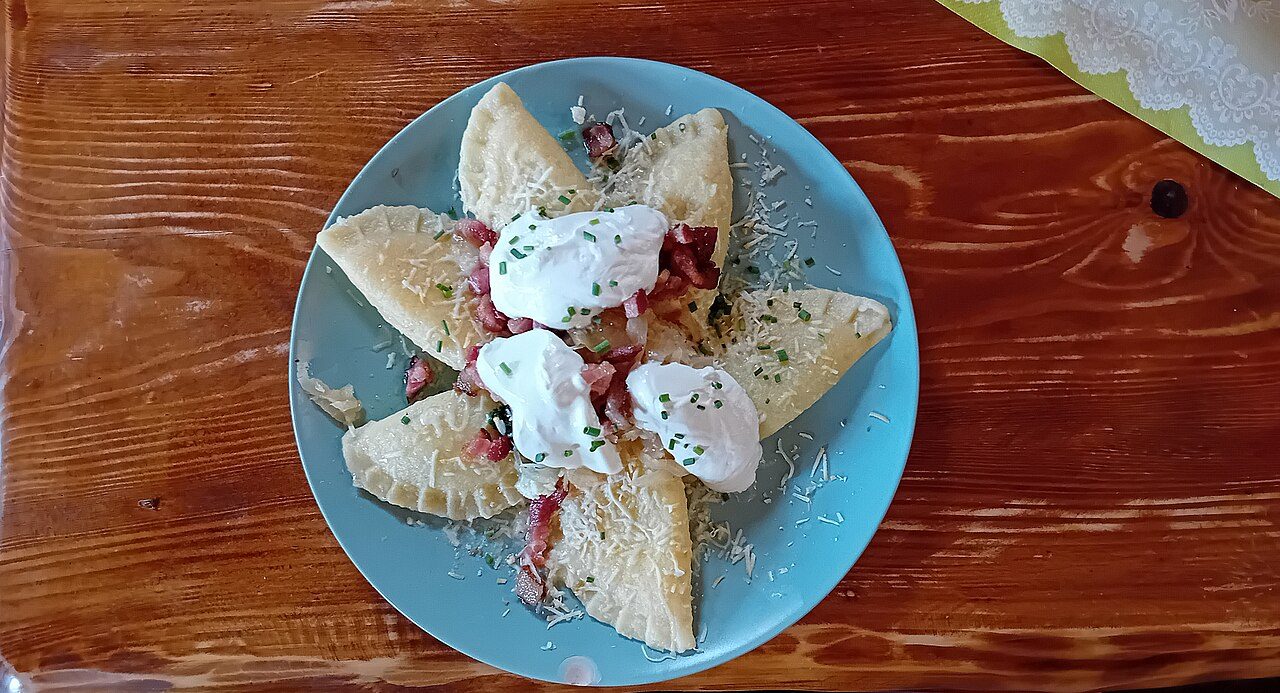
6 min read · 2 sourcesPierogi ( pirr-OH-ghee; Polish: [pjɛˈrɔɡʲi] , sing. pieróg [ˈpjɛruk] ) are filled dumplings made by wrapping unleavened dough around a filling and cooking in boiling water. They are occasionally flavored with a savory or sweet garnish. Typical fillings include potato and tvorog cheese, sauerkraut, ground meat, mushrooms, fruits, or berries. Savory pierogi are often served with a topping of sour cream, fried onions, or both. Dumplings under the name pierogi are a traditional Polish dish, holding considerable culinary significance in Poland. The recipe itself dates back to at least 1682, when Poland's first cookbook, Compendium ferculorum, albo Zebranie potraw, was published. Pierogi are also popular in modern-day Canadian and American cuisines. 1
Terminology
The Polish word pierogi is the plural form of pieróg, a generic term for one filled dumpling. It derives from Proto-Slavic *pirъ, 'feast'. While dumplings as such are found throughout Eurasia, the specific name pierogi, with its Proto-Slavic root and its cognates in the West and East Slavic languages, including Russian пирог (pirog, 'pie') and пирожки (pirozhki, 'small pies'), shows the name's common Slavic origins, antedating the modern nation states and their standardized languages. In most of these languages the word means 'pie'. However, a recent theory speculates that the words bierock, pierogi or pirog may be derived from Turkic bureg. In Ukrainian cuisine, the term varenyky (вареники, singular varenyk) refers to a related but distinct type of filled dumpling rather than a Ukrainian name for pierogi. Varenyky are traditionally boiled, but in some Ukrainian regions they may also be steamed (parenі varenyky), a preparation method not typical for pierogi. The word varenyky is the plural form of вареник (varenyk), deriving from Ukrainian вар (var) meaning "boiling liquid", indicating boiling as the primary cooking method for this category of dumplings. The same term and its variants are also used in the Mennonite tradition, where spellings such as varenikie or wareniki appear. In Canadian Doukhobor Russian variations are called and spelled pyrahi, pirozhki, and vareniki. Bryndzové pirohy is the Slovak term for dumplings filled with sheep milk cheese. Colțunași is the Romanian term for filled dumplings. It is derived from Greek καλτσούνι, kaltsúni, itself a borrowing from Italian calzoni. A similarly named type of dumpling related to, or considered a variety of, pierogi, is known in Belarus as калдуны́, in Lithuania as Virtiniai-koldūnai, and in Poland as kołduny. 1
Origins
Because the exact origin of the pierogi is unknown and unverifiable, it is the subject of frequent debate. Dumplings most likely originated in China and became widespread in Europe during the Middle Ages or later periods. Some claim that pierogi were spread by Marco Polo's expeditions through the Silk Road, thus suggesting a connection to Chinese mantou. Other sources theorize that in the 13th century, pierogi were brought by Saint Hyacinth of Poland from the Far East (Asia) via what was then the Kievan Rus'. These became characteristic to Central and East European cuisines, where different varieties (preparation methods, ingredients, fillings) were invented. According to another theory, the dish was adopted in the territories of contemporary Ukraine from Turks, whose cuisine has a similar speciality known as düs-vara. 1
Fillings
Pierogi may be stuffed (singly or in combinations) with mashed potatoes, fried onions, quark or farmer cheese, cabbage, sauerkraut, ground meat, mushrooms, spinach, or other ingredients depending on the cook's preferences. Dessert versions of the dumpling can be stuffed with sweetened quark or with a fresh fruit filling such as cherry, strawberry, raspberry, bilberry, blueberry, apple, or plum; stoned prunes are sometimes used, as well as jam. For more flavor, sour cream can be added to the dough mixture, and this tends to lighten the dough. 1
Preparation
The dough, which is made by mixing flour and warm water, sometimes with an egg, is rolled flat and then cut into squares with a knife or circles using a cup or drinking glass. The dough can be made with some mashed potato, creating a smoother texture. Another variation, popular in Slovakia, uses dough made of flour and curd with eggs, salt, and water. The filling is placed in the middle and the dough folded over to form a half circle or rectangle or triangle (if the dough is cut squarely). The seams are pressed together to seal the pierogi so that the filling will remain inside when it is cooked. The pierogi are simmered until they float, drained, and then sometimes fried or baked in butter before serving or fried as leftovers. They can be served with melted butter or sour cream, or garnished with small pieces of fried bacon, onions, and mushrooms. Dessert varieties may be topped with apple sauce, jam, or varenye. 1
Poland
Traditionally considered peasant food, pierogi eventually gained popularity and spread throughout all social classes, including the nobility. Cookbooks from the 17th century describe how during that era, pierogi were considered a staple of the Polish diet, and each holiday had its own special kind of pierogi created. They have different shapes, fillings and cooking methods. Important events like weddings had their own special type of pierogi kurniki – baked pie filled with chicken. Also, pierogi were made especially for mournings or wakes, and some for caroling season in January. In the east baked pierogi are a common and well-liked Christmas dish. They were stuffed with potatoes, cheese, cabbage, mushrooms, buckwheat, or millet. The most famous is the Biłgoraj pierogi stuffed with buckwheat, potatoes, and cheese and then baked in the oven. Pierogi are an important part of Polish festive seasons, particularly Christmas Eve (Wigilia) and Christmastide. They are also served during public events, markets or festivals in a variety of forms and tastes, ranging from sweet to salty and spicy. At the 2007 Pierogi Festival in Kraków, 30,000 pierogi were consumed daily. Polish pierogi are often filled with fresh quark, boiled and mashed potatoes, and fried onions. This type is known in Polish as pierogi ruskie ("Ruthenian pierogi", often mistakenly called Russian by foreigners). Other popular pierogi in Poland are filled with ground meat, mushrooms and cabbage, or for dessert an assortment of fruits (berries, with strawberries or blueberries the most common). Sweet pierogi are usually served with sour cream mixed with sugar, and savory pierogi with bacon fat and bacon bits. Poles traditionally serve two types of pierogi for Christmas Eve supper. 1
The text above is adapted from the Wikipedia article “Pierogi”, available under the Creative Commons Attribution-ShareAlike 4.0 licence. 1
pierogi is unleavened stuffed bun of Central and Eastern European origin, according to the structured record cited below. This entry was generated automatically from that record and has not yet been reviewed by a person familiar with the tradition. 2
The source record links this tradition to 12 external registers, which can be verified through the citation. 2